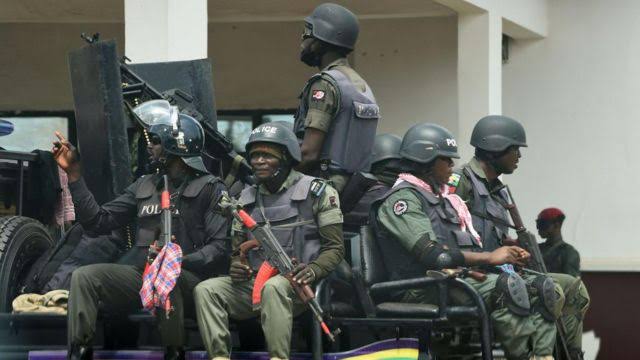
When Daniel Bwala, Special Adviser to President Bola Tinubu on Policy Communication, declared recently that Nigerians are “superlatively safer today than before 2023,” it reignited one of the country’s most persistent debates, which is the true state of security under the current administration.
Speaking on Channels Television, Bwala insisted that the era of rampant prison breaks, daylight kidnappings and indiscriminate killings was behind the nation.
But as Nigerians assess their lived experiences and available data, the question remains: How safe are Nigerians in 2025?
Across the country, insecurity remains a defining challenge.
While the federal government claims significant progress in restoring peace and weakening criminal networks, recent data paints a more complicated reality.
According to a 2024 report by the National Bureau of Statistics (NBS), Nigerians paid an estimated ₦2.23 trillion in ransom to kidnappers between May 2023 and April 2024; a figure that indicates the persistence of abductions despite renewed military operations.
Similarly, Amnesty International estimates that more than 10,000 Nigerians have been killed since President Tinubu assumed office, mostly in attacks linked to banditry, terrorism and communal clashes.
States in the North-West and North-Central remain epicentres of such violence.
However, the Counter-Terrorism Centre under the Office of the National Security Adviser reports a 16.3% drop in kidnapping incidents in 2024 compared to the previous year.
This suggests a modest decline in frequency, though the severity and brazenness of attacks remain deeply concerning.
Beyond Statistics: Nigeria On the Edge
In the North-East, Boko Haram and Islamic State West Africa Province (ISWAP) factions continue sporadic assaults on rural communities and military bases.
In the Middle Belt, farmer-herder conflicts persist, displacing thousands.
Even the Federal Capital Territory (FCT), once considered secure, has seen a rise in kidnappings for ransom, forcing authorities to deploy more joint task forces around major highways and border communities.
Security experts argue that while federal forces have intensified operations, gaps in intelligence coordination, weak policing and economic desperation continue to fuel violence nationwide.
For the Tinubu administration, stabilizing the country’s security architecture remains central to its legitimacy.
Increased budgetary allocations to defence and new counterterrorism frameworks are being implemented, alongside plans to recruit thousands of new police officers.
Yet, for millions of citizens whose daily lives are shaped by fear of abduction, armed robbery, or communal violence, optimism remains obscene.
Verdict: Safer, But Not Safe
So, are Nigerians “superlatively safer” in 2025? The evidence suggests a more nuanced truth.
There are areas of improvement fewer mass jailbreaks, enhanced intelligence sharing, and stronger security coordination, but insecurity remains widespread and deeply rooted.
Until kidnappings, banditry, and communal violence cease to dominate national headlines, claims of safety will continue to meet skepticism.
In summary, Nigeria in 2025 is not as unsafe as before 2023 but not yet safe enough to inspire public confidence.