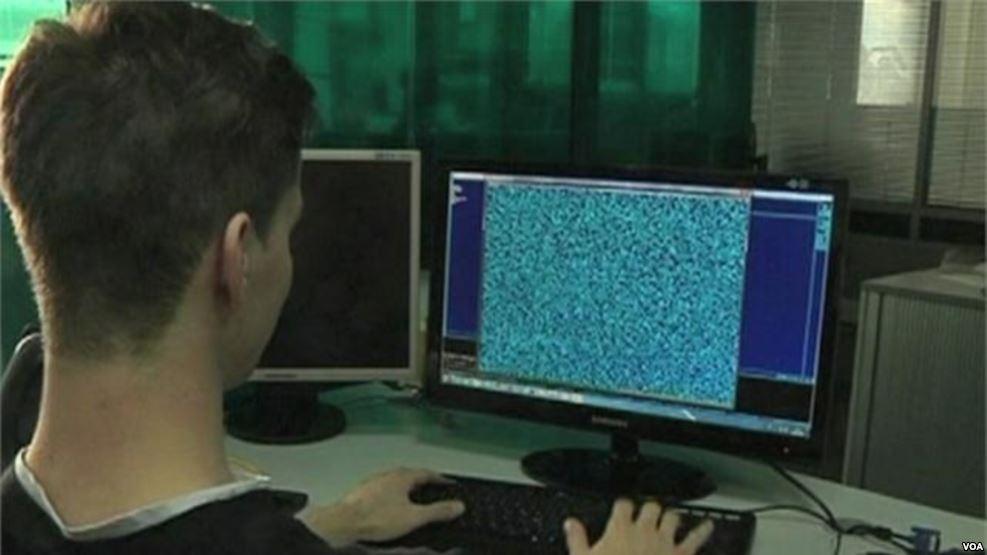
Few understand both the importance of the internet and the dangers of digital advocacy as well as the six international participants in the Digital Integrity Fellowship.
Funded by the Open Technology Fund*, the fellowship – now in its inaugural year – provides months-long intensive training, education, and guidance to six individuals around the world already working to increase internet freedoms and protect individuals and organizations from government punishment.
“This comes out of demand for access to an open internet, particularly in environments where journalists, activists, and open access workers often face threats in their ability to do that work,” says Lindsay Beck, a senior program manager at OTF who oversees the fellowship.
“It’s really important to understand that we’re aiming to help individuals [learn] how they’re able to access technology, what types of software they use, and what specific threats they’re facing,” Beck said.
The fellows – some of whom are not at liberty to use their real names – continue living and working in country while participating. VOA recently had the chance to speak via secure channels with three of the six fellows to hear about the challenges they face, and the opportunities they hope to achieve.
“Dangers and risks lurk online”
Natasha Msonza is the co-founder of the Digital Society of Zimbabwe, a volunteer network that helps individuals and groups strengthen their online security. Minorities, LGBT advocates and political opponents to President Robert Mugabe are under particular threat for their online activities and organizing. While a fellow, Natasha will work to create a digital security “road map” for at-risk populations online.
VOA: What do you see as the needs for the people of Zimbabwe when it comes to the internet and online activities?
“There is especially a need for digital security awareness. In my experience, ordinary technology users are not fully appreciative of the dangers and risks lurking online, and therefore unwittingly share personal information or become victims of cyber-crime simply because they are not very aware. This is our challenge: how to get information to everyday technology users who are not part of organized groups of activists.
“This lack of awareness is even starker when you look at Internet governance and steps being taken by the state to construct the country’s cyber laws. While it’s understandable that in a country with massive economic problems people are pre-occupied with keeping body and soul together, it’s unfortunate that there is that lack of appreciation of how digital rights are also linked to the realization of socio-economic empowerment.”
VOA: What are some of the successes you’ve been involved with, and what are you still hoping to accomplish?
“I believe that we have made a difference in the work and operations of some human rights defender organizations. Over the past two years, we have trained over 120 at-risk individual activists and at least 15 whole organizations in digital security. Currently we’re undertaking a fellowship supporting five organizations in implementing a digital security road map ahead of the 2018 presidential elections.
“My work with DFIP entails first undertaking some information security audits to establish some sort of baseline in terms of where they are at, security-wise, then coming up with short and long term recommendations. We’re hoping the raids or harassment will not be as bad as it has been in previous years.”
VOA: What are the challenges of your work in Zimbabwe? Do you or your colleagues feel pressure, threat, or worse from either the government or other organizations?
“During periods of volatile political activity, there tends to be increased surveillance, and physical intimidation remains the biggest concern for human rights groups. Sometimes they have strange people lurking or parked mysteriously around their offices. There are also frequently office raids leading to confiscation of equipment and possible losses of important data, or access by state and unknown agents, to private membership databases.
“I feel very inspired when I make a difference in the life of at-risk activists who are doing such good work but face numerous digital threats. It’s also heartening to see when generally technophobic individuals start to feel at ease using some of the tools we impart in the trainings, and then actively use them in their work. With the DIPF fellowship, I hope to make a difference that is distinct. We can anticipate that the forthcoming elections will as usual see at-risk groups undergo increased surveillance and harassment, with usual raids and confiscation of their work and equipment.”
“So much work to do”
“Daniel”, who declined to use his true name, lives in Venezuela where he works in computer science. A self-described techie, he began working in social activism with friends who had been doing similar work for several years. He hopes to use his knowledge of computer architecture to help at-risk groups conduct organizational audits to improve their online security and defend against government surveillance.
VOA: Why do you do this kind of work?
“I feel my work has impact. I’m not doing it for financial or commercial reasons; they of course have value, but not the sort of value and kind of impact that I’m having.”
VOA: How did you come to digital activism?
“It’s hard not to be political in Venezuela – I started in the times of Chavez. Some young people said they hate politics – I was never one of those. I disagreed with the Chavez regime, but wasn’t extremely active. I loved the 2012 election with Enrique Capriles. It was great to see how he presented a challenge to the regime regarding the issues of the election – it didn’t change anything in that election because the Supreme Court just ignored everything, but he had something to show and to say.”
VOA: Is this kind of work risky for you or your colleagues?
“We haven’t been in direct threat, but we work in a space where there’s a lot of risk. We’re working directly with people who have been jailed or forced into exile in the past. We hope the government sees us as just the tech guys, not the political guys, who are the ones really leading the campaigns. But still, we have to keep a low profile. I’m not the kind of person to be really worried about it, but suspect highly that our names are on lists somewhere.”
VOA: What are you hoping to accomplish in Venezuela?
“My specific fellowship proposal is to offer longer-term assistance to organizations who need it. Audits by themselves usually fix nothing, and single day trainings are good, but the organizations are too hard to change. So after doing an audit, I want to follow up with trainings, spending weeks implementing policies, tools and security policies. There’s so much work to do and so little time and money.”
VOA: Are you hopeful you can do that?
“I’m not a pessimist or an optimist. The situation is depressing, it certainly is – you need optimism to remain in this country, you really do. I feel you need that to stay here and make this country a place worthy of living and returning. It hits home when so many friends and family have to leave, so part of the reason I’m doing what I’m doing is that I hope someday our country is in a much better place and people will return.
“That’s what pushes our work- that’s the impact. People really need to take care of their own digital security here. There aren’t many people working in this area, but in my case I have a lot of work to do.”
“The government sees us as a threat”
Nighat Dad is the founder of the Digital Rights Foundation, based in Lahore, Pakistan. A lawyer by education, she and the foundation focus on bolstering the online freedoms and rights of vulnerable populations, such as religious minorities, the LBGT community, and women. She hopes to use the fellowship to provide greater legal access and counsel to at-risk communities online.
VOA: Why is this digital activism important in Pakistan?
“I feel countries like Pakistan who are still grappling with issues around internet rights and human rights, there’s a lot of focus around regulating the internet through draconian legislation – legislation that allows them to hinder the exercise of fundamental human rights. Raising awareness of online security and digital rights is a critical place to share their ideas.
“It’s so sad that Pakistan has not seen a good space for minorities and vulnerable groups. These online spaces are so important; the internet is the only place where these groups feel they can talk about their issues, their beliefs, and share their opinions. Unfortunately, this space has been shrinking for them.”
VOA: Does this work put you at risk?
“The government sees us as a threat. During the debate around recent cybersecurity legislation, they labeled as anti-state, as CIA agents, as people getting funding from other states and hurting national security. It’s also important to tell them that in a democratic state, they can’t just make decisions themselves and oppress the rights of people which are enshrined in the constitution. We need to remind them again and again when what they’re doing is wrong.”
VOA: You say you’re working to protect minority communities, but there are more women than men in Pakistan. Do you also include women as a vulnerable minority?
“Of course! We’re 52 percent of the population but clearly a minority in Pakistan in terms of rights. They’re being attacked online: when they exercise their right to free expression, they’re attacked by the patriarchy who are not ready to allow them to express their minds. Women are using the internet to enjoy all the freedoms they’re not allowed in the off-line space; the more they speak, the more they are attacked. That’s not the case for men.”
“My activism is very political in a personal sense. I feel personal is political. My personal experiences forced me to do something for women broadly in Pakistan. There are a lot of groups addressing the violence and harassment off-line, but those experiences online weren’t being acknowledged, and this is something I felt I could do. That’s where I started my work back in 2009.”
VOA: What are your aspirations; what do you want to accomplish that you haven’t?
“Working for digital rights in a country where this hasn’t been done before is a bit of a challenge. I feel a lot of responsibility, because I feel I’m setting a precedent for young people who will be doing this work in the future. One success we’ve had so far is mainstreaming this debate and issue. Now there are journalists, activists, media and others talking about these issues.
“The internet is for women; despite the harassment, young women can reclaim the Internet. We’re helping them to fight back, providing the legal recourses and strategies that work. We’ve been across the nation specifically to talk to young women and girls. In these areas we teach them the tools to prevent harassment and fight back when it happens.”
*The Open Technology Fund is a joint project of the Broadcasting Board of Governors (BBG) and Radio Free Asia (RFA.) The BBG is VOA’s parent agency, and RFA is a sister media organization to VOA.
-

Doug Bernard
Doug Bernard covers cyber-issues for VOA, focusing on Internet privacy, security and censorship circumvention. Previously he edited VOA’s “Digital Frontiers” blog, produced the “Daily Download” webcast and hosted “Talk to America”, for which he won the International Presenter of the Year award from the Association for International Broadcasting. He began his career at Michigan Public Radio, and has contributed to “The New York Times,” the “Christian Science Monitor,” SPIN and NPR, among others. You can follow him @dfrontiers.