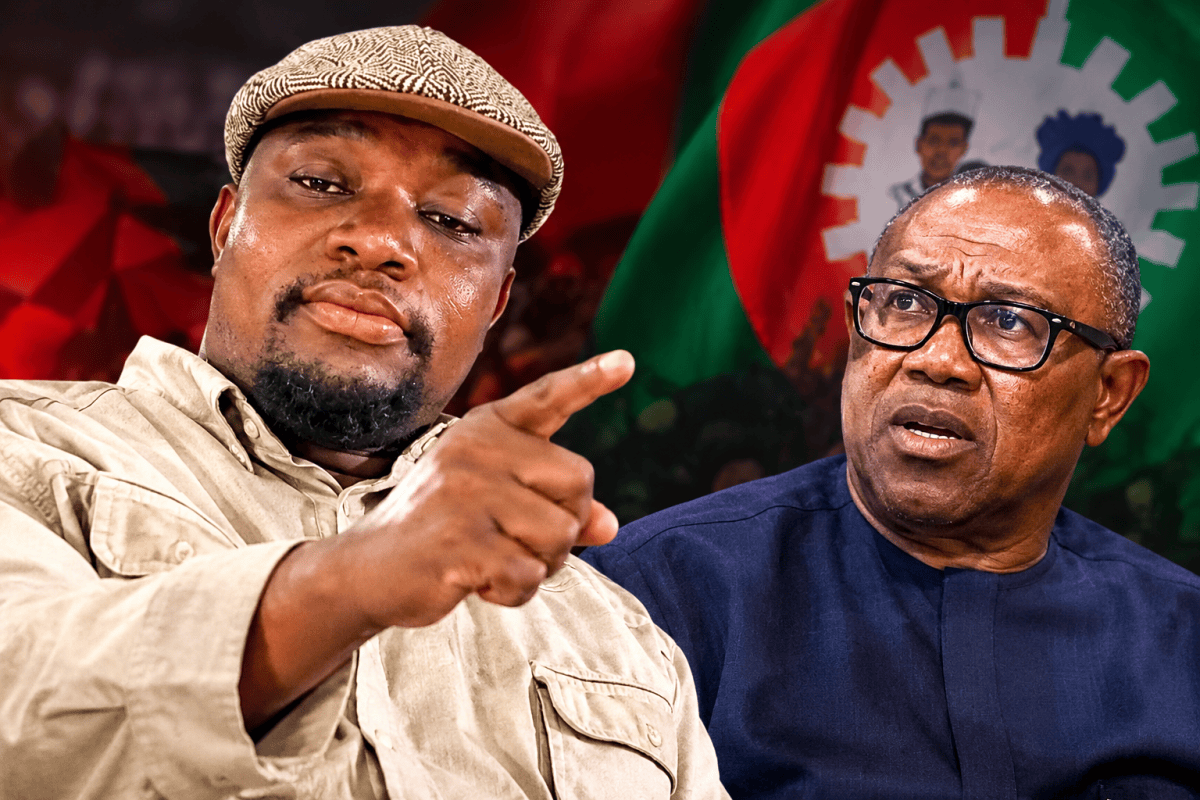
The 9News Nigeria Bureau Chief, South-South, Amb. Emmalex David Atseyinku has advised the 2027 presidential candidate of the Nigeria Democratic Congress, Mr Peter Obi, to strengthen his political structures and prepare for what he described as a “tough and highly competitive” presidential election.
Atseyinku advised while reacting to reports that Peter Obi and members of his political movement were allegedly prevented from gaining access to parts of Benue State during a political engagement.
The journalist expressed disappointment over the development, stressing that political disagreements should be resolved through democratic engagement and the ballot box rather than intimidation, obstruction or violence.
According to him, if the allegations of political thuggery or organised obstruction are established, the development should concern every Nigerian, regardless of political affiliation.
He said Nigeria’s democracy would be endangered if political candidates were prevented from freely campaigning or engaging voters because of their political differences with those in power.
“At a time when Nigerians are preparing for another presidential election, nobody should be celebrating the restriction or intimidation of an opposition candidate. Today it may be Peter Obi; tomorrow, it could be another candidate,” Atseyinku said.
He, however, warned Peter Obi not to mistake peacefulness for political preparedness, insisting that the realities of Nigerian politics require more than public sympathy, social-media popularity and large political gatherings.
“Peter Obi must understand that peacefulness is a virtue, but peacefulness alone does not win presidential elections in Nigeria. A serious presidential campaign requires political structures, grassroots mobilisation, strategic alliances, effective communication and the capacity to defend democratic rights through lawful means,” he stated.
Atseyinku said the reported incident in Benue should serve as a wake-up call to the Nigeria Democratic Congress and the wider opposition political movement ahead of the 2027 election.
He expressed concern that if such incidents were allowed to go unchallenged through legitimate legal and political channels, other political actors could be encouraged to adopt similar tactics.
The journalist further cautioned against a situation where governors or political authorities would be perceived as having the power to determine which presidential candidates could campaign in their respective states.
“Governors are elected to govern the people, not to own the political space. If a candidate has the support of the people, let him enter the state, campaign freely and allow the people to make their choice at the ballot box,” he said.
Atseyinku also urged Peter Obi to learn from the political experience of the 2023 presidential election and avoid entering the 2027 contest without a formidable political structure capable of responding to challenges across the country.
He argued that the 2027 election would require serious preparation, including stronger grassroots networks, effective coordination across the states, strategic political engagement and a robust legal team capable of responding promptly to alleged violations of electoral rights.
According to him, the opposition should not wait until an election is concluded before beginning to challenge practices capable of undermining a free and fair electoral process.
He maintained that his position was not necessarily about defending Peter Obi or the Labour Party, but about protecting the democratic rights of every political candidate and Nigerian voter.
“This is bigger than Peter Obi. It is about the Nigeria we want to build. No presidential candidate should be prevented from campaigning because of political differences. Candidates should compete with ideas, programmes and their records—not through thuggery, intimidation or political violence,” Atseyinku declared.
He warned that the country must not allow the controversies surrounding the 2023 election to be repeated in 2027, urging political leaders across party lines to respect the rights of their opponents.
Atseyinku further challenged Peter Obi to demonstrate greater political resilience, arguing that the road to the presidency would require the ability to withstand political pressure while remaining firmly within the law.
“2027 will not be won by emotions alone. It will not be won by social media alone. It will not be won by sympathy alone. It will be won by serious political organisation, strategic mobilisation, effective leadership and the confidence of the Nigerian people,” he said.
The journalist therefore urged the Nigeria Democratic Congress, opposition groups and other political stakeholders to begin preparing for the 2027 election by strengthening democratic institutions and rejecting every form of political intimidation.
He stressed that the ultimate power in a democracy must remain with the electorate.
“The ballot box must decide who becomes President of Nigeria—not political thugs, not intimidation and not the personal interests of any governor or political godfather,” Atseyinku concluded.