By Princely Onyenwe | Editorial Desk
The true value of major infrastructure projects is rarely appreciated at the moment they are completed. More often, public opinion evolves as the long-term economic, environmental, and social benefits begin to reshape everyday life. That may well become the story of Douglas Road in Owerri.
For decades, Douglas Road stood as the commercial heartbeat of Imo State. While it sustained businesses and attracted thousands of traders, commuters, and visitors daily, it also suffered from chronic flooding, traffic congestion, inadequate drainage, indiscriminate street trading, illegal parking, and environmental degradation. These challenges steadily reduced the efficiency and attractiveness of one of Owerri’s most important commercial corridors.
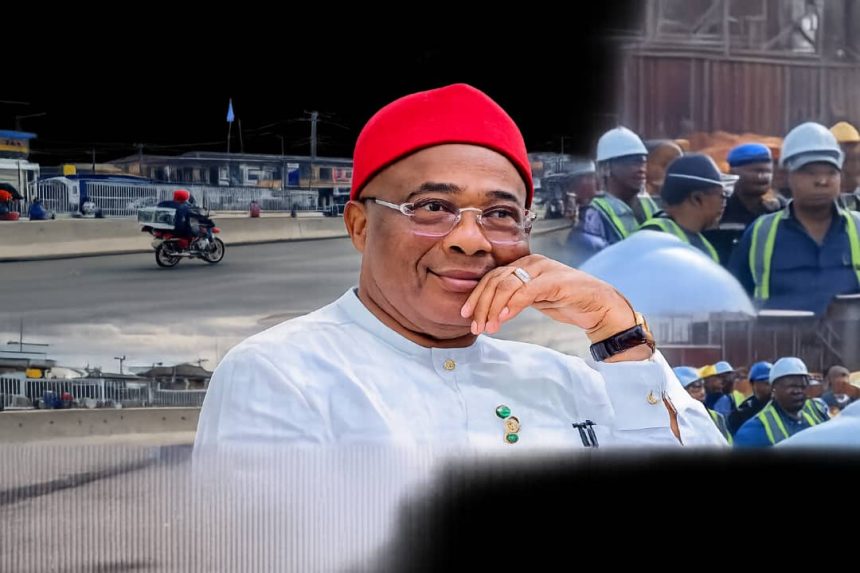
Today, the reconstruction undertaken by the administration of Governor Hope Uzodinma under the 3R Shared Prosperity agenda is gradually changing that narrative. Expanded road sections, modern drainage infrastructure, improved traffic flow, and renewed urban planning are beginning to restore functionality to an area that had long struggled under years of infrastructural pressure.
Although opinions remain divided in some quarters, the full impact of the project may not be measured by today’s reactions but by tomorrow’s realities. As businesses expand, flooding reduces, transportation becomes easier, and commercial activities become more organised, many Imolites may begin to view the project from a different perspective.
Indeed, history has shown that several transformative public projects initially attracted criticism before eventually earning widespread public acceptance once their long-term benefits became evident. Urban renewal often demands temporary inconvenience, but its success is judged by lasting improvements in economic productivity, environmental sustainability, and quality of life.
The challenge now extends beyond government. Protecting the investment has become a collective responsibility. Reports of traders displaying goods on drainage channels, illegal roadside parking, and encroachment on pedestrian walkways raise legitimate concerns. If unchecked, such practices could undermine the very infrastructure designed to solve longstanding urban problems.
Government agencies must therefore sustain strict enforcement of environmental, traffic, and urban planning regulations. Equally, traders, transport operators, residents, and community leaders must recognise that public infrastructure is a shared asset deserving of protection.
Beyond enforcement, the next phase of urban renewal should focus on establishing organised market spaces, designated loading bays, pedestrian-friendly walkways, effective traffic management systems, and continuous maintenance programmes. Such complementary measures would maximise the value of the Douglas Road reconstruction while balancing commercial activities with orderly urban development.
The Douglas Road project deserves to be assessed not merely by its physical transformation but by its ability to stimulate economic growth, reduce environmental risks, improve transportation, and strengthen Owerri’s competitiveness as a modern state capital. Time, rather than immediate public opinion, will provide the fairest measure of its impact.
If these gains are sustained through responsible governance and public cooperation, the ongoing reconstruction may, in the near future, become one of the projects for which many Imolites express genuine appreciation to Governor Hope Uzodimma—not because of political sentiment, but because the enduring benefits of sound infrastructure often become clearer with time.
Douglas Road, therefore, is more than a reconstructed highway. It represents an investment in the future of Owerri and a test of whether government commitment and responsible citizenship can work together to build a cleaner, safer, more prosperous, and better-organised capital city. Should that shared responsibility endure, Douglas Road may indeed become one of the defining projects that leads many Imolites to appreciate the foresight behind Governor Hope Uzodinma’s urban renewal agenda.