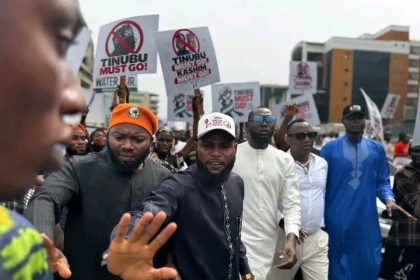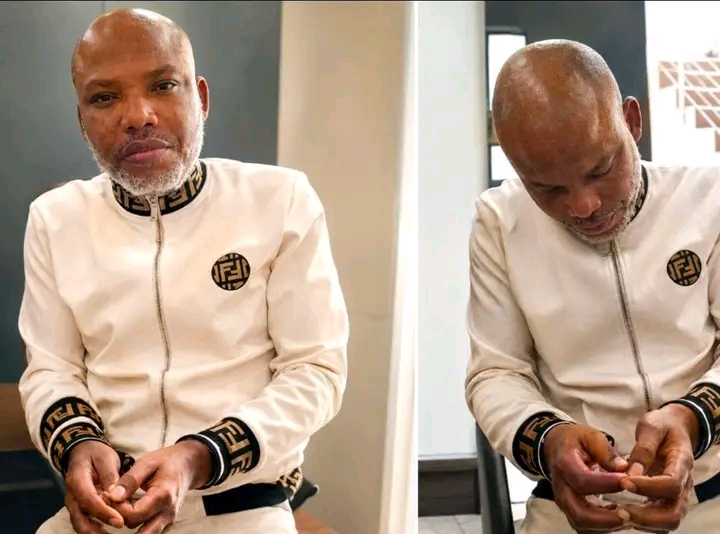
Hundreds of residents of Afaraukwu in Abia State, the hometown of detained IPOB leader Nnamdi Kanu, staged a peaceful protest demanding his immediate release.
The demonstrators marched through community streets carrying banners and chanting solidarity songs in Igbo in support of Kanu.
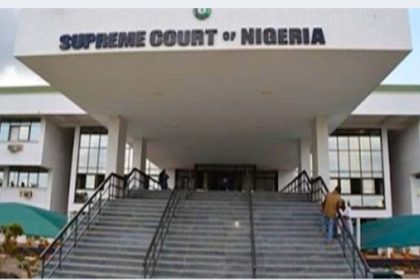
Kanu spent more than five years in detention before being convicted on terrorism-related charges and sentenced to life imprisonment by Justice James Omotosho. He is currently appealing the judgment at the Court of Appeal.
Following his conviction, Kanu was transferred to the Sokoto Correctional Centre, where he remains in custody.
A video of the protest shared on X by Kanu’s special counsel, Alloy Ejimakor, showed men and women dressed in traditional attire, headgear and red caps participating in the march.
The protesters carried a large banner declaring Kanu the supreme leader of IPOB and Director of Radio Biafra. The banner also portrayed him in royal regalia holding a staff as a prince of the Afaraukwu Kingdom.
Commenting on the protest, Ejimakor urged South-East governors to seek a political resolution to Kanu’s case rather than relying solely on the courts.
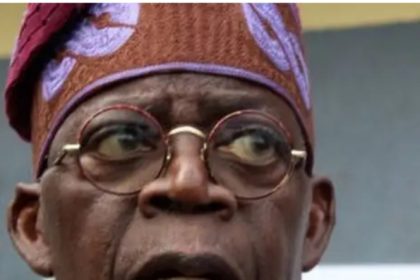
He argued that despite the conviction, the matter has always been political and called on the governors to engage President Bola Tinubu on securing Kanu’s release.
Kanu’s life sentence has continued to generate debate among legal practitioners and human rights advocates, particularly across the South-East.
In late 2023, an Enugu High Court ruled that the Federal Government’s proscription of IPOB under former President Muhammadu Buhari was unconstitutional, null and void, saying it violated rights guaranteed by the 1999 Constitution.
Despite that ruling, federal prosecutors continued with terrorism charges against Kanu, eventually securing his conviction at the Federal High Court in Abuja.
As the appeal against the conviction continues, community leaders and civil society groups in Abia State are urging the Federal Government to pursue a political solution to the prolonged legal dispute.