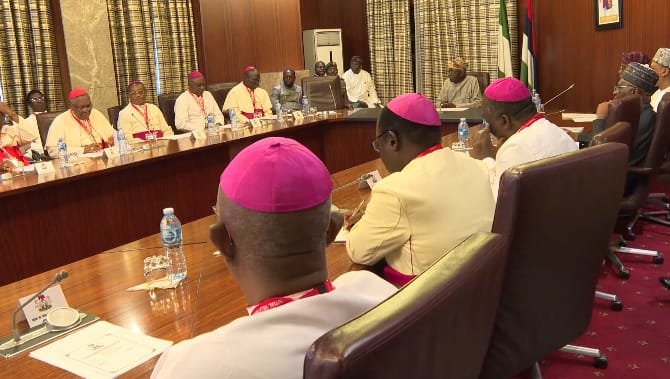
ABUJA (9NEWS NIGERIA) — President Bola Tinubu has declared that Nigeria has officially turned the corner on its worst economic crisis, promising citizens that “sustained stability and prosperity” are now within reach, as he met with Catholic Bishops in Abuja.
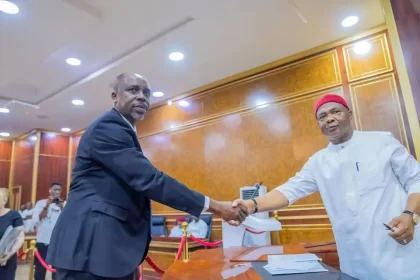
The President made the assertion on Tuesday, 28 July 2026, during a high-stakes, closed-door meeting at the State House in Abuja with a 19-member delegation from the Catholic Bishops’ Conference of Nigeria (CBCN).
Led by the newly elected CBCN President and Archbishop of Kaduna, the Most Rev. Matthew Man-Oso Ndagoso, the bishops did not hold back. They presented the President with a candid, unfiltered assessment of the nation’s current realities, spanning severe economic hardship, threats to democracy, and growing fears of a one-party state.
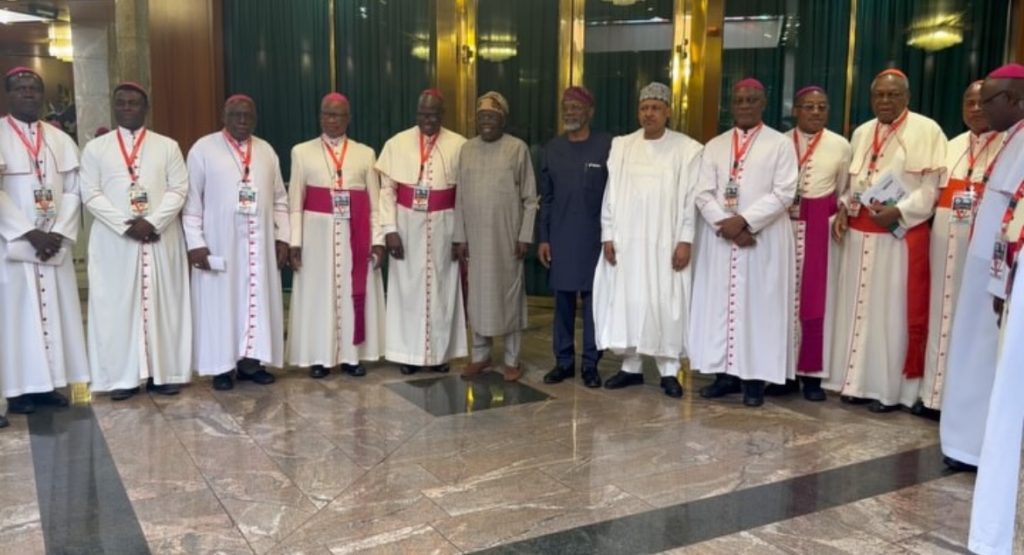
Here are the key takeaways from the explosive villa meeting that everyone is talking about.
1. “Nigerians are Bleeding”: Bishops Demand Faster Relief
Archbishop Ndagoso directly challenged the administration on the harsh realities facing everyday Nigerians. While acknowledging the government’s long-term economic visions, the CBCN pointed out that current policies have caused intense financial bleeding across households. The bishops warned that promised government interventions and palliatives are moving far too slowly to cushion the blow for vulnerable citizens.
2. Alarms Raised Over Nigeria’s Shrinking Democratic Space
With the 2027 general elections drawing closer, the Catholic clerics expressed deep concern over the health of Nigeria’s democracy. The delegation openly cautioned against a shrinking political space and the systematic weakening of opposition parties. They warned that Nigeria risks sliding into a dangerous single-party dominant state, which could severely damage public trust in the upcoming electoral cycle.
3. Christian Inclusivity and Religious Freedom Under the Spotlight
The bishops brought a critical message regarding national unity and religious freedom. They noted that many Christians currently feel alienated from the political center, a lingering anxiety stemming from recent shifts away from traditional Christian-Muslim balancing on presidential tickets.
Furthermore, the CBCN urged the federal government to guarantee equal protections for Christians, explicitly calling for an end to the bureaucratic bottlenecks that prevent churches from acquiring land in several northern states.
4. A Formal Request to Invite the Pope to Nigeria
In a move to foster national healing, the CBCN formally requested that President Tinubu extend an official state invitation to Pope Leo XIV to visit Nigeria. The bishops believe a papal visit would serve as a powerful catalyst for nationwide peace, reconciliation, and international goodwill.
5. The Battle for Mission Schools and University Access
The delegation put forward two major educational demands:
- Return of Mission Schools: They appealed for the structural return of schools to their original religious proprietors to restore moral and academic standards.
- Lifting the University Freeze: They flagged the National Universities Commission’s (NUC) current moratorium on private universities, warning it severely restricts higher education options for Nigeria’s booming youth population.
How Tinubu Responded
President Tinubu strongly defended his administration’s track record, reiterating that his aggressive economic reforms rescued the nation from total bankruptcy.
Responding to the bishops’ specific demands, Tinubu offered sharp, strategic feedback:
- On Security: The President revealed he has approved structural expansions across the Nigerian Armed Forces to permanently crush terrorism, banditry, and kidnapping.
- On Mission Schools: Tinubu clarified that school autonomy falls strictly under state jurisdiction, advising the bishops to lobby state governors directly rather than seeking a federal constitutional amendment.
- A Warning to Opponents: Addressing the concerns over democracy and 2027, Tinubu gave a firm political signal. He stated that he intends to fight a hard, democratic re-election race, sending a clear message to political rivals that he will not make their path to power an easy one.