Winter is coming, and there are signs it will not be an easy one for Europe, neither in Brussels nor in the national capitals. A cocktail of crises threatens social cohesion, economic growth, and Europe’s ability to answer to multiple challenges: some structural, others triggered by hard-to-predict events.
More than ever, this calls for increased coordination between European institutions and member states similar to what happened last year after the COVID-19 pandemic began, innovative solutions, like the can-do and will-do-whatever-it-takes philosophy behind Next Generation EU, and the ability to overcome emerging societal divides through master narratives that emphasize our common purpose.
Here, I provide an inventory of what will most likely come to define our lives as Europeans in the coming months. It might all seem doom and gloom, but it’s better to be realistic than continue to be caught off guard.
The COVID-19 pandemic in Europe
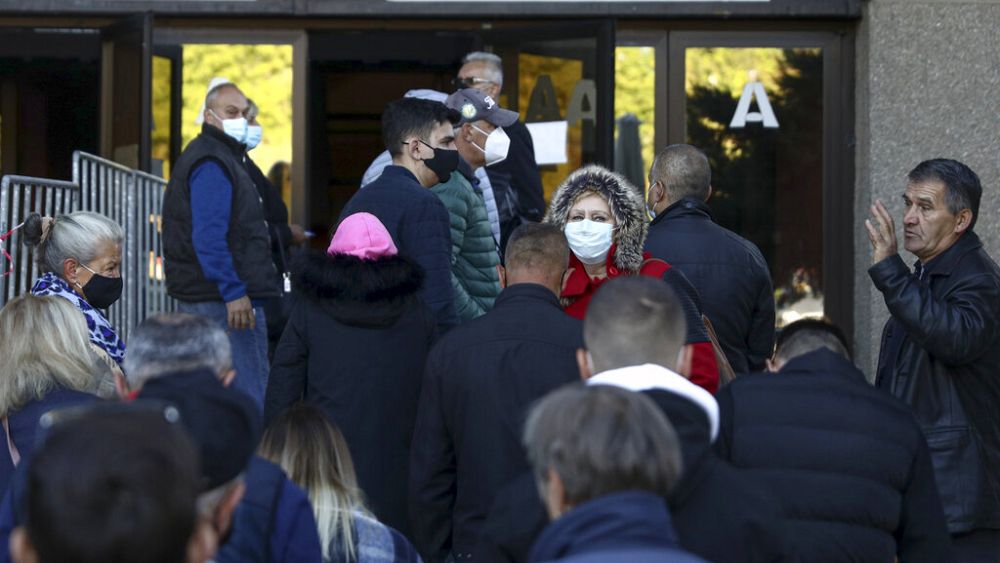
The coming winter will most probably see European nations struggle to boost vaccination rates while still trying to find a balance between restrictions and personal freedoms. Governments need to work on bridging the divide between the vaccinated and anti-vaxxers, while finding better ways to communicate with those who are vaccine-hesitant.
Unfortunately, the pandemic is here to stay, and we cannot afford to add another polarizing issue to our already-divided societies. It will take a lot of skill from those in charge to walk the fine line between communicating the seriousness of the situation, and imposition.
Lockdowns and restrictions will also continue to have negative economic effects, especially in those countries where vaccination rates continue to lag behind. Fear and uncertainty are never drivers of economic growth.
Building on past experiences, it will matter a great deal how the decisions on the economy are made. First, decision-makers must gather all stakeholders around the same table and look for solutions that involve everyone. If the table is too small, get a bigger table. The more stakeholders are involved, the fewer divergent opinions there will be in the end. Yes, the process might be a little slower, but it will be more inclusive, and safer.
Secondly, governments must not rush into decisions even if a crisis seems inevitable. Most problems emerge during a crisis because of previous actions having not been sufficiently analysed.
Energy prices and inflation
Oil prices are expected to hit $90 per barrel by the end of the year. In Europe, average gas prices have risen by more than 250 per cent since January. Similar price hikes have been seen in electricity.
In the absence of serious market interventions, energy bills will be a major issue of concern for most Europeans on top of the pandemic. Businesses will also be heavily affected, especially those in the industrial, chemical and manufacturing sectors: the impact to fertilizer companies, for instance, could be massive.
The spike in energy prices translates into higher prices for all kinds of products and services, obviously hurting people’s purchasing power.
There is no single root cause for this situation. Among the many are a general increase in demand, a lower supply of natural gas (driven by Russia’s actions), low renewable energy output, and higher EU carbon prices.
When the story is complex, there’s always a compulsion to simplify it. We already see attempts to shift the blame to the EU for its ambitious climate plans. The Commission will have to find a better response than espousing the long-term benefits at a time when everyone is focused on the short-term pain.
We know the EU is preparing a package of solutions to tackle energy price hikes. But how fast these are implemented, and whether they will be properly communicated to an increasingly apprehensive public, will be pivotal.
This crisis also foregrounds the necessity of a coordinated energy policy between member states: one that deters those energy producers who currently benefit from a lack of European unity.
The outcome of the German election
Throughout the recent major crises, Europe could always rest assured of Germany’s political stability. With the end of the Merkel era and the beginning of complex negotiations over the next cabinet, this has evaporated.
The new chancellor and his team will find it hard to project the same level of assurance and competence, which will indisputably have a ripple-effect beyond Germany’s borders. This is not to say that Germany will contribute to the uncertainty that Europe faces in the coming months, but that a key engine of European stability is currently under maintenance.
Food and goods shortages
Disruption of global supply chains will also contribute to a spike in prices for key products and services. The chip shortage currently disrupting global car production, for instance, could continue well into 2022, and even until 2023.
Europe’s small businesses have already been hammered by booming shipping costs. We also see Kremlin-backed disinformation about food riots in Europe being caused by the US, which induces panic and exacerbates problems for the market.
This is one of the areas where European strategic autonomy could be easily formalised and communicated to the public. Food and basic goods sovereignty should be part of the strategic and communication agenda that Europe uses to push back.
The old concerns haven’t gone away
These issues are only parts of a wider crisis looming over Europe. The pressure caused by migration has not disappeared, with Belarus the latest example of a country weaponising migration to create problems at the border with Poland and Lithuania.
Although Afghanistan is currently in the public eye, the possibility of a new wave of refugees on the southern borders of Europe should also not be dismissed. Given the recent Serbia-Kosovo border tensions, and uncertainty over the future of Balkan states’ integration in the EU, Europe will have to find ways to stabilize its own backyard.
All this is to say that in the coming months and years, we as Europeans must find better ways to manage crises not only by implementing solutions, but by better communicating to the public the logic behind the solutions.
First and foremost, this will require a change of perspective: rather than as mere disruptions, crises have to be understood as the new normal.
Accordingly, public policy should better integrate aspects such as forecast and risk analysis, and interventions should be focused on the potential problems with massive disruptive capacity (as opposed to long-running issues such as protecting the environment).
This approach could generate what it is known as the rally-round-the-flag effect: the idea that, faced with clear and significant threats, people unite around their leaders and find the resources to overcome a given existential challenge.
Although such effects never last forever, they might be what we need to emerge unscathed and stronger from this winter of discontent.
Going into crisis mode and more vigorously communicating the gravity of the situation is not about pessimism. It’s about foregrounding the mentality that we so badly need during these very interesting times.
Radu Magdin is a strategic communications analyst, consultant and former prime ministerial advisor in Romania and Moldova.