Politics, as astutely observed, is indeed a profound game played “between the ears,” a relentless revealer of deeply held sentiments and societal character.
Nowhere is this psychological and strategic battleground more vividly displayed than in the current Nigerian political arena, electrified by the formation of a grand opposition coalition.
The decision by various opposition parties to converge under the banner of the African Democratic Congress (ADC) as their “Special Purpose Vehicle” (SPV) to challenge the ruling All Progressives Congress (APC) in 2027 has injected both hope and profound skepticism into the nation’s discourse.
While this move signals a desire for unity against a common adversary, the path to convincing a weary and suspicious electorate remains fraught with unanswered questions and inherent contradictions.
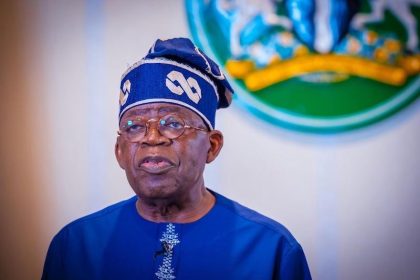
President Bola Tinubu’s APC projects an image of unflappability in the face of this coalescing opposition.
This surface calm, however, belies a significant underlying responsibility.
The onus rests squarely on the APC to demonstrate tangibly and consistently—its commitment to good governance.
Nigerians demand more than rhetoric; they require concrete evidence of equitable distribution of democracy’s dividends: improved security, economic stability, job creation, and functional infrastructure.
Crucially, the APC must also proactively build trust in the electoral process itself. Its legacy will be heavily judged on its ability to oversee and guarantee a free, fair, and credible 2027 election.
Any perception of manipulation or bias will severely damage its standing and potentially bolster the opposition’s appeal.
The ADC-led coalition presents itself as the essential antidote to the APC’s purported “bad governance.”
Yet, before it can be seriously considered as a viable alternative by the masses, it must navigate a minefield of scepticism and provide compelling answers to fundamental questions that resonate loudly across the nation:
1. The Credibility Conundrum
Who are the principal architects and promoters of this coalition? What is their tangible track record in public service, integrity, and putting national interest above personal or factional gain? Nigerians, scarred by past betrayals, demand leaders whose reputations inspire trust—not those perceived as merely recycled or tarnished figures. The coalition’s legitimacy hinges entirely on the perceived credibility of its leading lights.
2. The Ambition Quagmire
The coalition is built on a foundation of leaders and parties, many harbouring presidential ambitions. How will these competing aspirations be reconciled? Can a transparent, equitable, and acceptable mechanism be devised for selecting a consensus presidential candidate? Failure to manage this inherent tension risks internal implosion before the campaign even begins, confirming public fears of a gathering of “politically displaced persons” seeking only relevance.
3. The Ideological Vacuum
What core ideology now binds this “conglomerate of ideas” under the ADC umbrella? Is it social democracy, liberalism, conservatism, or a nebulous populism? A coherent, compelling narrative distinguishing the coalition from the APC—beyond mere anti-incumbency—is essential. Voters need to understand not just what they are voting against, but what they are voting for. Without a unifying ideological anchor, the coalition risks appearing as an opportunistic marriage of convenience.
4. The Zonal Rotation Imperative
The unwritten principle of power rotation between North and South remains a potent force in Nigerian politics. President Tinubu’s tenure represents the South’s turn. Will the ADC-led coalition honour this principle and present a credible Southern presidential candidate for 2027? Attempting to field a Northern candidate would likely fracture the coalition and alienate significant Southern constituencies, regardless of the candidate’s individual merit. Navigating this expectation is critical for national cohesion and electoral mathematics.
5. The Campaign Capacity Test
Does this coalition possess the organizational depth, financial muscle, strategic acumen, and grassroots reach to wage a truly formidable nationwide campaign? Can it craft a message powerful enough to overcome entrenched loyalties and win the “hearts and minds” of a diverse and often disillusioned electorate? Mere aggregation of parties does not automatically translate to electoral potency.
The Mirror Image Dilemma
Perhaps the most damning critique facing the opposition coalition is the perception that it fundamentally mirrors the very entity it seeks to replace. A closer examination of its composition reveals familiar faces, similar political godfathers, and analogous structures to the APC. Its formation often appears driven by the same calculus of power and access that characterizes the ruling party, rather than a genuine rupture with established political culture. This perceived lack of differentiation fuels public cynicism—is this merely a contest between factions of the same political elite, offering little substantive change for the average Nigerian?
The Road to 2027: Answers Define Destiny
The formation of the ADC-led coalition is a significant political event, reflecting a recognition that unity is essential to challenge the APC’s dominance. However, its ultimate success or failure hinges entirely on its ability to transcend its current limitations. The coalition stands at a credibility crossroads. Providing convincing, transparent, and principled answers to the five critical questions outlined above is not optional; it is the absolute prerequisite for transforming from a vessel of ambition into a credible vehicle for genuine national aspiration.
The “game between the ears” has intensified. The coalition must now prove—through concrete actions and unambiguous commitments—that it represents not just a reshuffling of the political deck, but a genuine departure towards a more credible, equitable, and effective governance paradigm. Until then, the palpable scepticism of the Nigerian masses remains its most formidable opponent.
The answers demanded today will write the political narrative of tomorrow.
Mr. Olugbenga George is the National Convener of the Coalition of Young Compatriots in Africa (CYCA)