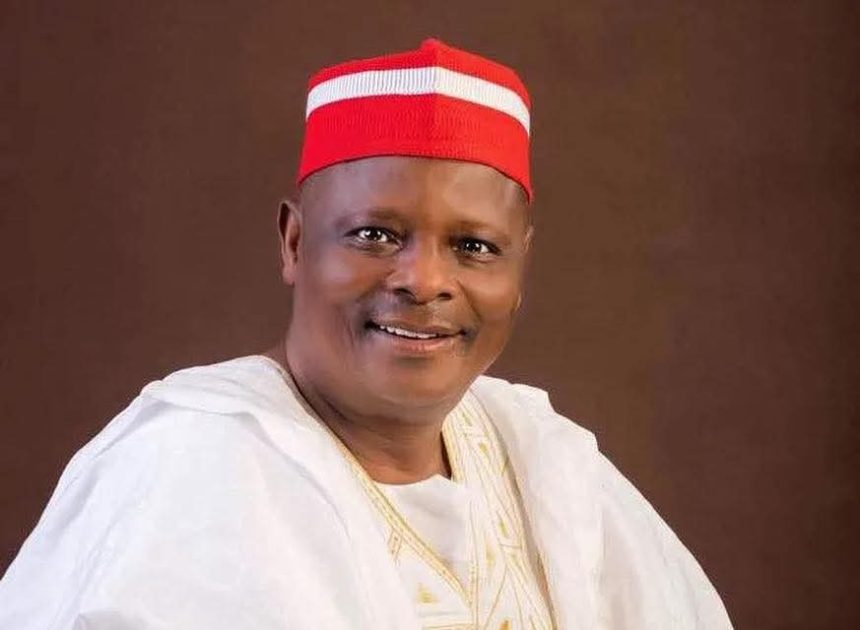
Rabiu Kwankwaso, vice-presidential candidate of the Nigeria Democratic Congress (NDC), has explained why he wants former Vice-President Atiku Abubakar to step down from the 2027 presidential race in favour of Peter Obi.
Kwankwaso said his appeal was driven by their longstanding political relationship and the need to make way for a new political arrangement ahead of the 2027 general election.
He made the remarks during an interview on Channels Television’s Politics Today on Thursday, where he discussed his relationship with Atiku and his decision to align with Obi.
Asked whether he wanted Atiku, the African Democratic Congress (ADC) presidential candidate, to abandon his ambition, Kwankwaso replied, “Well, yes.”
The former Kano State governor disclosed that he recently appealed to a group of Fulani leaders from different parts of the country to persuade Atiku to reconsider his presidential ambition.
According to him, he used their courtesy visit to encourage them to meet with Atiku before returning to their respective communities.
Kwankwaso, however, stressed that his position was not motivated by personal hostility towards the former vice-president.
He described Atiku as a longtime political associate with whom he had shared several political experiences over the years.
How Kwankwaso and Atiku’s Political Relationship Began
Kwankwaso traced their political relationship to 1993, when both men were involved in the political movement led by the late General Shehu Musa Yar’Adua.
He recalled that their group supported Atiku as its preferred presidential candidate under the Social Democratic Party (SDP), but the effort did not succeed.
He said they subsequently attempted to secure the party’s vice-presidential ticket under the same political arrangement, but that effort also failed.
Their relationship continued into the 1999 transition to civilian rule, when Olusegun Obasanjo emerged as the presidential candidate and eventually won the election.
Kwankwaso, who was then governor-elect of Kano State, said he was close to Atiku during that period, when Atiku became Obasanjo’s running mate and later vice-president.
He also recalled Atiku’s political involvement in the 2003 elections and claimed that Kano voters gave the former vice-president substantial support during the 2007 presidential election.
According to Kwankwaso, nearly 90 per cent of the votes from Kano went to Atiku in 2007, despite their different political affiliations.
He further noted that they worked together in 2011 and competed as presidential aspirants under the All Progressives Congress (APC) ahead of the 2015 general election.
Kwankwaso recalled that former President Muhammadu Buhari emerged as the leading aspirant, followed by him and then Atiku.
Despite their changing political affiliations and past electoral contests, Kwankwaso maintained that his call for Atiku to step aside should not be interpreted as personal opposition.
“We are not against him,” he said, adding that their longstanding relationship had taught him that every political ambition had its time.
His appeal comes as political parties and prominent opposition figures continue positioning themselves ahead of the 2027 presidential election.