By Abubakar H. Muhammad (9News Nigeria Northeast)
The Abdul Samad Rabiu Africa Initiative, ASR Africa, has launched a new programme aimed at turning future doctors into health innovators, with a conference on health innovation held in Borno State’s capital, Maiduguri.
Under its new programme, the ASR Africa Health Innovation Series, the opening ceremony took place on Thursday at the Abdul Samad Rabiu International Centre for Innovation and Entrepreneurship, also known as UniPod, University of Maiduguri, UNIMAID.
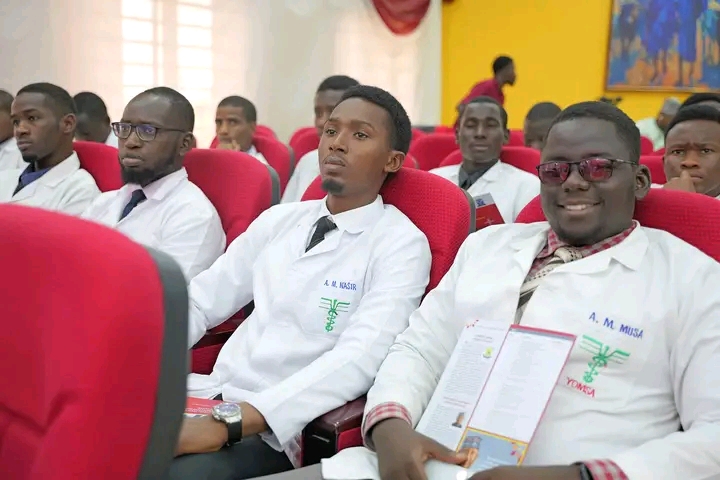
With the theme: Strengthening Healthcare through Innovative Approaches, the programme, in collaboration with the university, is aimed at exposing medical students to embracing innovation in their future practice.
It aims to make future graduates of medicine more than just health workers, but innovators, thinkers, and policymakers, Dr. Ubon Udoh, the Managing Director of ASR Africa, said at the event.
Dr. Udoh was represented by Nakama Keri, a top official of the organisation.
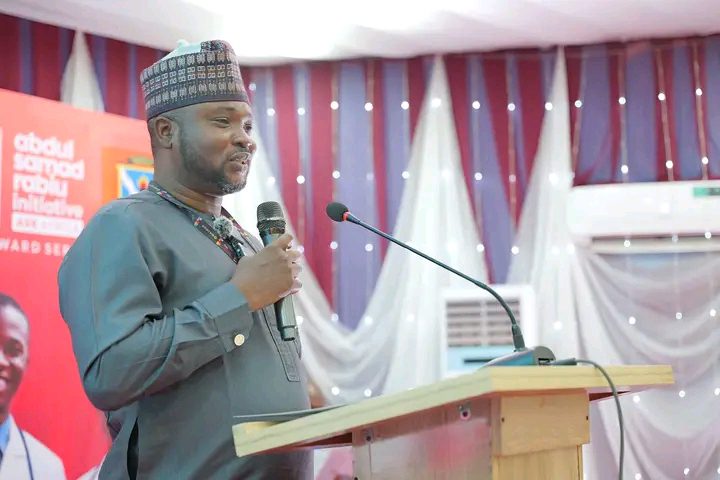
While delivering his principal’s speech, Keri emphasised the importance of the programme, noting that it is targeted at final-year medical students because it will prepare them as they transition from medical students to medical doctors.
The Health Innovation Series reflects ASR Africa’s commitment to health and human-capacity development by creating a platform for knowledge sharing, mentorship, professional development, innovation and exposure for young medical professionals and future healthcare leaders.
The programme is a strategic initiative designed to support final-stage medical trainees by bridging the gap between academic study and clinical practice.
It also equips participants with essential transition skills, a strong grounding in medical ethics, leadership capabilities, and personal branding strategies required for housemanship and long-term career progression.
However, this is not the first partnership between ASR Africa and UNIMAID.
The organisation has supported the university through its Tertiary Education Grant Scheme, including a N1 billion grant for the construction of the Abdul Samad Rabiu International Centre for Innovation and Entrepreneurship on the campus.
The MD also reiterated the organisation and its founder’s commitment to supporting government efforts in tackling health and other challenges.
He noted that with an annual budget of $100m, they have so far executed and commissioned about 85 projects across the African region.
ASR Africa is a philanthropic initiative founded by African industrialist and philanthropist, Abdul Samad Rabiu, the Founder and Executive Chairman of BUA Group.
Established in 2021, the organization was built to provide local solutions around three key areas of intervention; health, education and social development.
It operates through an annual US$100 million Africa Fund, with 50% allocated to Nigeria and the other half to the rest of Africa.
In her remarks, Dr. Hafsat Rabasa, a health specialist at ASR Africa, said that under the Health Innovation Series, the students will not only receive orientation and mentorship ahead of their career, but an opportunity to become leaders.
“This program seeks to ensure they become more than just medical practitioners but innovators, not only heal diseases but policy and change makers,” she explained.
In his speech at the event, Prof. Mohammed Mele, UNIMAID Vice-Chancellor, said he is excited about the idea of the programme as it seeks to add value to health practice.
Represented by Prof. Dauda Mohammed, Director of the Abdul Samad Rabiu International Centre for Innovation and Entrepreneurship, the VC said that the Health Innovation Series is where medicine and engineering meet, adding that the value of any medical idea is measured by its impact on the patients, hence the need for medical practitioners to key into productive innovation.
He thanked ASR Africa and its founder for their support to the university.
The VC urged the students to utilise the opportunity, saying, “this is a time for reflection and foresight into the future, and the patients are counting on what you are learning today, and you must always put them at the center of your thinking.”
Also speaking, Prof. Hamman I. Garandawa, Provost, College of Medical Sciences, UNIMAID, told the final-year students that the programme is an opportunity for them to decide for themselves what kind of health practitioners they want to become in the future.
He urged them to embrace the programme and utilise it for the benefit of their career and humanity at large.
Prof. Baba Malam Gana, Borno State’s Commissioner of Health and Human Services, said medical students must embrace every opportunity they are presented with in order to bridge the gap in Nigeria’s health industry.
He mentioned the inadequate number of health workers and Japa syndrome as major challenges to health services in the country.
He noted that about 4,500 health workers are lost annually in Nigeria due to Japa and other challenges.
He explained that while the World Health Organization, WHO, standard is one doctor to 600 people, it is about 1 doctor to 10,000 people in Nigeria, and about 1 to 100,000 in some parts of Borno State.
While calling for more investment in the health sector, particularly producing more health workers, he recalled his experience studying in a United Kingdom hospital, where there are only about 450 people to a doctor.
“Had we continued like the time of our graduation when only 60 graduated, it would take Nigeria more than 100 years to achieve the WHO standard,” he added.
However, the commissioner reiterated Governor Babagana Umara Zulum’s commitment to improving healthcare services in the state.
He said Borno has implemented the Abuja Declaration of 15% budgetary allocation to the health sector for three consecutive years, and their target is to produce 1,000 nurses and midwives annually.
He also said the state government has revitalized 100 primary healthcare centres across Borno, providing stable power supply, adequate water facilities, medicine, staff housing, among other things.
He also announced that the government will soon commission a 400-bed orthopedic hospital and the newly constructed Kashim Shettima University Teaching Hospital in the state, while inviting ASR Africa to be part of it.
He said to motivate health workers in ensuring excellent service delivery to everyone, Borno State government is the first state in Nigeria to offer a rural posting allowance.
On maternal deaths, he said Nigeria has one of the highest numbers in the world, with an equivalent of one maternal-related death in every eight minutes in the country, Borno used to be the third highest in the country.
He however noted that using advanced tools, digital methods and gadgets, “we have recorded remarkable difference, and reduced the number by 54%.”
He mentioned the adoption of digital methods as one of the key drivers of their achievements, citing examples with the successes recorded by the Borno State Contributory Healthcare Management Agency, BOSCHMA, which bagged a presidential award last week.
During a separate interview with newsmen after the programme, he called on ASR Africa to partner with the state government and key into some of its health projects and programmes.
Dr. Adamu Ibrahim Rabasa, the keynote speaker, took the students through his journey, experiences and entrepreneurial success, while other speakers gave several remarks on careers in the medical field.
The second day of the programme will feature discussions and interaction on personal experiences, ethics, clinical confidence, patient safety, common early career mistakes and how to manage personal mental health, among other things.
Established in 1979, the College of Medical Sciences, University of Maiduguri is a leading centre for medical education and healthcare training. Since producing its first 21 doctors in 1983, it has trained over 3,400 medical doctors and thousands of other health professionals across five faculties.