Editorial by Chinedum Anayo | 9News Abuja, Nigeria
The image remains striking.
A seasoned broadcaster, known more for his sharp questions than public displays of emotion, paused on live television as tears welled up in his eyes.
Rufai Oseni’s voice trembled as he reflected on Nigeria’s decline, reminding viewers that there was a time; December 1974, according to him, when Nigeria was lending millions of dollars in the tune of US$240 million to the World Bank, and in 1975, extending financial support to the International Monetary Fund (IMF) in the tune of US$120 million.
Whether one views the historical reference as symbolic or literal, the message resonated with millions of Nigerians because it spoke to a painful truth: a nation once celebrated as Africa’s economic giant now finds itself battling inflation, unemployment, a depreciating currency, and mounting public debt.
Meanwhile, the tears were not merely Rufai’s.
They belonged to the graduate who has submitted hundreds of job applications without success.
They belonged to the civil servant whose salary no longer lasts beyond two weeks.
They belonged to the entrepreneur watching production costs soar because of unstable electricity, expensive diesel, and foreign exchange shortages.
They belonged to the parents forced to choose between paying school fees and putting food on the table.
The emotion on television simply gave a face to a crisis that millions experience daily.
Nigeria’s post-independence trajectory was one of extraordinary promise.
In the early 1970s, oil revenues had transformed government finances.
Following the 1973 oil boom, Nigeria emerged as one of the fastest-growing economies in the developing world.
Massive investments were made in roads, airports, universities, housing estates, steel complexes and new federal institutions.
The country was confident enough to play leading roles in African diplomacy, peacekeeping and liberation struggles.
Nigeria financed regional development, contributed significantly to African causes and became a respected voice within the Commonwealth and the Organisation of African Unity.
Indeed, this was an extraordinary accomplishment.
There was widespread optimism that the country would soon rank among the world’s leading industrial economies.
Few would have imagined that half a century later, conversations about Nigeria would centre on debt servicing, food inflation, fuel prices and youth migration.
Perhaps the greatest tragedy is not that Nigeria declined.
It is that many countries that stood on similar economic footing decades ago chose a different direction.
In the 1960s, South Korea was poorer than many African countries.
The country had limited natural resources and was recovering from a devastating war.
Today, South Korea is home to global brands such as Samsung, Hyundai, LG and Kia.
It exports advanced technology, automobiles, semiconductors and ships to virtually every continent.
Its economy is driven by innovation rather than natural resources.
Singapore, at independence in 1965, had virtually no natural resources.
Its leaders openly worried about whether the tiny island-state could even survive.
Today, Singapore ranks among the world’s wealthiest nations, boasting one of the busiest ports globally, a respected financial system, world-class healthcare and one of the least corrupt public sectors.
Malaysia, which shared many similarities with Nigeria as an oil and commodity producer, invested heavily in manufacturing, education and infrastructure.
Today, it exports electronics, machinery and high-value manufactured goods while maintaining stronger institutional stability.
China, a vast territory once associated with widespread poverty, transformed itself through decades of industrialisation, infrastructure development and export-led growth.
Hundreds of millions of its citizens have been lifted out of poverty.
Even closer to home, Rwanda, despite suffering one of the worst genocides in modern history in 1994, has rebuilt institutions, improved public administration, attracted investment and become one of Africa’s fastest-growing economies.
None of these countries achieved perfection.
However, each made deliberate choices to prioritise productivity over politics, institutions over personalities and long-term planning over short-term gains.
Nigeria’s greatest resource has never been oil.
It has always been its people. With over 220 million citizens, Africa’s largest economy by population possesses immense agricultural potential, one of the continent’s youngest workforces.
Nigeria is also richly endowed with vast mineral resources, expansive arable land, a thriving creative industry, and one of the world’s fastest-growing technology ecosystems.
Unfortunately, these advantages have repeatedly been weakened by familiar problems.
Policy inconsistency.
Corruption.
Weak institutions.
Overdependence on crude oil.
Poor infrastructure.
An unreliable power supply.
Insecurity.
Political patronage.
Short-term economic thinking.
Successive governments have launched ambitious development plans with impressive names and lofty promises.
Nevertheless, many of those plans disappeared with changes in administration, leaving behind abandoned projects and unrealised ambitions.
Meanwhile, countries with fewer natural advantages continued moving steadily forward.
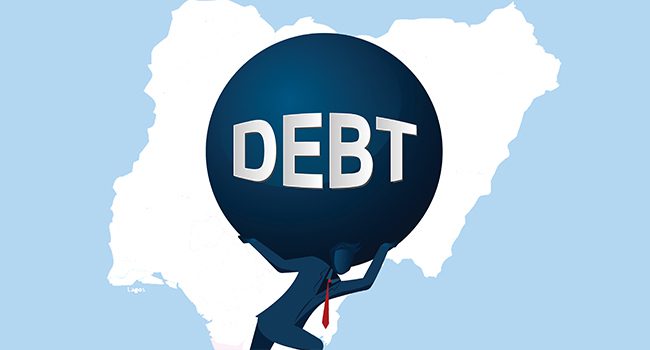
Perhaps nothing captures Nigeria’s predicament more than its debt profile.
Borrowing, in itself, is not the problem.
The United States borrows.
Japan borrows.
The United Kingdom borrows.
China borrows.
Virtually every major economy carries public debt.
The difference lies in what the borrowed funds achieve.
Advanced economies largely invest borrowed resources in productive infrastructure, research, education, transportation and industries capable of generating future economic returns.
Nigeria, however, continues to face difficult questions about whether borrowed funds are translating into corresponding improvements in infrastructure, industrial capacity, healthcare, education and citizens’ quality of life.
Even more worrying is that debt servicing now consumes a substantial portion of government revenue, leaving less fiscal space for development priorities.
When a nation spends more servicing debt than investing in its people, the future inevitably becomes more difficult.
The Conclusive Human Cost
Economic decline is often discussed through graphs, percentages and statistical reports.
But behind every statistic is a human story.
The unemployment figure represents graduates unable to secure work years after leaving university.
Inflation represents mothers buying fewer groceries with the same income.
Currency depreciation represents manufacturers paying significantly more for imported machinery and raw materials.
Food inflation means millions skipping meals.
Brain drain means hospitals losing doctors, universities losing lecturers and technology companies losing skilled professionals to countries offering better opportunities.
Today, thousands of Nigerian doctors practise in the United Kingdom.
Nigerian nurses are highly sought after across Europe and North America.
Software engineers, academics and entrepreneurs continue to leave in search of environments where talent is rewarded with stable institutions and predictable policies.
The nation spends billions educating skilled professionals, only to watch many contribute their expertise to foreign economies.
At the same time, there Is still Hope.
Despite the sobering realities, Nigeria is far from a lost cause.
Its fintech industry continues attracting international investment.
Its film industry has become one of the world’s largest.
Its music dominates charts across Africa, Europe and North America.
Its young entrepreneurs continue building globally competitive businesses despite difficult operating conditions.
Its agricultural potential remains enormous.
Its strategic location gives it access to regional markets under the African Continental Free Trade Area (AfCFTA).
The ingredients for economic transformation still exist.
What remains uncertain is whether the political will exists to implement reforms consistently over decades rather than electoral cycles.
Economic miracles are not accidental.
South Korea did not become wealthy in one administration.
Singapore did not become efficient overnight.
China’s transformation unfolded over decades.
Development demands continuity, discipline, accountability and institutions that outlive individual leaders.
Rufai Oseni’s tears captured national attention because they reflected a shared disappointment.
But history teaches an important lesson.
No country develops through nostalgia.
The Nigeria of the 1970s cannot simply be recreated, nor should the country’s ambitions be confined to memories of what once was.
The challenge is to build something even stronger.
A Nigeria where economic growth is measured not only by GDP but by jobs created.
A Nigeria where borrowing finances factories instead of consumption.
A Nigeria where electricity powers industries instead of generators.
A Nigeria where graduates dream of building careers at home rather than searching for opportunities abroad.
A Nigeria where leadership is judged by measurable improvements in the lives of ordinary citizens.
That vision remains possible.
The country’s history proves that Nigeria once possessed remarkable economic confidence.
Its people continue to demonstrate extraordinary resilience and creativity.
The question is no longer whether Nigeria can rise again.
The question is whether the nation is finally prepared to make the difficult, consistent and sometimes unpopular choices required to reclaim its place, not merely as Africa’s largest economy on paper, but as one of the world’s truly prosperous and competitive nations.
Until that question is answered with action rather than rhetoric, Rufai Oseni’s tears will remain more than a fleeting television moment.
They will continue to mirror the hopes, frustrations and unanswered questions of millions of Nigerians who still believe their country can become far greater than it is today.
God bless The Federal Republic of Nigeria!