The National Economic Council (NEC) has endorsed a 90-day economic action plan aimed at easing the cost of living, improving food affordability, attracting investment and accelerating projects that directly benefit Nigerians.
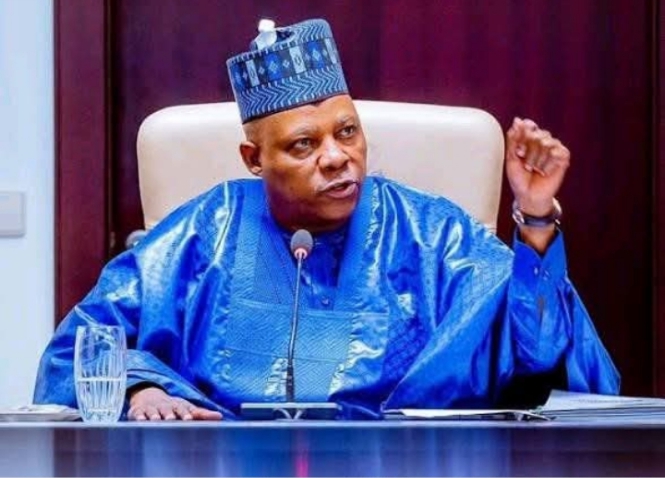
The plan was endorsed on Thursday during NEC’s 161st meeting, held virtually and chaired by Vice President Kashim Shettima. Finance Minister and Coordinating Minister of the Economy, Taiwo Oyedele, presented the proposal.
The initiative comes amid persistent concerns over high food prices, transportation costs and the pressure of economic reforms on household incomes.
NEC said the plan would focus on five priority areas: affordable food, tax harmonisation, completion of high-impact projects, removal of investment bottlenecks and regulated household support.
However, the practical impact will depend on how quickly the federal and state governments implement the measures and whether Nigerians experience measurable reductions in their daily expenses.
Shettima Tasks Governors on Cost-of-Living Relief
Shettima urged state governors and relevant government institutions to translate the gains of President Bola Tinubu’s economic reforms into tangible improvements in citizens’ lives.
He said the success of economic policies should be measured by their impact on employment, healthcare, transportation and the financial security of households.
“The first dividend of prosperity should be the confidence to plan a life,” the Vice President said, stressing that economic progress must give Nigerians greater certainty about their future.
He called for stronger coordination between federal and state governments, warning that differences in their responsibilities should not obstruct the delivery of essential services.
According to him, governors must bring their knowledge of local economic conditions into national policy decisions to ensure that interventions address the realities facing their communities.
Government Targets Cheaper Transport
The Council also resolved to establish a joint financing framework between the federal and state governments to accelerate the deployment of compressed natural gas (CNG) buses and electric vehicles.
The framework is expected to support the National Affordable CNG Transit Programme and expand access to alternative-energy public transportation.
NEC directed the relevant authorities to engage transport unions and operators to ensure that savings from cheaper vehicle energy and operating costs are passed on to passengers through lower fares.
Shettima warned that the programme should not be judged by the number of buses deployed but by whether commuters can afford to use them.
“The cost of reaching a livelihood should never consume the livelihood itself,” he said.
The Council also agreed to establish a committee to coordinate financing arrangements, consult stakeholders and develop measures to make the programme affordable and sustainable.
NEC Approves National Projects Dashboard
NEC approved the establishment of a national dashboard to monitor ongoing projects across the country.
The platform is intended to improve transparency, accountability and public access to information about project implementation.
It will also track how funds released from the removal of petrol subsidies are being utilised, an issue that has attracted public scrutiny since the policy change.
Oyedele expressed optimism about the prospects for economic recovery, identifying a reduction in headline inflation and interest rates to single-digit levels by 2027 as key policy objectives.
He emphasised that achieving these targets would require coordinated implementation of reforms across federal and state institutions.
The 90-day plan also seeks to remove obstacles to investment and improve the translation of economic gains into benefits for households and businesses.
FG Assures Nigerians Over Ebola Response
At the meeting, Health and Social Welfare Minister, Professor Muhammad Ali Pate, briefed NEC on the reported Ebola situation in the Federal Capital Territory (FCT).
Pate sought to reassure the Council about Nigeria’s capacity to manage the situation, outlining measures to strengthen surveillance, laboratory testing, logistics and public communication.
He said preparedness efforts also included screening at points of entry and ensuring the availability of essential response supplies, including personal protective equipment.
According to the briefing, 21 states had updated their response plans, while the remaining 15 were urged to establish or strengthen their preparedness arrangements.
The Ebola briefing formed part of broader discussions on national health security. The minister’s assurances, however, should not be interpreted as proof that all risks have been eliminated.
States Directed to Intensify Polio Eradication
NEC also considered a report from its Ad Hoc Committee on Polio Eradication, chaired by Gombe State Governor Muhammadu Inuwa Yahaya.
The Council directed states to review their immunisation campaigns, particularly in communities where children were missed or insecurity disrupted vaccination exercises.
It called for timely release of counterpart funding, stronger routine immunisation and improved coordination with security agencies.
Governors, traditional rulers and other community leaders were also urged to strengthen public participation in vaccination campaigns.
NEC said sustained cooperation would be essential to closing immunisation gaps and achieving the complete eradication of polio in Nigeria.
NEC Seeks to Unlock Livestock Sector
The Council further examined recommendations from its Ad Hoc Committee on Livestock Development, chaired by Kebbi State Governor Nasir Idris.
NEC acknowledged the sector’s potential to generate employment, stimulate economic growth and improve livelihoods.
It noted that all states had expressed interest in supporting the Federal Government’s livestock development initiatives.
The Council consequently called for stronger collaboration between federal and state authorities to accelerate reforms and unlock opportunities across the livestock value chain.
Implementation Remains the Key Test
The 90-day action plan represents another attempt by the Tinubu administration to connect economic reforms with improvements in household welfare.
Its five priority areas cover food affordability, tax coordination, project delivery, investment and targeted household support. The transport initiative adds a specific commitment to reducing commuting costs.
However, NEC’s endorsement is not, by itself, evidence that food prices, fares or other household expenses have already fallen.
The effectiveness of the plan will depend on clear implementation deadlines, adequate funding, transparent monitoring and cooperation among the different levels of government.
For millions of Nigerians facing economic pressures, the decisive measure of success will be whether the next 90 days produce visible improvements in the cost of food, access to affordable transport, employment opportunities and essential public services.