By Rev Fr Benedict C.C. Amuchie
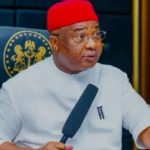
Governor Hope Uzodimma of Imo State is, in my considered opinion, a politician who understands the meaning of maturity, wisdom and strategic silence. He is intelligent, politically calculating and sufficiently confident not to waste his energy on unnecessary public altercations. He is a man of few words who knows when to speak, when to remain silent and, more importantly, when to treat political opponents as human beings rather than enemies.
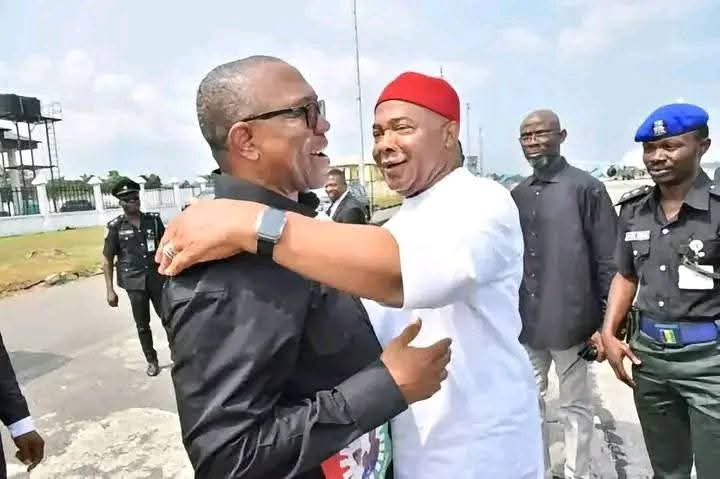
Despite being the Chairman of the APC Governors Forum, Governor Uzodimma has not, to my knowledge, descended into the habit of publicly deriding or addressing Mr Peter Obi in derogatory language. On the contrary, he has consistently treated him with brotherly respect, both during the 2023 presidential campaigns, afterwards and during this 2026/2027 presidential campaigns. Whenever Peter Obi visits Imo State for political engagements, he enjoys an atmosphere of warmth and hospitality. Governor Uzodimma has demonstrated that one can disagree politically without becoming disagreeable personally.
Unfortunately, this level of political maturity appears to be missing in the dispositions of some other governors, particularly Professor Charles Soludo of Anambra State and Rev. Fr. Hyacinth Alia of Benue State, whose public comments and political postures towards Peter Obi have attracted considerable criticism.
At this point, I am tempted to ask two uncomfortable but necessary questions: Between Governor Hope Uzodimma and Professor Charles Soludo, who has demonstrated greater political wisdom and maturity? Does being a professor automatically make one wiser than a governor without that academic title? And between Governor Uzodimma and Rev. Fr. Hyacinth Alia, who appears to be demonstrating more convincingly the Christian virtues of humility, tolerance, charity and brotherhood? Does wearing a clerical identity or occupying a religiously significant office automatically translate into doing the will of God?
These questions are not intended to diminish academic distinction or religious vocation. Rather, they challenge us to look beyond titles and examine character. A professor may possess enormous intellectual accomplishments, but wisdom must also be evident in conduct. A clergyman may preach the Gospel with eloquence, but the authenticity of his Christian witness is equally measured by how he treats those with whom he disagrees. Likewise, a politician may belong to a different political party from his visitor, but that should not prevent him from demonstrating hospitality, civility and respect.
Governor Uzodimma may be a political opponent of Peter Obi, but he has shown that political rivalry does not require personal hostility. That is a lesson some of our political leaders, irrespective of their academic qualifications or religious credentials, urgently need to learn. Democracy is not a licence to insult, intimidate or humiliate opponents. It is a system that demands tolerance, mutual respect and the recognition of the political rights of others.
Indeed, the Word of God is active and alive. Our Lord Jesus Christ reminds us that “the last shall be first, and the first last” (Matthew 20:16). Perhaps this biblical principle offers a timely lesson to those who occupy exalted positions or pride themselves on impressive titles. In the final analysis, it is not the title one carries, the office one occupies or the noise one makes that establishes greatness. It is the wisdom one demonstrates, the dignity one preserves and the humanity one extends to others.
Sometimes, the man who speaks less demonstrates greater wisdom than the one who speaks endlessly. And sometimes, the man without the most impressive title displays the character that those with the most impressive titles ought to emulate.
Rev Fr. Ben Amuchie, a respected clergyman, a lecturer, prolific writer, and seasoned public affairs analyst, writes on how Governor Hope Uzodimma is demonstrating that political differences need not destroy human relationships, dignity and brotherhood.