Verdict: False and misleading
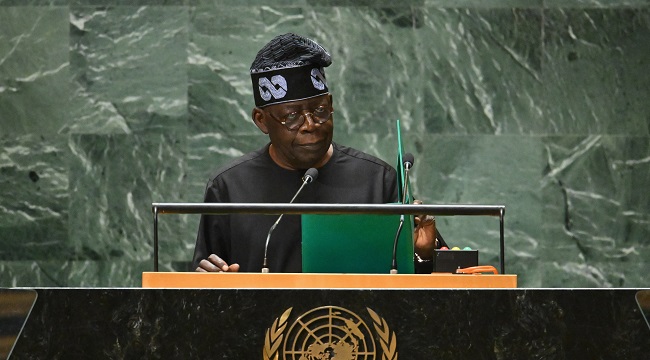
Claims circulating on social media suggesting that the United States Federal Bureau of Investigation (FBI) has threatened to arrest President Bola Ahmed Tinubu when he travels to New York for the United Nations General Assembly are not supported by credible evidence.
Nigeria’s Permanent Representative to the United Nations, Ambassador Jimoh Ibrahim, has publicly dismissed the reports, saying the Nigerian Mission to the UN had received no communication from the United States government indicating that President Tinubu would face arrest, restriction or any other legal impediment during the UN General Assembly.
But there is an important distinction that should not be lost in the political argument.
It is not accurate to say simply that the United States could “never” arrest a foreign president under any circumstances. International law is more nuanced than that. The relevant question is whether a sitting, recognised head of state such as Tinubu could lawfully be arrested by U.S. authorities while travelling to the United Nations in New York for official UN business.
On the evidence and legal framework currently available, there is no indication that such an arrest is planned or legally available in the circumstances being circulated online.
What started the rumour?
The latest claims appear to have been fuelled by renewed discussion of President Tinubu‘s historical dealings with U.S. authorities and a 1993 civil forfeiture proceeding involving money held in accounts associated with him.
Those two issues should not be confused.
Ambassador Ibrahim said Nigeria’s UN mission had received no notification from Washington that Tinubu would be arrested or prevented from attending the General Assembly. He also pointed to the protections contained in the 1947 Agreement between the United Nations and the United States concerning the UN Headquarters.
There is therefore a significant difference between political speculation about what might happen and an actual arrest warrant, criminal charge or diplomatic notification from the U.S. government.
No credible evidence has emerged showing that the FBI has issued an arrest threat against Tinubu for his UNGA attendance.
What does the 1947 UN-US Headquarters Agreement actually say?
This is one of the most important parts of the story — and also one of the areas where social-media explanations have gone too far.
The United States and the United Nations signed the Agreement Regarding the Headquarters of the United Nations on June 26, 1947. It entered into force later that year and establishes the legal arrangements governing the UN Headquarters in New York and the relationship between the UN and its host country.
Section 11 is particularly relevant.
It provides that U.S. federal, state and local authorities shall not impose impediments on the transit to or from the UN Headquarters district of representatives of UN member states, UN officials and certain other persons travelling on official UN business.
The agreement further provides that U.S. authorities shall afford necessary protection to qualifying persons while they are travelling to or from the UN Headquarters district.
In plain language, the agreement was designed to ensure that the United States, as host country, does not obstruct representatives of UN member states from reaching the organisation’s headquarters to perform their official functions.
That protection is particularly important during the General Assembly, when presidents, prime ministers and other senior representatives of member states travel to New York.
The agreement is still reflected in U.S. federal law. Section 11 is reproduced in Title 22 of the United States Code, which states that U.S. federal, state and local authorities shall not impose impediments to the transit of qualifying representatives to and from the UN Headquarters district.
But there is an important legal qualification
Section 11 should not be interpreted as meaning that every foreign president has a completely unrestricted right to travel anywhere in the United States regardless of U.S. law.
Its central protection concerns transit to and from the UN Headquarters district for persons covered by the agreement.
Nor does Section 11, standing alone, constitute the entire legal basis for a president’s personal immunity.
That distinction matters because a proper fact check should not replace one exaggerated claim with another.
What protection does President Tinubu have as a sitting head of state?
The second and more important legal issue is head-of-state immunity.
Under customary international law, incumbent senior state officials enjoy certain immunities from the jurisdiction of foreign states while they remain in office. The International Court of Justice examined this principle in its landmark 2002 judgment in Arrest Warrant of 11 April 2000 (Democratic Republic of the Congo v. Belgium).
The case concerned an arrest warrant Belgium had issued against the then incumbent Congolese Minister for Foreign Affairs.
The ICJ held that an incumbent foreign minister enjoyed immunity from foreign criminal jurisdiction and personal inviolability while in office. The Court explained that the purpose of such immunity is not to provide a personal privilege or establish impunity, but to ensure that the official can perform the functions of the state without interference by another country.
The principle is highly relevant to understanding why the prospect of U.S. authorities simply arresting a sitting, recognised Nigerian president during an official UN visit is fundamentally different from arresting an ordinary visitor to America.
Immunity is not the same thing as innocence
This point is often lost in political arguments.
Diplomatic or jurisdictional immunity does not mean that a person can never be accused of wrongdoing, investigated, prosecuted or held accountable.
It means that, while the immunity applies, the courts and law-enforcement authorities of another state may be restricted from exercising jurisdiction over that official.
The ICJ expressly distinguished immunity from criminal responsibility.
In other words, immunity can prevent a foreign court from exercising jurisdiction at a particular time without declaring that the underlying conduct could never constitute an offence.
That distinction is crucial.
A sitting president can therefore have immunity from foreign criminal jurisdiction without international law declaring that presidents are above the law.
Does UN status itself give Tinubu immunity?
Not exactly.
Another commonly repeated explanation says that Tinubu cannot be arrested because everyone attending the UN automatically enjoys diplomatic immunity.
That is an oversimplification.
The UN Charter provides that representatives of member states and UN officials enjoy privileges and immunities necessary for the independent exercise of their functions in connection with the organisation.
The 1946 Convention on the Privileges and Immunities of the United Nations further establishes privileges and immunities for representatives of member states, UN officials and experts on UN missions.
There are therefore several overlapping legal protections involved:
- the privileges and immunities associated with UN functions;
- the 1947 UN-US Headquarters Agreement;
- the protection of official representatives travelling to the UN;
- and, separately, the customary international-law principles concerning the immunity and inviolability of incumbent senior state officials.
For President Tinubu, his status as Nigeria’s sitting head of state is especially important.
What about the 1993 U.S. case involving $460,000?
This is another area where social-media claims require careful examination.
There really was a U.S. federal forfeiture proceeding in 1993 involving funds held in an account in Bola Tinubu’s name.
The U.S. District Court for the Northern District of Illinois ultimately ordered the forfeiture of $460,000. The court record described the money as representing proceeds of narcotics trafficking or property involved in financial transactions covered by U.S. money-laundering statutes.
However, describing that proceeding as a criminal conviction of Tinubu for drug trafficking would be inaccurate.
The case was a civil forfeiture proceeding involving property, rather than a criminal trial in which Tinubu was convicted and sentenced.
That distinction was also recognised by Nigeria’s Presidential Election Petition Tribunal in 2023, which found that the evidence before it established a civil forfeiture proceeding and did not establish that Tinubu had been arraigned, entered a plea or been sentenced in a criminal case in the United States.
So both of the following statements can be true:
There was a documented U.S. forfeiture proceeding involving $460,000 associated with an account in Tinubu’s name.
And:
That proceeding did not result in a criminal conviction of Bola Tinubu for drug trafficking.
Serious fact-checking requires both facts to be reported.
Is there a current U.S. arrest warrant for Tinubu?
The available evidence does not establish that there is.
More importantly for the current UNGA controversy, Nigeria’s Permanent Representative to the UN says the Nigerian Mission has received no communication from the U.S. government indicating that Tinubu would be arrested or have his movement restricted during the General Assembly.
There has also been renewed litigation and public discussion in the United States concerning the release of historical FBI, DEA and other government records relating to investigations from the early 1990s. That development has helped revive online speculation about Tinubu’s past in the United States.
But a dispute over the release of historical investigative records is not the same thing as an arrest warrant.
Recent reporting on the matter has also noted that a 2003 communication from the American Consulate in Lagos reportedly stated that an FBI records check found no criminal arrest records, wants or warrants for Tinubu at that time.
That historical FBI check should not be misrepresented as proof that no conceivable U.S. investigation could ever exist today. But neither does the existence of old investigative records establish a present-day arrest warrant.
Could the United States ignore diplomatic protections and arrest a foreign president?
That is where the viral claim becomes legally misleading.
The United States is sovereign over its territory. It does not surrender its entire criminal jurisdiction simply because a foreign leader enters the country.
However, international law places significant restrictions on the exercise of jurisdiction over incumbent foreign leaders.
For a sitting, recognised head of state attending an official UN event, an attempted arrest would raise serious issues involving head-of-state immunity, the United Nations’ privileges and immunities, the Headquarters Agreement and the United States’ international obligations.
It would also create an extraordinary diplomatic confrontation between Washington, Abuja and the United Nations.
That is very different from saying that a foreign president can never be arrested anywhere in the world.
The distinction is not merely theoretical.
The legal status of an incumbent leader can depend on questions such as whether the person is recognised as the legitimate head of state, what jurisdiction is attempting the arrest, what legal instrument is being relied upon and whether an applicable exception or waiver exists.
Therefore, the responsible formulation is not “international law makes it absolutely impossible for America to arrest any president under any circumstances.”
The more accurate conclusion is that there is no evidence that the United States intends to arrest Tinubu, and the legal framework surrounding a recognised sitting Nigerian president travelling to the UN for official business provides substantial protection against such an action.
Why the viral “FBI will arrest Tinubu at UNGA” claim fails the fact check
The claim falls apart for several reasons.
1. There is no verified evidence of an arrest threat
Nigeria’s UN representative has said the Nigerian Mission received no communication from Washington indicating that Tinubu would face arrest or movement restrictions.
2. The UN Headquarters Agreement protects official transit
Section 11 of the 1947 Headquarters Agreement prevents U.S. federal, state and local authorities from imposing impediments on qualifying representatives travelling to and from the UN Headquarters district.
3. Tinubu is a sitting, recognised head of state
The customary international-law rules concerning the immunity and inviolability of incumbent senior state officials provide an additional and highly significant legal barrier to the exercise of foreign criminal jurisdiction.
The ICJ’s Arrest Warrant judgment provides an important authoritative statement of that principle.
4. The 1993 forfeiture case was not a criminal conviction
The existence of the old forfeiture case does not establish that Tinubu is currently wanted by U.S. law enforcement or that he was criminally convicted in that proceeding.
5. An old investigation is not automatically a current arrest warrant
The renewed controversy over historical FBI and DEA records does not, by itself, demonstrate the existence of a present-day warrant or a plan to arrest the president at UNGA.
Verdict: FALSE
The viral claim that the FBI has threatened to arrest President Bola Tinubu when he attends the United Nations General Assembly in New York is false and unsupported by credible evidence.
There is no verified indication that the U.S. government has issued such an arrest threat.
The legal circumstances also make the claim highly implausible. President Tinubu would be travelling to the United Nations as the sitting head of state of a UN member country, bringing into play the 1947 UN-US Headquarters Agreement, UN privileges and immunities, and the customary international-law protections attached to incumbent senior state officials.
However, it is equally important not to turn that conclusion into another misleading absolute.
The Headquarters Agreement does not mean the United States has surrendered all jurisdiction over every foreign president who enters American territory. Nor does diplomatic immunity mean permanent immunity from criminal responsibility.
What it does mean is that the circumstances surrounding a sitting president’s official UN visit are governed by a very different legal framework from those applying to an ordinary person entering the United States.
And, in the case of Tinubu’s forthcoming UNGA attendance, there is presently no credible evidence that the FBI is preparing to arrest him.
The old 1993 forfeiture case may continue to generate political controversy. It may also continue to attract public interest as historical U.S. records are debated and sought through litigation.
But turning that decades-old civil forfeiture proceeding into a claim that the FBI is waiting in New York to arrest a sitting Nigerian president at the United Nations is a leap that the available evidence simply does not support.
9News Nigeria Fact Check: The claim is FALSE.