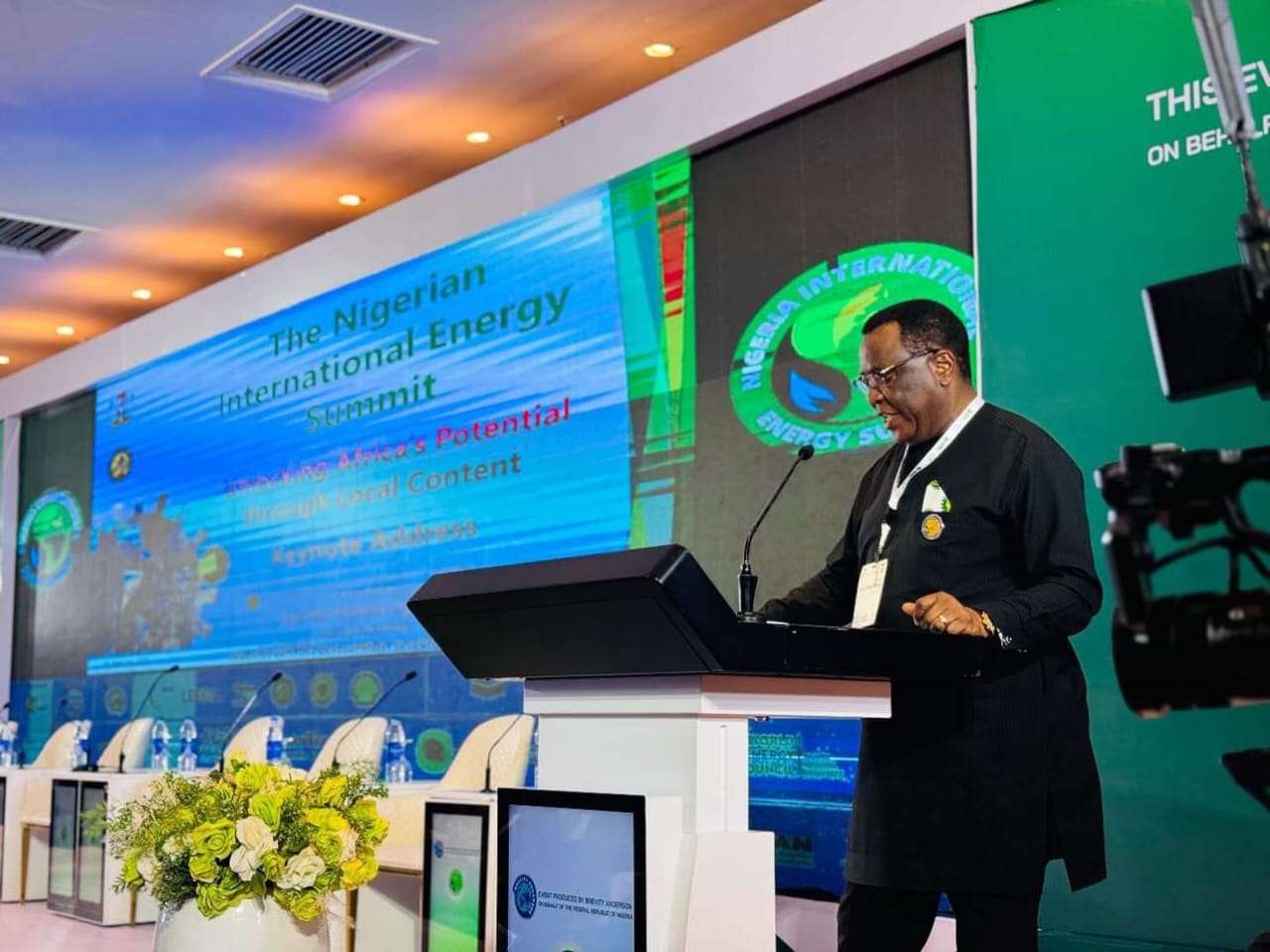
The Executive Secretary of the Nigerian Content Development and Monitoring Board (NCDMB), Engr. Felix Omatsola Ogbe, has called on stakeholders in Africa’s oil and gas sector to establish a unified local content framework. Speaking at the Nigerian International Energy Summit (NIES 2025) in Abuja on Tuesday, he emphasized that such a framework would harmonize policies, foster cross-border partnerships, and enhance economic prosperity across the continent.
Engr. Ogbe stressed that local content is more than just a policy—it is a strategic tool for sustainable economic growth and energy security. He highlighted that the African Continental Free Trade Area (AfCFTA) presents a crucial opportunity to leverage local content for industrialization, ensuring that African nations extract, retain, and multiply value within their economies.
Maximizing Africa’s Energy Potential
In his keynote address titled “Unlocking Africa’s Potential through Local Content: Policies, Partnerships, and Progress,” Ogbe underscored the importance of capacity building, policy refinement, and strategic collaboration in driving Africa’s energy potential. He assured stakeholders that the NCDMB is committed to sharing best practices, co-developing industrial hubs, and creating synergies that will benefit the broader energy landscape.
Impact of Executive Orders on Oil & Gas Investments
The Executive Secretary also lauded President Bola Ahmed Tinubu for implementing Executive Orders that have positioned Nigeria as Africa’s leading investment destination in the oil and gas sector. He noted that these orders have significantly reduced the contracting cycle for oil and gas projects from 36 months to just six months, thereby accelerating project approvals, eliminating bureaucratic delays, and boosting investor confidence. As a result, four Final Investment Decisions (FIDs) were recorded within a year, marking a major milestone for the industry.
Strengthening Local Content in Nigeria
Highlighting Nigeria’s success in local content development, Engr. Ogbe pointed to job creation and economic advancement through increased local participation in the oil and gas value chain. He outlined various initiatives spearheaded by the NCDMB, including:
- The Nigerian Content Intervention Fund (NCIF): Providing affordable financing to indigenous businesses for asset acquisition, expansion, and service delivery.
- Human Capacity Development (HCD) Programmes: Training thousands of Nigerians in specialized industry skills.
- Project 100 Initiative: Supporting indigenous service companies, some of which now operate on an international scale.
The Board is also developing seven oil and gas industrial parks across Nigeria to boost local manufacturing of equipment, components, and spare parts. Major construction is expected to conclude by year-end, and interested investors are encouraged to engage with the Board for allocation in these parks.
Driving Local Ownership in the Oil & Gas Sector
Among NCDMB’s key policy instruments is the Nigerian Content Equipment Certificate (NCEC), aimed at increasing in-country value addition through local ownership of equipment and facilities. Another major success is the Marine Vessel Categorisation Implementation Strategy, which has seen indigenous ownership of marine vessels rise from less than 8% in 2010 to over 60% today.
Engr. Ogbe reiterated NCDMB’s commitment to fostering industrial growth, enhancing local participation, and ensuring sustainable development in Africa’s oil and gas sector. He urged stakeholders to work collaboratively towards a future where Africa fully harnesses its energy resources for the benefit of its people and economies.