Where is Democracy in Nigeria?
By Auwal Ahmed Ibrahim, Goronyo
The basic logic of democracy is simple; it is supposed to be the government of the people, by the people, and for the people. In practice, however, in Nigeria, that definition has taken on a different coloration because the opposition and the media are, in many instances, restricted in exercising freedom of speech and democratic rights.
The media, as the Fourth Estate of the Realm, is constituted to serve as the watchdog of society and should be allowed to cover and report information without infringement or harassment. Political opposition should also be allowed to operate within the foundations of democracy and the provisions of the Nigerian Constitution without intimidation.
When democracy returned to Nigeria in 1999, leaders blamed every failure on the system itself, calling it a “nascent democracy” that needed time to grow. Yet that was the period when democracy appeared to flourish and worked for many citizens of the country despite being a relatively young system of governance. Twenty-seven years later, the system has matured, but the core doctrines of freedom, tolerance, justice and accountability still seem diluted. Many of the practices that defined the early, hopeful years of the Fourth Republic have faded or have been deliberately restricted because opposition leaders no longer enjoy the political space they once had.
At the rebirth of democracy in 1999, opposition parties had visible political space. Posters, billboards and political activities were seen and felt across the country. Political parties freely contested elections, and aspirants challenged governors and even the President within the ruling party. Today, party leaders dominate the political structure, steering its affairs and determining its direction. That culture of political participation and inclusion has gradually been eroded, giving way to a one-man style of leadership. Presidents and governors now often emerge from party primaries with little or no serious competition, returning as elected candidates almost unopposed.
The political space has shrunk. Opposition parties have limited opportunities to campaign, remain visible, comment on national issues and exercise their democratic freedoms. Even the media faces challenges in reporting government activities because some media organisations are labelled enemies of the government simply for reporting facts that matter to the public. The government now appears to favour pro-government media by granting them greater access to official information while sidelining or harassing others for reporting the truth.
Go around any state in Nigeria and the subjugation of democracy becomes evident when you count the number of opposition billboards compared to those of the ruling party, not only in the cities but also in other parts of the state. Opposition members are often silenced, subjected to injustice and, at times, harassed.
In the build-up to the 2023 general election, opposition parties in some states alleged that their billboards were defaced and campaign venues denied by state authorities. During the elections, some governors were accused of denying opposition parties access to public facilities for campaigns while allowing the ruling party unrestricted use of state resources.
When state institutions are used to favour one political party, elections cease to be contests of ideas and instead become contests of incumbency.
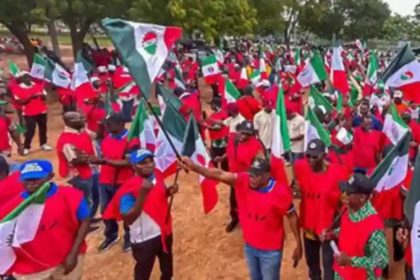
However, the internal crises currently affecting the ADC and some other opposition parties are perceived by many as being engineered by the ruling party to weaken and destabilise the opposition. If this perception proves to be true, then Nigerian democracy is in serious danger.
In a true democracy, public resources belong to all citizens. In Nigeria, however, access to some government programmes is often perceived to be tied to party membership. This undermines both the mission and the doctrine of genuine democratic governance.
During the distribution of COVID-19 palliatives in 2020, several states were accused of diverting food items to party loyalists. In Lagos and Plateau states, warehouses were discovered storing palliatives that were meant for all citizens. Reports alleged that some of the hoarded items were intended to be distributed during elections to influence voters.
Employment and empowerment programmes in many states, such as S-Power in Sokoto and N-Power at the federal level, have repeatedly faced allegations of favouring party members and supporters. In 2021, some local governments in Northern Nigeria were reportedly accused of making party membership cards a requirement for accessing fertiliser subsidies, grants and scholarships. Such practices contradict the principles of genuine democracy.
This transforms governance into patronage and reduces citizenship to possession of a party membership card. It also weakens democratic practice and breeds anarchy.
Democracy thrives on dissent and scrutiny. Yet journalists, activists and ordinary citizens who expose some of these perceived abnormalities often face intimidation and harassment for speaking the truth about government actions.
In 2020, the NBC fined some television stations over their coverage of the #EndSARS protests, a move widely condemned as an attack on press freedom. In 2021, the Federal Government suspended Twitter in Nigeria for seven months after the platform deleted a presidential tweet, citing concerns over misinformation. Activists and social media commentators have also been arrested on allegations of cyberstalking and spreading false information after criticising government officials. In several states, governors have shut down or threatened radio stations for hosting opposition party members.
When the press and citizens become afraid to speak, accountability dies, and government risks becoming the alpha and the omega in the affairs of the people, whether for good or bad. Democracy can only flourish when citizens are treated equally, with justice and freedom.
Democracy should accommodate disagreement without destroying relationships. Today, political party affiliation has increasingly become part of personal identity. During elections, families are divided and even marriages are strained because of political differences. Husbands and wives quarrel over party affiliation. Siblings become bitter rivals because of political choices. Many people have lost their lives as a result of do-or-die politics, while journalists have been imprisoned or detained over their reporting of election-related issues.
Traditional rulers have reportedly been dethroned or threatened for being perceived as not supporting the ruling party. Contractors and business owners often feel compelled to identify with the ruling party to secure government contracts, sidelining merit and excluding non-partisan citizens.
This creates a system where loyalty to political parties matters more than competence or the public good, thereby undermining merit and professionalism.
In a true democracy, the President and state governors should regard opposition members not as enemies but as fellow citizens. Inclusive governance means appointing competent individuals across party lines as ministers, ambassadors and advisers. It means that palliatives, educational support and government contracts should be available to citizens based on fairness rather than party membership.
INEC, the Police and the Judiciary must operate independently and without interference. Journalists, activists and opposition parties must be free to campaign, report and express themselves within the framework of the rule of law. Social intervention programmes should be based on need, not political affiliation.
Until then, we must continue asking: if government is truly “of the people,” democracy should not merely be about holding elections every four years. It should also be about the freedom to choose, the freedom to speak and fairness in the distribution of the commonwealth. Nigeria has the structure of democracy; we must also allow its spirit to lead us.