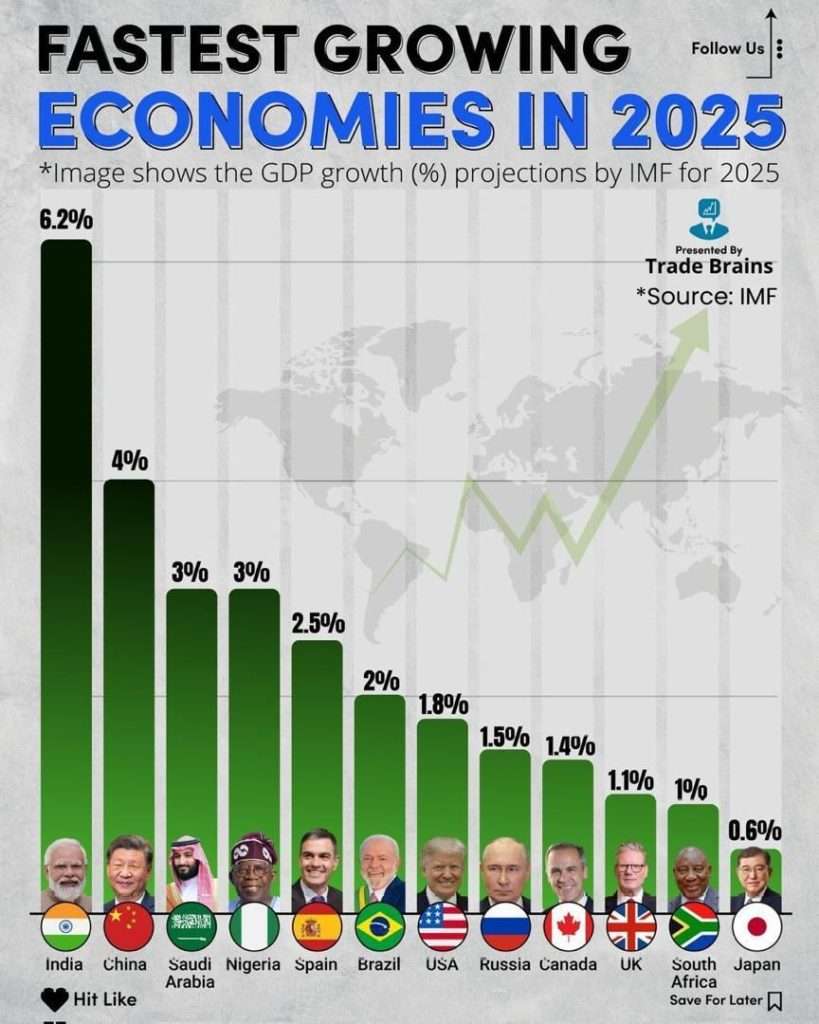
Nigeria’s economy is set to grow by 3% in 2025, according to the International Monetary Fund’s (IMF) April 2025 World Economic Outlook.
This forecast places Africa’s largest economy ahead of many developed nations, including the United States, which is projected to grow at a modest 1.5%.
The IMF attributes Nigeria’s growth to robust performance in the services and agriculture sectors.
These two sectors have remained key drivers of the country’s Gross Domestic Product (GDP), providing a buffer against external economic shocks and domestic fiscal pressures.
Despite this positive outlook, Nigeria continues to grapple with significant macroeconomic challenges.
Inflation remains outrageously high, with the annual rate projected at 26.5%—one of the highest among emerging markets.
The persistent depreciation of the naira has further strained household purchasing power and complicated efforts to stabilize the economy.
Nevertheless, Nigeria’s nominal GDP is expected to reach $520 billion in 2025, a milestone that could further solidify its position as the continent’s economic powerhouse.
The IMF’s projection offers cautious optimism, highlighting the need for continued structural reforms, exchange rate stability, and inflation control to sustain growth and improve living standards.
Currently, all eyes remain on fiscal and monetary policy decisions that could shape the country’s economic trajectory.