The participation of young people in leadership and politics is sweeping across the world today, and it is not a different story in Nigeria. This is also not limited to the popular role of ‘political thugs’ they usually play during election periods, but are seen at the center of decision making processes within and outside government coffers.
This development can be attributed to many reasons but the central arguments are basically two; the emergence of many young leaders making wonders in leadership roles across the globe, therefore motivating, impacting and influencing changes against the status-core in the country.
And secondly, it can be, to a lesser extent, attributed to, especially in governments across Nigeria, the failures of the old folks that have been ruling the country for decades, without any reasonable development or perhaps their slow pace to catch up with the rest of world.
Be that as it may, this development, coupled with several other global factors, are giving birth to new reforms and ways of doing things, and challenging the conservative ways, while paving ways for the younger minds.
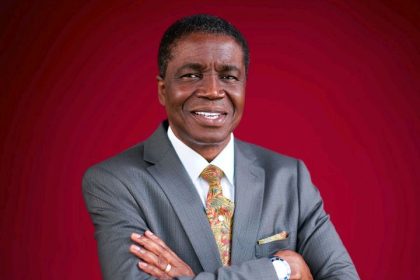
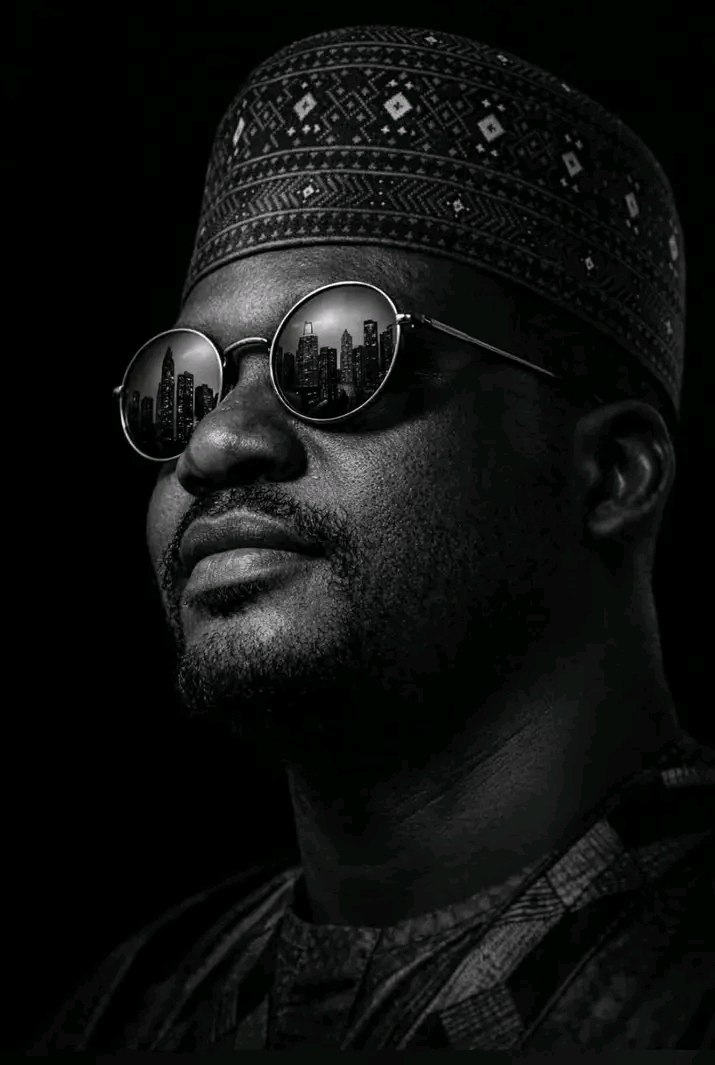
At the heart of these young minds catapulting developments in Nigeria is a veterinarian, whose journey into politics and public service is marred by sequence of events that shaped his story and contribution to the development of his society.
There are always conflicting thoughts and public arguments about one’s discipline, educational background and training when in relating to what he/she does later in life, and this particular personality is not an exception to that reality; in the fact, he is not only a medical doctor-turned politician, but animal specialists, now rolling and rocking directly with public officers to serve the masses.
Now busying himself in ensuring that every nook and crannies of his state, Yobe, recognizes and feel the impact of government, this public ‘’servant’’ is demonstrating that good leadership, if anything, can only be effectively efficient if leaders get involved directly with their masses, that it is no more fashionable to do it behind an executive desk.
His continues urge and thrive to serve people and the journey into public service is logically not accidental, and perhaps that would explain how he opted to do things differently.
The passion and stamina with which he carries the heavy burden upon himself is the culmination of some experiences and stories that built his personally.
Born in old Borno State, at the capital Maiduguri, in the early 80s, his childhood was characterized by events of different military coups, instability in government and other political and social crisis.
He began his education at a public school, Abbaganaram Primary School in Maiduguri and after graduating in 1990, he was sent to a boarding school in Madagali, Adamawa State to start junior secondary school where he only spent a year. His journey at Madagali ended amidst the jubilation sweeping across the present day Yobe State, his ancestral home when it was carved out of the old Borno in 1991.
Originated from Buni Yadi in Yobe, the future doctor’s father, a civil servant, was duty-bound to return home and help stir the infant territory, so also himself to study at home.
He joined Government College Damaturu, now Federal College Nguru and later moved to Government Senior Science Secondary School, Potiskum, where he obtained his West African Examination Certificate (WAEC) in 1996.
The later story of his life and achievements are not unconnected to his days in Potiskum where he said he met most of his friends and network. He has in several public statements mentioned some of his school mates and when and how they impacted his life. In May 2015, he recalled some of them on a Facebook post while congratulating Dr. Mohammed Musa Lawan, the first PhD graduate of their set. Among them are now university lectures, engineers, lawyers, humanitarian aid workers and politicians spread across Nigeria.
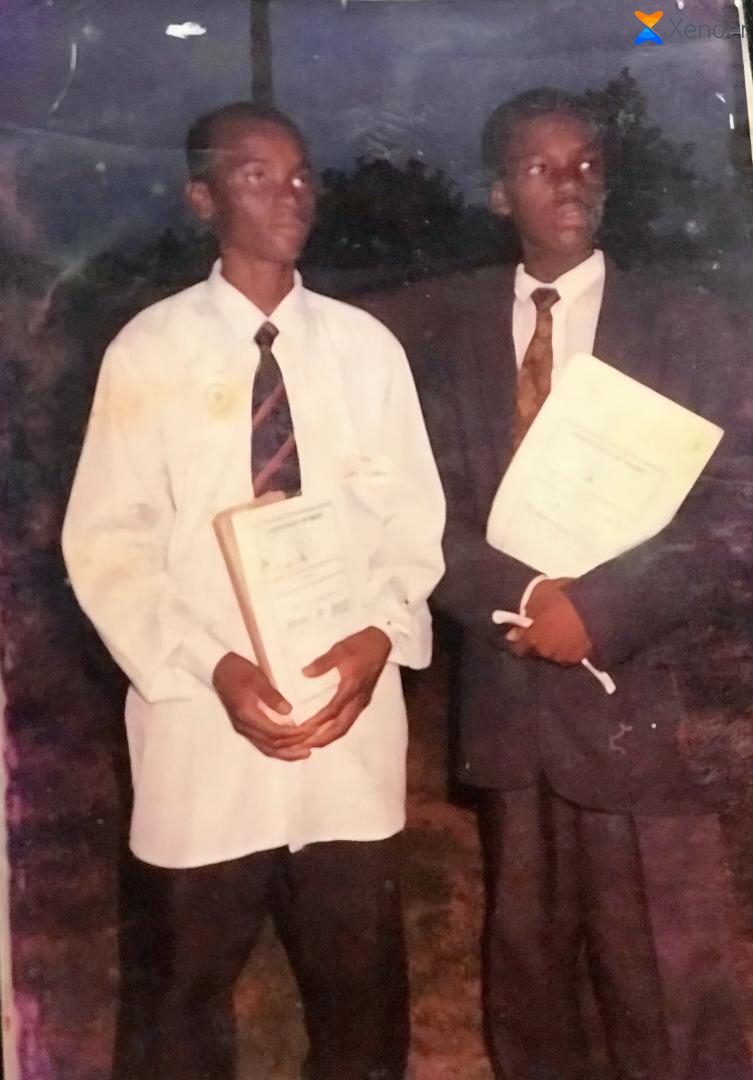
When Nigeria is celebrating its new born democracy with former President Olusegun Obasanjo as the president, the fresh graduate from Potiskum is battling with the choice of what to study in the tertiary education, a phenomenon that will shape his future. That was further complicated by his father’s wish of getting ‘a doctor’ son; but although he has a different dream, everything that involves mathematics will do for him. ‘‘My favorite subject was mathematics, I was obsessed with numbers and calculations but my ambition was to become a pilot,’’ he said during an exclusive interview at his Damaturu resident.
Like of a child’s dream and cinematic influence, he later desire to be a soldier or any uniform personnel but faith has its own plan.Despite growing up in a large polygamous family, life generally was modest for him. First as a civil servant in old Borno State, his father has two wives and many children. ‘I am from a middle class family, I am the second of about 20 children, although we don’t have material abundance, life was smooth for us growing up, we never lacked anything, especially basic needs,’’ he said.
The large family settings had equally equipped him with experience of different characters, and understanding their actions and inactions, became an asset that now describes his exceptional qualities in interacting directly with locals. The twist and turns finally happened in 1997 when he got admission into Veterinary Medicine at University of Maiduguri, known as Unimaid, after a remedial program, and that created a balance between his desire to meddle with numbers and ‘a doctor’ son for his father.
Typical of the Nigerian academic system, it took him nine years to graduate due to frequent distractions like workers strike. Available record has shown that there were about six strike action by the Academic Staff Union of Universities (ASUU) between 1999 to 2006 alone. After graduating in 2006, he is yet again confronted with the idea of what do to next and where to start.
Perhaps passing through the university, meeting different people and engaging in several activities has changed his perception on things, and molded in him a different orientation and vision for the future.Politics in university campus are usually the beginning and stepping stone for most politicians, and in Nigerian universities for instance, staying in hostels is close to a shortcut into active participation.
Like many successful politicians in the country, his surgeon into politics started at Unimaid campus.‘‘It was tough to get involved in campus politics at that time because unlike now, there are many rich students with influential parents in the university, we always get intimidated by the big boys,’’ he narrated.
And while many students find it difficult to weave themselves into academics, campus politics and other economic and social challenges, the student-doctor was privileged to witness the dying phase of the ‘golden generation’ in Nigerian universities, a time when basic amenities are at students’ reach, an opportunity to multi-tasked for young minds and he took it.
From activism to member of student assembly, he became a member of electoral committee twice for Student Union Government (SUG).
‘’That experience laid my foundation and interest in politics but it did not mature until later in life,’’ he said.That period was not only characterized by ease in the academic environment but abundant of opportunities after graduation.
This reality presented him with several choices after graduation and he got an automatic appointment with Yobe State government as Student Graduate, at grade six level. This however, was after finishing National Youth Service Corp (NYSC) at Kindila Veterinary Hospital, Kano.
Serving for the state government and practicing what he study wasn’t fulfilling for the fresh graduate and it did not last long until he jumps into the labor market. For the love of numbers, he did not hesitate to accept an offer to work at a bank, the former Intercontinental Bank, now Access Bank, Maiduguri branch in 2008.
Working in the bank was supposed to fulfil his passion for numbers and calculation for but it was not long until he found himself wanting something else.Rejoining the labor market, he sent application to Nigerian University Commission applying for job at Nigerian Prison Service, Ministry of Interior. As faith would have it, he was enlisted and after a short service training in Kaduna, screening in Gombe and internship at Potiskum, the young doctor landed at Prison Farm Centre.
‘’The job has a lot of hype at that time, it is three ranks above other graduate, it was like working in an oil firm or one of these lucrative government organizations like NNPC. With N190 monthly salary, I was earning more than enough and life was very comfortable,’’ he said.
Then came the Boko-Haram crisis. When the first terrorist war broke-in in 2009, the years that later followed saw the emergence of new security threat, especially among uniform personnel. The serial killings of policemen and other security workers in Maiduguri changed everything for him.
Confronted with the daily threat to life two years after the Boko-Haram first major armed encounter with security forces, he shared with his parents the thought of quitting the job.
Leaving prison service opened up a new phase of life for the former officer and set him up for a new challenge. In the same year, he sponsored himself to acquire a foreign Masters, an action that comes not without sacrifice.
He recalled during an interview how he sold his car and a plot of land to fund the post-graduate studies in Public Health and Bio-Statistics in Malaysia.‘’But I also had support from other people at some point, like Dr. Yerima Ngama, of the then ministry of finance who cater for some of my bills during studies,’’ he said.
Typical of his energetic characteristics, he did not take for granted the brief wait while anticipating for results in a foreign land, and took up an ad-hoc job, until he finally graduated in 2014 and returned to Nigeria.
The year 2014 was a chaotic period in the northeastern region of Nigeria, particularly in Borno and Yobe. It was a period when the terrorists’ activities were in all-time high.
That situation had created an unprecedented humanitarian crisis in the two states as many security personnel and thousands of civilians were killed while millions displaced.
In addressing that crisis, local and international NGOs trooped in numbers to bring, mostly immediate, relief to the victims and survivors of the conflict.
Informed with what awaits him, the now rejuvenated health worker was back home amidst that chaos, aiming to turn a new leaf to his life and career. Would Dr. Mohammed Goje now find his path, the path he has been searching within himself in the center of the crisis?
To be continued in part 2…
(PFACE Magazine)