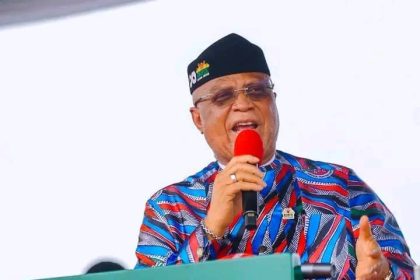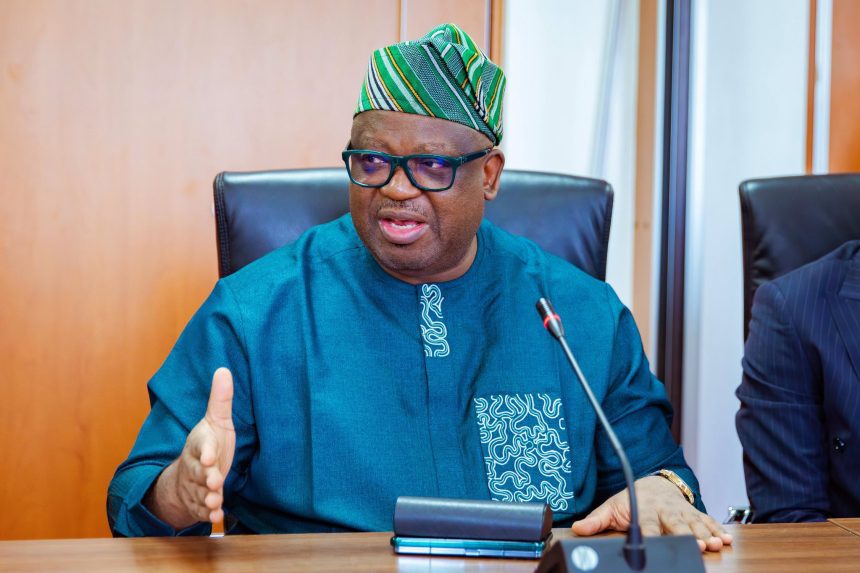
Mr. Kefas Ropshik was a former governorship aspirant of the People’s Democratic Party (PDP) in the 2023 election and the MD/CEO of Kefiano Group. In this interview, he says Plateau PDP is dissatisfied with the governor’s defection to APC.
Excerpts:
First of all, we want to clarify your political location and affiliation. Are you still in the PDP, or have you moved to the APC—or what some people call ‘PDAPC’?
No, no, no. I’m still in the PDP. Politics is peculiar to one’s environment, but for now, I remain in the PDP. I’m not moving anywhere at the moment—until any decision is taken collectively by stakeholders. But for now, I’m in the PDP.
But we’ve seen you recently with the APC , some of their meetings, conversations, even with the APC chairman. Is that actively being considered? We also hear similar things about the governor.
The truth is this: The governor has his own mindset and reasons, but for now, he has not officially moved. As for me, I remain in the PDP. I’m not moving anywhere for now, and that’s the position.
You have spoken like a true politician—’for now.’ But people are asking: which PDP do you belong to? Is it the FCT Minister’s PDP or the Tanimu Turaki PDP?
If we’re being realistic, the only recognised PDP right now—whether anyone likes it or not—is the Tanimu Turaki PDP. It followed due process, as far as some of us are concerned.
We all know the political skirmishes in the other faction. As a right-thinking person, I believe the Turaki PDP is the only recognised PDP for now, and that’s where we belong. I don’t belong to the other faction. I’m guided by conscience, and I do things rightly. So for now, we’re in the Turaki PDP.
Beyond politics, many people are more concerned about governance. Politics influences policy, and policy affects governance. The primary role of government is security and welfare, both of which have been questioned in Plateau State due to persistent insecurity. Clerics raised alarm, the U.S. Congress held hearings, and we heard harrowing stories of displacement and killing
How are your people faring, and how did things get this bad?
This is one of the most sensible questions to ask. Politics is about the people—that’s why I ventured into it. I’m a comfortable person, but I’m also a humanitarian. My life is centred on the people. As far as security is concerned, my people are in a very pathetic situation. The people of Plateau have suffered immensely over the years—persecution, displacement, killings. The issue of Christian genocide is real; there’s no sugarcoating it. My people are going through a lot. There are countless displaced persons, many undocumented. Some cases cannot even be properly recorded. Regarding the U.S. government designating Nigeria as a country of particular concern, I personally believe it’s long overdue and welcome.
The people have suffered greatly, and it’s time for international assistance. I frown at the narrative that the U.S. wants to invade Nigeria or take our resources. That’s not realistic. The Christian genocide is real.
That said, beyond religion, Nigerians—both Christians and Muslims—have suffered immensely from banditry, kidnapping, and killings. I don’t want this politicised or framed solely around religion. Nigeria is generally unsafe, but states like Plateau, Benue, Taraba, and Kaduna have suffered disproportionately over the years. Anyone trying to downplay this is wasting time. The American government has done in-depth research.
They have comprehensive records—down to individuals killed across villages, local governments, and states. We need help. There’s no pretence about it. That’s why I see this intervention as a welcome idea.
If you were at the table during these discussions, what kind of assistance would you want from the United States? Beyond narratives, everyone agrees the killings must stop. Isn’t it?
Nigeria has gallant security personnel, but what we lack is political will. I say this plainly. The issue is political will—especially in intelligence gathering and utilisation.Often, the intelligence exists, but the will to act decisively is lacking. Nigeria has the capacity to crush what’s happening. Assistance should focus on intelligence, technology, and equipment. Security today can be handled effectively using technology—drones, surveillance, and precision targeting.The U.S. likely already knows the locations and movements of these groups. They can provide intelligence and equipment, and I see nothing wrong with them being on ground to assist our military. One major issue we face is internal sabotage. If the U.S. operates independently, sabotage becomes difficult because they often don’t fully share intelligence before striking. So equipment, technology, and intelligence support are key areas where the U.S. can help.
Let’s briefly address politics again. There’s growing talk that your principal will defect to the APC. Governor Caleb Mutfwang attended the Ibadan Convention of the Turaki-led PDP. Some see this as anti-party activity, and there are concerns that his possible defection has divided the PDP in Plateau State. How do you respond?
Nobody in the PDP is taking this lightly. It’s already in the public domain that he’s likely heading to the APC. As a stakeholder, I’ll speak plainly. On the Plateau, PDP is seen almost like a religion. You know his background and the circumstances under which he was elected.
There was a ruling APC government at the time, but because of the organic support and fellowship among the people, he won and was declared governor. Things have been moving well, so many of us are confused about why he would move to the APC.
We can’t comprehend it. Personally, I think it’s a wrong move. He hasn’t even called key stakeholders to explain his reasons. So I can’t speak for him. But the general impression among PDP supporters on the Plateau is dissatisfaction. The mandate was given to him based on trust and party loyalty. Many feel betrayed and thrown under the bus.