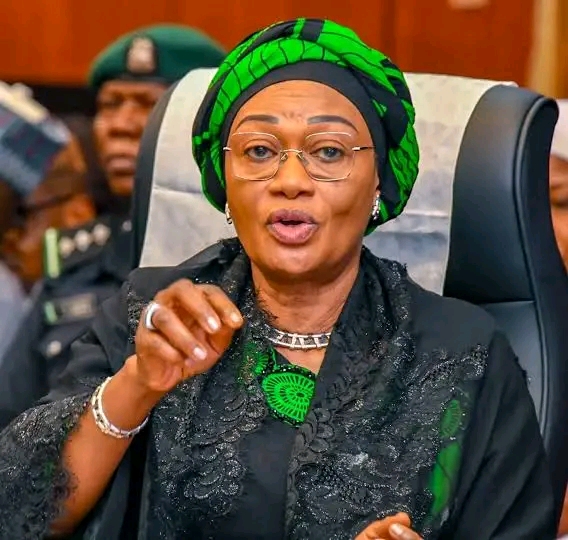
Nigeria’s First Lady, Senator Oluremi Tinubu, has promised that the country will move from economic reforms to greater prosperity if President Bola Ahmed Tinubu secures re-election in 2027.
She made the declaration on Saturday, October 10, at the All Progressives Congress (APC) North-Central Grassroots Mobilisation Network mega rally in Lafia, Nasarawa State.
Mrs Tinubu urged party members to mobilise support for President Tinubu, Vice-President Kashim Shettima and other APC candidates ahead of the 2027 general elections.
According to her, the President’s October 1 Independence Day address, titled “From Reforms to Prosperity,” outlines the next phase of the administration’s economic agenda.
She argued that the government’s ongoing reforms were beginning to stabilise the economy and expressed confidence that a second term would enable the administration to translate those measures into improved living conditions for Nigerians.
The First Lady cited infrastructure development, agricultural initiatives, food assistance programmes and education funding as areas where the government was making progress.
She also pointed to developments in the foreign exchange market and renewed investor interest as signs of economic improvement.
Mrs Tinubu said the government’s food support initiatives were designed to assist children, pregnant women and breastfeeding mothers, particularly those facing malnutrition and food insecurity.
She further urged APC supporters to take the administration’s message to communities across the country, describing President Tinubu as a leader prepared to make difficult decisions.
The rally was attended by APC National Chairman Nentawe Yilwatda, Imo State Governor Hope Uzodimma, Nasarawa State Governor Abdullahi Sule and other party leaders from the North-Central region. The gathering formed part of the party’s mobilisation efforts for the 2027 elections.
Economic Gains Versus Cost-of-Living Pressures
The First Lady’s promise comes amid continuing debate over whether the economic reforms introduced since 2023 are translating into tangible benefits for ordinary Nigerians.
The World Bank reported in October 2026 that Nigeria’s real gross domestic product grew by 4.2 per cent in the first half of the year, compared with 3.9 per cent during the corresponding period of 2025. It attributed much of the growth to services and a stronger contribution from agriculture.
However, the World Bank also highlighted the challenge of ensuring that economic growth creates sufficient jobs and significantly reduces poverty. Its country assessment estimated that 50.8 per cent of Nigerians—about 123 million people were living in extreme poverty in 2025 under the poverty threshold used in the report.
The figures underscore the challenge facing the administration as it seeks a second term: converting improvements in economic indicators into affordable food, lower living costs, better-paying jobs, reliable electricity and improved public services.
As the 2027 elections approach, the effectiveness of the government’s policies and the extent to which households experience measurable improvements are likely to remain central issues in the political debate.
For Nigerians, the key question is whether the promised transition from reforms to prosperity will produce sustained improvements in their daily lives.