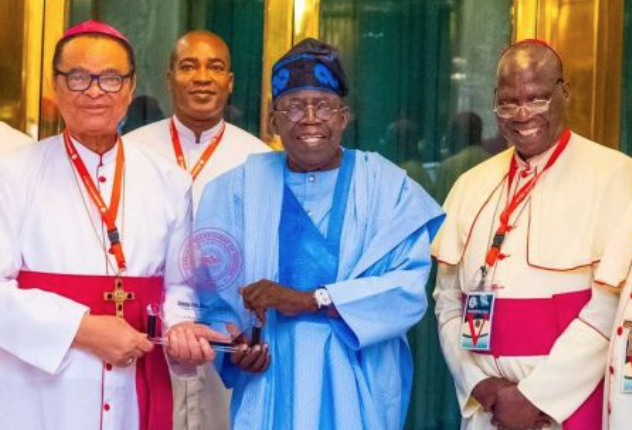
ABUJA (9News Nigeria) — Archbishop John Cardinal Onaiyekan has revealed that the Catholic Bishops who met President Bola Ahmed Tinubu at the Presidential Villa deliberately chose to present the harsh realities confronting ordinary Nigerians, saying they considered it their moral obligation to tell the President the truth rather than offer reassuring narratives about the state of the country.
Speaking during an interview on ARISE Television monitored by 9News Nigeria, the respected Catholic cleric disclosed that the bishops were aware their message would differ sharply from what the President regularly hears from many of those around him, including some religious leaders who often paint a more optimistic picture of national affairs.
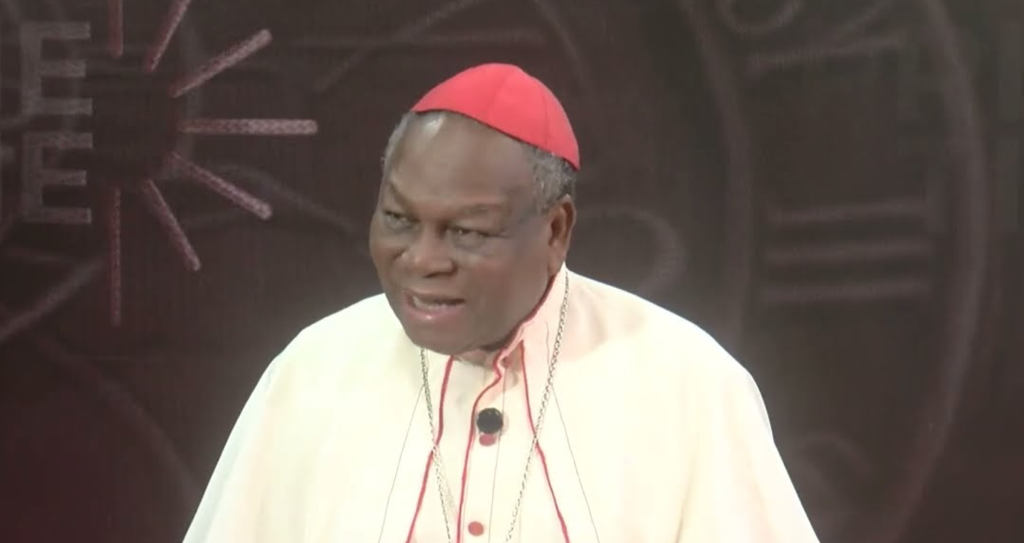
According to Cardinal Onaiyekan, the bishops sensed from the outset that President Tinubu was uncomfortable with the frank assessment they presented, but insisted that the Church could not remain silent while millions of Nigerians continue to grapple with economic hardship, insecurity and declining living standards.
“I was not surprised that he was not looking very happy,” the Cardinal said while reflecting on the atmosphere of the meeting.
He explained that the delegation understood that its presentation was unlike the messages the President routinely receives.
“We knew that this is different from the kind of statements that our President keeps receiving from all kinds of people. That is one of the things that worries us. There are so many people hanging around Mr. President, giving him a rosy picture of what the country is, which it is not.”
Cardinal Onaiyekan said the bishops believed they had a duty—not merely a choice—to help the President appreciate the realities facing ordinary Nigerians.
“We have the obligation to help him appreciate the reality of the situation in which we find ourselves. That is the reality we painted, which I know is not the kind of thing he wanted to hear.”
The cleric noted that despite the differing views, both sides expressed their positions candidly before leaving the meeting.
Asked whether the encounter could be described as frosty, Cardinal Onaiyekan argued that difficult national circumstances demanded honest conversations rather than ceremonial exchanges.
“When the nation is bleeding, you can’t expect a polite meeting with the Head of State.”
According to him, the bishops told President Tinubu that the economy was inflicting severe hardship on poor Nigerians, but the President firmly rejected that assessment.
“We told him the economy is not helping our poor people. He told us the economy is doing fine, practically speaking. He told us quite clearly that he did not agree with us.”
The Cardinal stressed that the bishops were not disappointed by the President’s response because they never expected immediate agreement.
“We didn’t expect him to agree with us. We have done our duty. We have delivered our message, and we have a feeling that somehow along the line somebody will show him the truth in a few of the things we said.”
The latest comments provide further insight into the closed-door meeting between President Tinubu and members of the Catholic Bishops’ Conference of Nigeria (CBCN), during which the bishops presented a candid assessment of the country’s worsening socio-economic and security challenges.
As previously reported by 9News Nigeria, the bishops had warned President Tinubu that Nigeria was “bleeding” under the weight of rising hunger, deepening poverty, widespread insecurity and growing public frustration. They urged the administration to urgently address the suffering of citizens and restore hope through practical governance rather than optimistic projections.
In response at the time, President Tinubu rejected the description of Nigeria as a nation in collapse, defending his administration’s economic reforms and insisting that the difficult measures being implemented were necessary to place the country on a path of long-term recovery.
The exchange underscored the widening gap between the government’s assessment of ongoing reforms and the concerns being raised by many religious leaders, civil society organisations and citizens over the daily realities of life across the country.
With Cardinal Onaiyekan’s latest account, the bishops’ meeting is now being portrayed not merely as a routine engagement between Church leaders and government officials, but as an occasion where the Catholic hierarchy sought to confront the President with realities they believe are often filtered or softened by those within his circle.
The development has renewed public conversation about the importance of independent voices in governance and whether leaders receive sufficiently candid feedback about conditions experienced by ordinary Nigerians before making policy decisions.