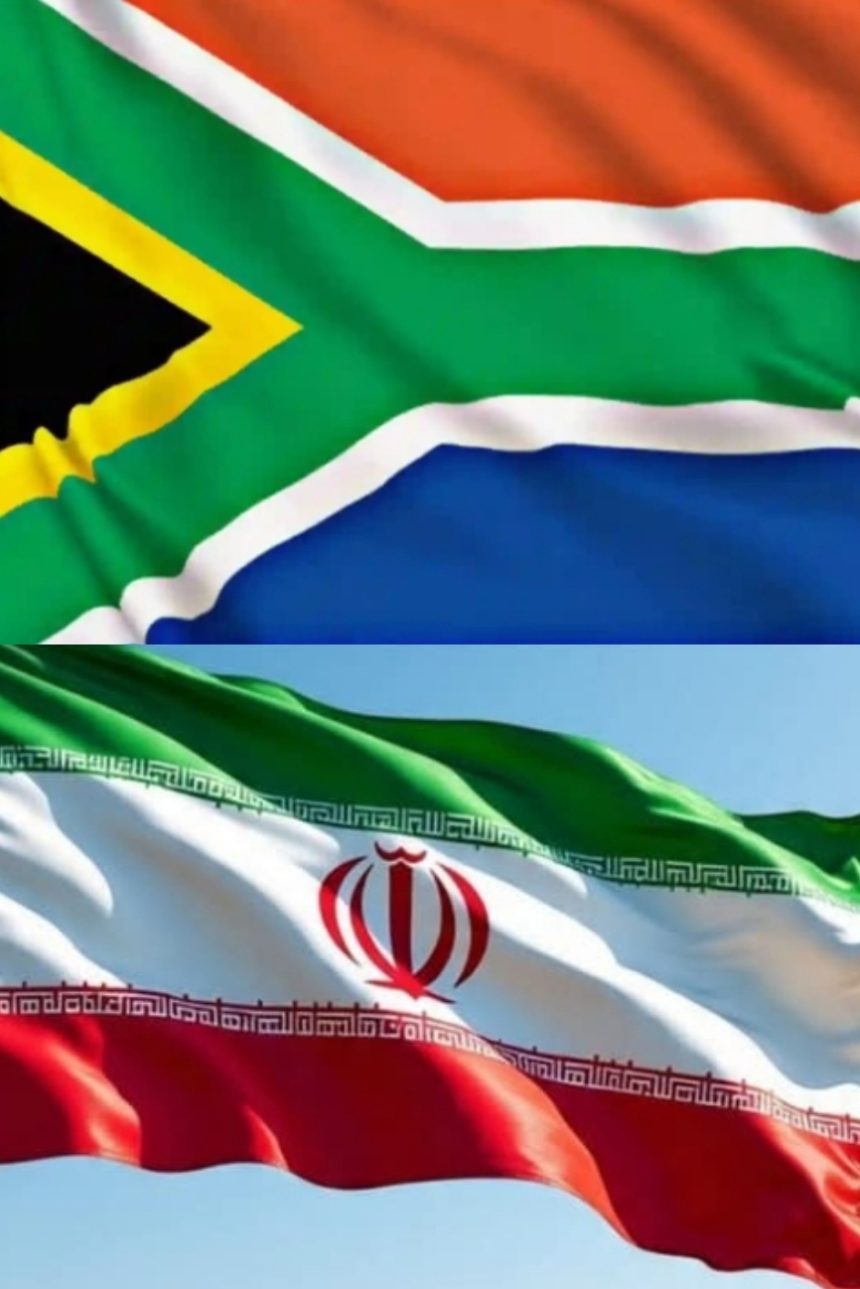
South Africa has allegedly become a hub for money laundering and fundraising activities linked to Iran, Hamas, Hezbollah and ISIS, according to a new report by the Amit Terrorism and Intelligence Research Institute (ITIC).
The report, titled “Funding Terrorism – Historical Review and Future Trend,” was authored by Dr. Udi Levi and published on August 13, 2026.
It attributes South Africa’s vulnerability to its diplomatic relationship with Iran and weaknesses in its financial regulatory system.
According to the report, the combination of these factors has allegedly turned the country into a “haven” for terrorism-linked money laundering and fundraising.
The report cited the financial network associated with Nazem Said Ahmad as an example of how South Africa’s banking system could allegedly be exploited.
It claimed that networks linked to Ahmad operate front companies in South Africa and conduct transactions worth millions of dollars through major banks, with limited enforcement by authorities.
The ITIC report placed South Africa alongside countries such as Iran, Qatar, the United Arab Emirates and Venezuela, which it described as jurisdictions that have facilitated the activities of sanctioned regimes and armed groups.
It argued that such countries can provide what it called “sovereign protection,” allowing terrorist financing networks to operate on a much larger scale.
Report Raises Questions Over Regulatory Gaps
The report also examined what it described as broader failures by governments and financial regulators in tackling terrorism financing.
It argued that state support, weak oversight and access to national banking systems have become major “force multipliers” for terrorist financing networks.
According to the report, these factors enable criminal and militant organisations to move funds on a scale that individual actors could not achieve on their own.
However, the ITIC report did not identify specific South African banks allegedly used by the Nazem Said Ahmad network.
It also did not state whether South African authorities had launched investigations into the allegations.
The report referenced the Financial Action Task Force (FATF), which previously placed South Africa on its grey list in 2023 over deficiencies in its efforts to combat money laundering and terrorist financing.
South Africa was removed from the FATF grey list in October 2025 after making significant progress in addressing the identified deficiencies.
The ITIC report also examined Saudi Arabia, Qatar, the UAE and Venezuela as part of its country-specific case studies on terrorism financing.
While it said Saudi Arabia had taken steps to dismantle jihadist and pro-Iranian financial networks, it portrayed South Africa as a country where regulatory weaknesses remain a concern.
The report is the first in a planned series by ITIC examining terrorism financing.
Future reports are expected to focus more extensively on the financial structures of Hamas and Hezbollah.
The allegations contained in the report have not been independently verified.