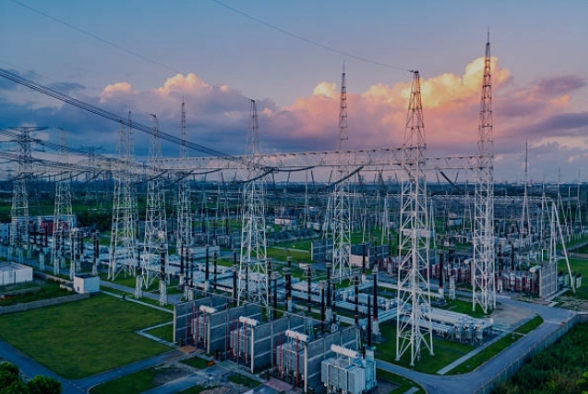
Nigeria may need as much as $23 billion in additional investment to address its electricity challenges and improve power supply nationwide, the Rural Electrification Agency (REA) has disclosed.
REA Managing Director, Abba Aliyu, made the disclosure on Friday in Abuja during the signing of a partnership agreement between the agency and Alpha Morgan Bank.
Under the agreement, Alpha Morgan Bank will provide up to N50 billion to support renewable energy developers participating in REA programmes.
Eligible developers can access revolving loans of up to N10 billion each, subject to the bank’s assessment and approval.
The bank will provide up to 70 per cent counterpart financing, with repayment periods ranging from 12 to 24 months.
However, Aliyu said the N50 billion facility was only a fraction of the funding required to address Nigeria’s electricity deficit.
He said the country needed about $23 billion in additional investment, while available funding was currently below $2.5 billion.
Aliyu warned that electricity demand would continue to increase as Nigeria’s population grows and more sectors become dependent on reliable power.
He listed population growth, digitalisation, artificial intelligence, widespread electrification and the expansion of data centres among the major drivers of future electricity consumption.
According to him, electricity will become increasingly important to transportation, agriculture, healthcare, education, manufacturing and other areas of the economy.
The REA chief also highlighted the growing role of renewable energy, particularly solar power, as technological advances continue to reduce the cost of solar generation and battery storage.
He said Nigeria must treat electricity infrastructure as a strategic priority to remain competitive as artificial intelligence, digital technology and data centres expand globally.
Aliyu disclosed that President Bola Tinubu had approved a $750 million renewable energy intervention aimed at deploying 1,350 mini-grids and extending electricity access to about 2.5 million Nigerians.
Despite the intervention, he stressed that additional financing would still be required to close the country’s power gap.
The REA is also expecting $119 million from the Japan International Cooperation Agency (JICA) to support interconnected and isolated mini-grid projects.
Aliyu further announced that the Renewable Energy Asset Management Company would be launched next week.
He said the company would manage renewable energy assets, attract private investment and recycle capital into new projects.
According to him, renewable energy assets valued at more than $300 million are currently located across Nigerian universities and could be leveraged to raise additional financing.
He also disclosed that Nigeria has developed a pipeline of about 3.7GW of local renewable energy manufacturing capacity, supported by investments estimated at $225 million.
The agency is also nearing completion of 288MW of interconnected mini-grid projects, with commissioning expected to commence in November.
Meanwhile, Alpha Morgan Bank Executive Director, Doyin Anyaehie, said the N50 billion partnership was designed to tackle one of the major challenges facing renewable energy projects — inadequate financing.
She said the bank was seeking to move beyond discussions about Nigeria’s power crisis by providing practical financial support for viable projects.
Anyaehie noted that unreliable electricity continues to affect businesses, schools, healthcare facilities and households, particularly in underserved communities.
She said the success of the partnership would ultimately be measured by its impact on communities and businesses within the next one to two years.
The agreement is expected to deepen collaboration between government programmes and private-sector financing as Nigeria works to expand electricity access and prepare for rising power demand.