Written by: Samuel Abasiekong-Abasiekong
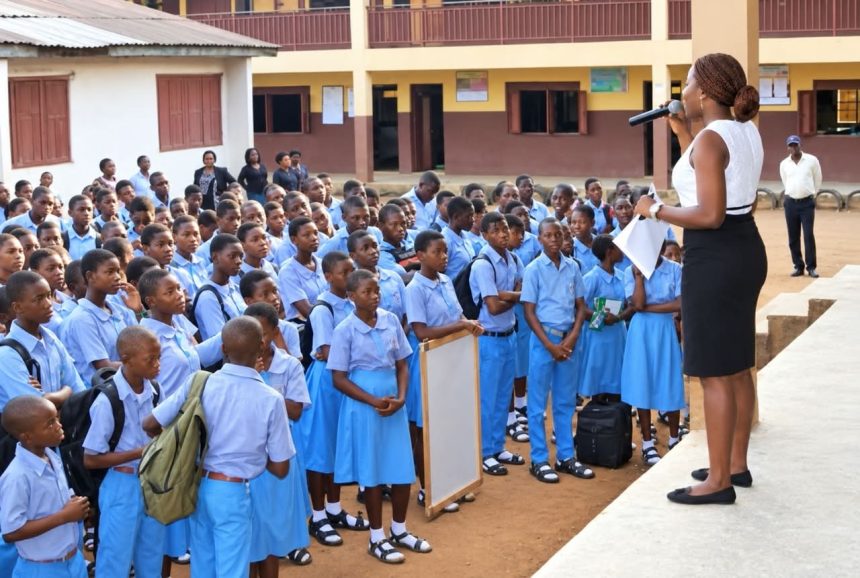
For millions of Nigerian families, September school resumption has traditionally been a season of excitement.
Children return to the classroom with new uniforms, school bags, books and shoes, while parents prepare to meet the demands of another academic session.
But in 2026, the excitement has been accompanied by growing financial anxiety.
As schools reopen for the 2026/2027 academic session, parents are having to deal with increased school fees alongside rising costs of food, transportation, fuel, electricity, rent and other household necessities.
The pressure is particularly significant because school resumption brings several expenses at the same time.
It is not simply tuition.
Parents have to pay school fees, buy textbooks and exercise books, uniforms, shoes, bags and other materials, while also providing money for transportation, feeding, school activities and, in some cases, accommodation.
Recent reports indicate that many private schools have increased their fees for the new academic session.
A September survey by Vanguard found that fees in several private schools had risen by between 30 and 40 per cent, with examples in Lagos showing tuition increasing from ₦86,000 to ₦124,000 per term in one school and from ₦250,000 to ₦320,000 in another.
The increase is not limited to tuition.
A separate report found that prices of textbooks for core subjects had risen by about 25 to 30 per cent in some markets.
This means that a family which managed to pay school fees last session may still struggle to meet the total cost of returning a child to school this year.
The latest inflation figures underline the wider economic environment in which families are making these payments.
The National Bureau of Statistics reported headline inflation of 15.39 per cent in August 2026, while food inflation stood at 19.57 per cent.
More significantly for parents, education costs have been rising faster than the general inflation rate.
Analysis of NBS data showed that education-services inflation accelerated to 10.72 per cent year-on-year in August 2026, up from 7.51 per cent in July.
That increase came just as families were preparing for the new academic year.
THE FUEL AND TRANSPORTATION PROBLEM
Transportation has become another major part of the school-resumption burden.
The recent rise in petrol prices has increased the cost of taking children to and from school, while school operators are also facing higher costs for running school buses.
Recent reports indicated that some school owners were considering reducing or discontinuing school-bus services because of rising fuel costs.
Some parents are therefore turning to tricycles, motorcycles, private transporters or neighbourhood arrangements to reduce the cost of daily school runs.
The renewed pressure on fuel prices has come at a particularly difficult time.
Reuters reported in September that petrol prices had reached about ₦1,400 per litre in Lagos and Abuja, with prices reaching about ₦1,500 in parts of northern Nigeria. Diesel prices had also risen above ₦2,000 per litre.
For parents who drive their children to school every day, the transportation bill can therefore become a substantial monthly expense.
SCHOOL FEES ARE ONLY PART OF THE STORY
For many households, the bigger problem is the cumulative cost.
A parent may pay tuition in one transaction, then discover that textbooks, uniforms, transportation, meals, examination fees, school activities and other charges require additional payments.
The result is that school resumption can consume a significant portion of household income within a relatively short period.
A recent BusinessDay survey of 140 parents found that 85.7 per cent of respondents reported tuition increases for the new academic term. The report also said some schools were offering staggered payment plans, while others maintained strict payment requirements.
For families with two, three or four school-age children, the financial burden can multiply quickly.
HOW ARE PARENTS COPING?
Parents are responding in different ways.
Some are spreading payments over several weeks or negotiating instalment arrangements with schools.
Others are borrowing money, cutting household expenditure or postponing other purchases.
Some families are moving their children from relatively expensive private schools to cheaper schools.
Others are keeping children in the same schools but buying fewer new items, reusing uniforms and school bags or purchasing second-hand materials where possible.
Some parents are also reducing transportation costs by arranging joint school runs with neighbours or using local transport operators.
These coping strategies, however, have limits.
A family already struggling to buy food cannot indefinitely redirect more of its income towards education.
THE HIDDEN ECONOMIC COST
The economic effect of school resumption is therefore not limited to the amount paid to schools.
Every additional naira spent on education has an opportunity cost for households.
Money used for school fees, books and transportation may mean less money available for food, healthcare, rent, electricity, savings, debt repayment or small-business investment.
This is particularly important at a time when food prices remain a major source of household pressure.
NBS data show that food and non-alcoholic beverages remained the largest contributor to headline inflation in August 2026.
For a low-income household, the choice may therefore become a difficult one: pay a school bill immediately or use the same money to meet another urgent household need.
THE BURDEN ON SCHOOL OWNERS
School proprietors are also facing their own economic pressures.
Private schools have to pay teachers and other employees, maintain buildings, purchase equipment, pay rent and electricity bills, provide security and transportation and cope with higher prices for fuel and other inputs.
Private-school proprietors have consequently defended fee increases as necessary to keep their institutions operating and retain teachers.
This creates a difficult economic chain.
When the cost of running a school rises, the school increases fees.
When fees rise, parents face additional financial pressure.
When parents struggle to pay, schools may experience delayed payments and cash-flow problems.
The result is pressure on both sides of the education system.
SCHOOL RESUMPTION ALSO CREATES BUSINESS
There is, however, another side to the economic story.
School resumption generates significant seasonal business activity.
Tailors receive orders for uniforms.
Booksellers sell textbooks and exercise books.
Shoe and bag dealers experience increased demand.
Transport operators gain additional passengers.
Food vendors and shops around schools also benefit from the return of pupils and students.
In communities across Nigeria, school resumption therefore creates temporary economic opportunities for thousands of small businesses.
Reports from Lagos, for example, have documented increased activity among traders selling school shoes, stockings, bags and other educational materials as families prepare for resumption.
But higher sales do not necessarily mean higher profits.
Many of these businesses are themselves paying more for fuel, transportation, rent, wholesale goods and other operating costs.
THE OUT-OF-SCHOOL RISK
The most serious consequence of rising education costs could be felt by children whose parents are unable to continue paying.
Nigeria already has a major education-access challenge.
UNICEF says about 10.5 million Nigerian children aged five to 14 are out of school, while economic barriers are among the factors contributing to educational exclusion.
A September 2026 UNICEF report also highlighted chronic underfunding of basic education, noting that government education expenditure as a share of total government spending fell from 9.3 per cent in 2015 to 3.6 per cent in 2023.
This makes the financial capacity of households increasingly important.
When families cannot afford school-related costs, children may miss classes, change schools or eventually leave education altogether.
The longer such interruptions continue, the greater the risk of learning loss and further educational inequality.
WHAT THE DATA SAY ABOUT SCHOOL EXPENDITURE
Nigeria’s household education expenditure data also show that the cost of education goes far beyond tuition.
The NBS General Household Survey records spending categories including tuition and other fees, textbooks and teaching materials, ancillary fees, school meals and transport, uniforms and school clothing, tutoring and other education-related expenses.
This is important because debates about school affordability can be misleading when they focus only on tuition.
A school may charge a relatively modest fee, yet the total cost of attendance can become much higher after transportation, books, uniforms, meals and other requirements are added.
THE PRESSURE ON FAMILY PRIORITIES
For parents, the central question is increasingly becoming how to balance education with survival.
Education remains one of the most important investments a family can make.
But parents cannot spend money they do not have.
For a worker whose income has not risen at the same pace as household expenses, a 30 per cent increase in school fees can represent a major reduction in disposable income.
For a family with several children, the effect is multiplied.
And for informal-sector workers whose income varies from day to day, meeting a large school bill at the beginning of a term can be particularly difficult.
THE BIGGER ECONOMIC QUESTION
The 2026 school-resumption experience therefore raises a broader question about the relationship between education and the Nigerian economy.
If education becomes increasingly expensive for households, more families may be pushed towards cheaper alternatives.
If children are unable to remain in school, the country risks deepening its existing education and skills gap.
But if schools are prevented from adjusting fees despite rising operating costs, some institutions may struggle to maintain teachers, facilities and services.
The challenge is therefore not simply about whether school fees should rise or fall.
It is about how Nigeria can make quality education affordable to families while ensuring that schools have the resources required to operate effectively.
BETWEEN EDUCATION AND SURVIVAL
For many parents, school resumption in September 2026 is no longer simply an annual educational routine.
It is an economic event that forces families to reorganise their finances.
Some are borrowing.
Some are negotiating payment plans.
Some are changing schools.
Some are buying used materials.
Some are reducing other household expenses.
And some may simply be unable to meet all the demands.
The excitement of children returning to school remains.
But behind that excitement is a financial reality that millions of Nigerian families cannot ignore.
School resumption has become a reminder of the wider cost-of-living crisis: when the price of educating a child rises at the same time as the cost of feeding, housing and transporting a family, parents are forced to make increasingly difficult economic choices.
For many households, the question is no longer simply, “Can we send our children back to school?”
It is increasingly, “How much of our household income can we sacrifice to keep them there?”