By Ezeh Emmanuel Ezeh Ph.D, DBA, GPOL (Oxon)
If the Anambra governorship election were to hold tomorrow morning, Professor Charles Soludo would likely be declared winner before noon the next day. Not because he’s riding a wave of popularity, but because the opposition is fractured and nearly beyond repair. The political terrain in Anambra today is not shaped by ideas or vision. It is shaped by chaos, fatigue, and a dangerous vacuum of leadership.
Soludo’s rise to power was once seen as a triumph of intellect and elite consensus. In 2021, his candidacy was embraced by a wide swath of Igbo intelligentsia and diaspora voices who saw in him a technocrat capable of transforming governance, setting a pathway toward the liberation of Alaigbo. But that dream has soured. His tenure has been marked by a growing disconnect from the expectations of Ndi Anambra and the wider Igbo nation. His rhetoric, often combative and dismissive, has alienated many. His governance style, more fist than finesse, has turned off those who once saw him as a bridge between the old guard and a new generation.

Take the story of Chika, a young entrepreneur in Awka who once campaigned for Soludo with passion. She believed his background in economics would translate into support for small businesses. But two years in, her business is struggling under the weight of multiple levies and inconsistent policies. “I feel betrayed,” she said. “We didn’t vote for this.”
Yet despite this growing disillusionment, Soludo remains the frontrunner. Why? Because the opposition is in disarray. As of today, four frontline candidates are in the race: Soludo for APGA, Ukachukwu Nicholas for APC, George Moghalu for Labour Party, and Nwosu Chukwuma for ADC. If all four go into the November 8 election without consolidation, it’s a guaranteed win for APGA. The math is simple: a divided opposition cannot defeat an incumbent with a loyal base and a well-oiled political machine.
If recent governorship elections in Anambra State between 2017 and 2021 are data we can base rigging strategy on, then with 234,071 votes, approximately 22% voter turnout in 2017, and just 112,299 votes, a 10.38% turnout in 2021, the rigging plans of APGA and APC for November 8 become clearer. With almost 250,000 votes at a counter price of ₦20,000 per vote, the cost of victory stands at ₦5 billion. That’s the price either party must be willing to pay.
So if indeed the APC and APGA strategy is built on vote buying and intimidation, then the price tag ranges between ₦5 to ₦7 billion. This is a figure both APGA and APC can pull off with ease. No wonder the political conversation between both camps has descended into a theatre of threats and distractions. There’s little talk of policy, no real engagement with the people’s needs. Instead, there’s a calculated descent into anarchy designed to scare voters away from the polls. It’s a strategy that worked in parts of Nigeria in 2023, and it’s being rehearsed again in Anambra. In fact, every election in Nigeria seems to be a rehearsal of a rigging strategy used before. For instance, the 2027 election may well mirror 2019, when INEC allegedly delivered sensitive materials to compromised institutions like the CBN and gave actors more time to execute the needed magic.
But this strategy can be defeated. The Obidient movement, still vibrant in the Southeast, holds the key. If Labour Party can mobilize upwards of one million votes, the tide could shift dramatically. The LP brand has already been etched into the subconscious of many Anambra voters, thanks to Peter Obi’s legacy and the party’s appeal to youth and urban voters.
This is the narrow path that George Moghalu must walk.
Moghalu is not a stranger to Anambra politics. He’s a seasoned player with a reputation for discipline and strategic thinking. But he faces a dilemma: Nwosu Chukwuma of ADC is also in the race, and their voter base overlaps. Between the two, one must step aside. ADC, while principled, lacks the grassroots presence and brand recognition to mount a serious challenge. Moghalu, on the other hand, benefits from LP’s momentum and the Obidient infrastructure.
There’s a lesson here from the 2019 Imo governorship race. Back then, multiple opposition candidates refused to step down, and the result was a fragmented vote that handed victory to a candidate with less than 30% of the total vote. History could repeat itself in Anambra if ego and ambition override strategy.
Nwosu has an opportunity to play the uncommon card, to bow out and endorse Moghalu. It would be a sacrifice, yes, but a strategic one. It would unify the anti-Soludo vote and present a credible alternative rooted in reform, youth engagement, and regional pride. It would send a message that the opposition is serious about winning, not just participating.
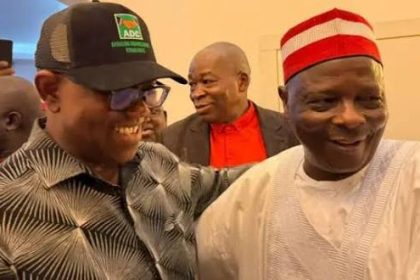
But this may not happen in isolation. In business school, we say every deal needs a hub, and that hub, in this case, is Mr. Peter Obi or someone he anoints. Yet here lies the challenge. Obi appears too careful, walking on eggshells to avoid political bruises. That caution plays directly into the hands of APGA and APC. If LP loses badly (as APGA in Anambra, Atiku’s ADC, and APC in Abuja hope) Obi may find the wind at his back diminished. Will he risk his legacy by staying silent, or will he step in to unify the movement he inspired?
What’s shocking is how Soludo, despite all efforts, is falling in public opinion. Even Madam Soludo, my UNEC PG course mate and a truly beautiful soul, is being dragged through the mud. The disappointment is palpable.
Take the story of Obinna, a university student in Nnewi who volunteered for LP during the last presidential election. He’s disillusioned by the violence and vote buying he witnessed, but he still believes in the power of numbers. “If we come out, we can win,” he said. “But we need one candidate, not four.”
And then there’s Mama Ifeoma, a market woman in Onitsha who has voted in every election since 1999. She sells vegetables and palm oil, and she’s tired of politicians who disappear after swearing-in. “I don’t want to waste my vote again,” she said. “Let them give us one person we can trust.”
Moghalu’s path is narrow, but not impossible. It requires strategic sacrifice, mass mobilization, and a clear message that transcends party lines. It requires the opposition to think beyond November 8 and imagine a future where Anambra is governed by ideas, not intimidation. Even Nicholas Ukachukwu is needed, not necessarily to win, but to hold the street against APGA’s ground game. Moghalu must reach out to him for alignment.
In the end, a three-horse race between APGA, APC, and LP – where unity prevails – could trigger a political upset that reshapes Anambra and the Southeast’s democratic landscape. After all is said and done, Anambra’s future won’t be decided by who run, it will be decided by who steps aside.