Nigeria is currently experiencing one of the most significant waves of political defections since the return to democracy in 1999.
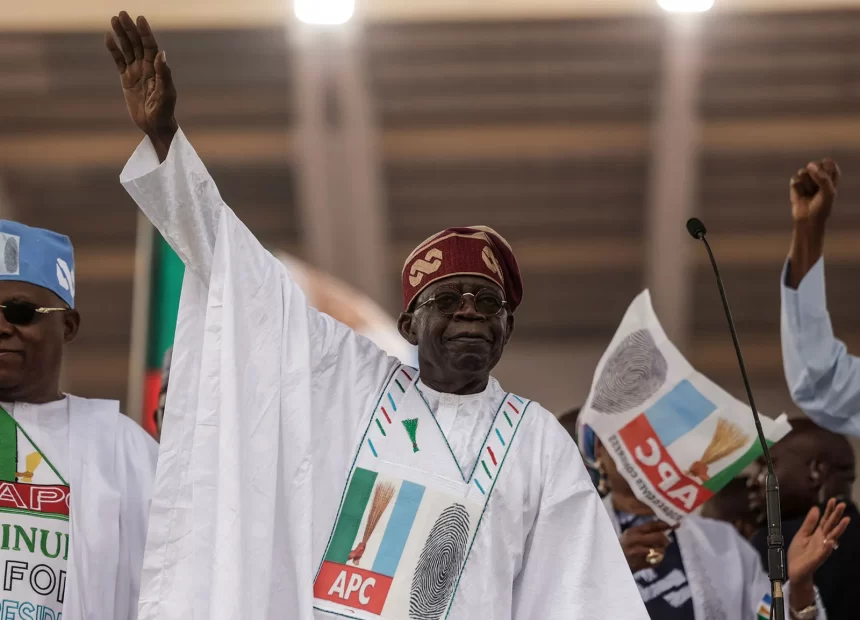
The year 2025 has been dominated by political realignments, as opposition governors gradually align with the ruling All Progressives Congress (APC) under President Bola Ahmed Tinubu’s administration.
The latest in this string of defections is Governor Peter Ndubuisi Mbah of Enugu State, who on October 14, 2025, formally announced his decision to leave the Peoples Democratic Party (PDP) for the APC.
His defection followed those of Governor Sheriff Oborevwori of Delta State and Governor Umo Eno of Akwa Ibom State, both of whom had earlier crossed over to the ruling party in the first half of the year.
With Mbah’s defection, Enugu joined the growing list of former PDP strongholds now under APC control; signaling a massive political shift ahead of the 2027 general elections.
Meanwhile, following Mbah’s announcement, attention has now turned to a select group of governors still holding the opposition flag, especially within the PDP and Labour Party.
The Big Question; Who is next ?
Among the remaining opposition governors are: Douye Diri (Bayelsa State) – A two-term PDP governor; Agbu Kefas (Taraba State) – A first-term PDP governor with a military background; Siminalayi Fubara (Rivers State) – Locked in a prolonged political battle with his predecessor, Nyesom Wike, now a minister in Tinubu’s cabinet; Ahmadu Umaru Fintiri (Adamawa State) – Widely respected within the PDP; Alex Otti (Abia State) – The only Labour Party governor in Nigeria; Dauda Lawal (Zamfara State) – A PDP governor in a largely APC-dominated region; Caleb Mutfwang (Plateau State) – Representing one of the few PDP-controlled states in the North-Central region; Abba Kabir Yusuf (Kano State) – Elected under the New Nigeria People’s Party (NNPP); Bala Mohammed (Bauchi State) – A PDP governor in a key North-East state, Bala Mohammed remains influential.
The APC’s growing attraction among opposition governors is being attributed to federal influence and political pragmatism, with much credit to the Tinubu administration.
With Mbah’s defection, APC now controls 29 out of Nigeria’s 36 states, consolidating dominance across most regions.
However, there are certain factors driving opposition governors toward the ruling party, including; Access to Federal Resources, Political Survival and Security, APC’s Machinery and Grassroots Networks, Investment incentives, amongst others.
If even one or two of the remaining opposition governors cross over before 2027, Nigeria’s democracy will be left with one overwhelmingly dominant party.
Evidently, President Tinubu’s influence deepens across the country.