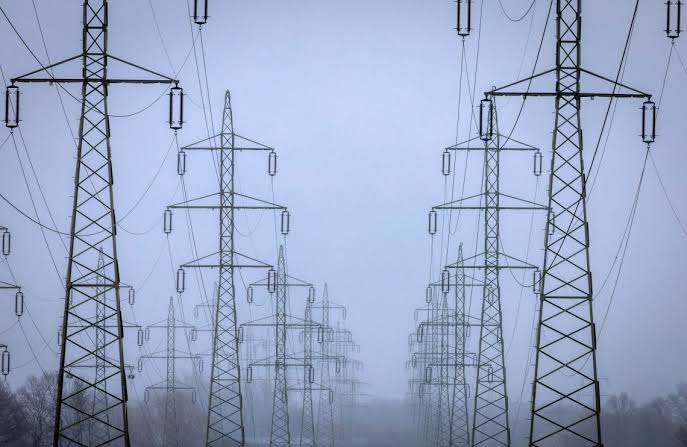
Scientists in Finland and collaborating research institutions have made noteworthy strides in experimental wireless electricity transmission.
According to the experts, electric energy can be guided through air without traditional physical wires.
However, experts caution that these breakthroughs remain early-stage and far from powering homes or grids.
Recent studies and laboratory experiments conducted by teams from institutions including the University of Helsinki and University of Oulu have shown that electrical power can be directed through the air using advanced methods such as ultrasonic sound waves, laser beams, and radio-frequency systems.
The method used in this research is described as an “acoustic wire,” in which high-intensity ultrasonic waves create temporary pathways in air.
These paths allow tiny electrical discharges, known as sparks to travel in a controlled manner, effectively simulating the role of a conductive wire without physical contact.
Parallel efforts involve the use of high-powered laser beams to transmit energy over a distance, converting light back into electricity at a receiver equipped with specialized photovoltaic cells.
While laser-based systems promise “galvanic isolation”, meaning complete electrical separation between source and receiver they currently operate at much lower efficiency than conventional wired systems and are limited to niche applications, such as powering sensors in hazardous environments.
Researchers are also exploring radio-frequency (RF) wireless power harvesting, a concept sometimes likened to “Wi-Fi for power,” in which low amounts of ambient radio energy are captured and converted into usable electricity for ultra-low-power devices. These are like environmental sensors and Internet-of-Things (IoT) components.
Furthermore, a fact check has noted that these technologies are not yet capable of replacing traditional electrical grids or powering homes and industries at scale.
Wireless power technologies in other contexts such as inductive charging pads for consumer electronics have existed for years, but they operate over very short distances and at low power levels.
The Finnish research represents a step forward in understanding how electricity could travel through open space, but scientists emphasize that it does not constitute a mature, widely deployable infrastructure.
If scaled and refined, such systems might one day contribute to more flexible energy distribution in specific settings.