By Nze Emmanuel Ehirim -(United Kingdom)
Why Must the Children Learn Under a Roofless Classroom?
From 9News Nigeria, this coverage hovers around the underlying public interest issue: how host communities benefit from natural resource development, the condition of public education, and the responsibilities of companies, government, and community leadership. The Featured Article Reads:
There are moments in the life of a community when history presents an opportunity that should transform its fortunes. Such moments should usher in development, inspire hope, create employment, improve infrastructure and secure a brighter future for generations yet unborn.
For Umudibia Autonomous Community in Owerri West Local Government Area of Imo State, the arrival of Orashi Petroleum Development Company Limited, currently drilling and exploring natural gas within the community, should have been one of those defining moments. Instead, it has exposed a painful contradiction.
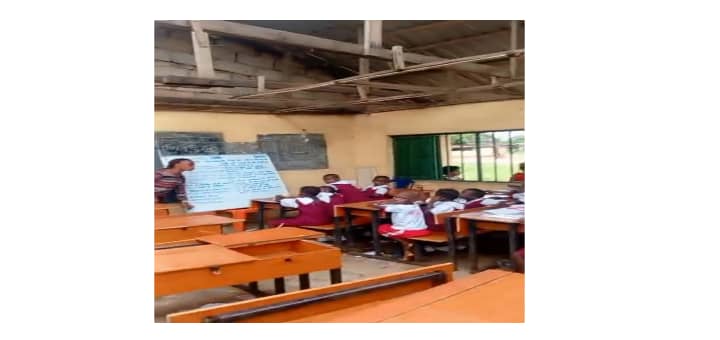
A community blessed with natural resources remains home to children learning inside roofless classrooms. The deplorable condition of Umudibia Community Primary School, Nekede is both heartbreaking and unacceptable.
Criminals reportedly removed the roofing sheets from one of the classroom blocks, leaving pupils and teachers completely exposed to the scorching sun, torrential rains and other harsh weather conditions. The video evidence paints a disturbing picture of abandoned classrooms where education has become a daily struggle rather than an inspiring pursuit.
How can a community that hosts a major oil and gas exploration project still watch its children receive lessons under such degrading conditions? This question deserves an honest answer.
Natural resources should improve the lives of host communities. Across the world, responsible extractive industries work with governments and host communities to invest in education, healthcare, roads, water supply, skills acquisition and youth employment through well-structured Corporate Social Responsibility programmes.
Unfortunately, Umudibia appears to be travelling in the opposite direction. Rather than mobilising the arrival of Orashi Petroleum as a catalyst for community development, attention has been diverted towards issues of representation, exclusion and the concentration of decision-making in the hands of a few individuals.
For months, concerns have been raised over the manner in which engagements between Orashi Petroleum and the community have been conducted. Meetings have reportedly been held within the palace of the Traditional Ruler instead of neutral community venues where every segment of Umudibia could freely participate.
Even more troubling are allegations that community liaison structures were largely populated by individuals personally loyal to the traditional ruler rather than persons enjoying broad acceptance across the constituent communities of Umudibia Autonomous Community.
Whether these perceptions are accurate or not, the consequences are becoming increasingly evident. A divided community loses its bargaining power. A fragmented people negotiate from weakness rather than strength.This is not merely a political issue. It is a development issue.
While disagreements over representation continue, the children of Umudibia remain the greatest victims. No responsible host community should allow discussions surrounding oil and gas exploration to proceed without placing education at the very top of its development agenda.
Imagine the possibilities – A modern primary school. New classroom blocks. A fully equipped library. Digital learning facilities. Scholarships for indigent students. Science laboratories. Teachers’ accommodation.Vocational training centres.
Additionally, Employment opportunities for qualified youths. Road rehabilitation. Healthcare facilities. Portable water projects – these are the dividends communities across the world negotiate when major extractive companies commence operations within their territories.
Why should Umudibia Autonomous Community settle for less? Corporate Social Responsibility should never be reduced to ceremonial visits, photographs and handshakes. It must produce measurable improvements in the lives of ordinary people.
The Managing Director of Orashi Petroleum has visited Umudibia on several occasions. Those visits should now translate into visible investments that directly benefit the people.
Restoring the roof of Umudibia Community Primary School would be a modest but highly symbolic beginning. It would demonstrate that the company’s presence represents more than commercial extraction—it represents partnership with the host community.
Equally, the leadership of Umudibia must embrace a more inclusive style of governance. Development flourishes where there is transparency. Progress accelerates where there is consultation.
Communities prosper where every constituent community has a genuine voice in decisions affecting their collective future. No single individual, however highly respected, possesses a monopoly of wisdom. Sustainable community development demands participation, accountability and broad representation.
The Imo State Government, the Universal Basic Education Board, the Owerri West Local Government Council, elected representatives, philanthropists and public-spirited Nigerians should not ignore the plight of Umudibia Community Primary School.
Immediate intervention is required to replace the stolen roofing sheets, rehabilitate the damaged classrooms and provide pupils with a safe and dignified learning environment.The criminals who vandalised the school deserve condemnation. Educational facilities must be protected as vital public assets and those responsible should be identified and prosecuted.
History will not judge Umudibia by the volume of gas extracted beneath its soil. History will judge it by what it did with the opportunities that those resources created. Years from now, future generations would ask why a community blessed with enormous natural wealth allowed its children to study beneath broken roofs while negotiations over representation consumed the attention of those entrusted with leadership.
The roof over a classroom is more than sheets of zinc. It is a roof over dreams. It is a roof over ambition. It is a roof over the future of a people. Umudibia must not allow that future to collapse. The time to act is now.
ABOUT THE AUTHOR:
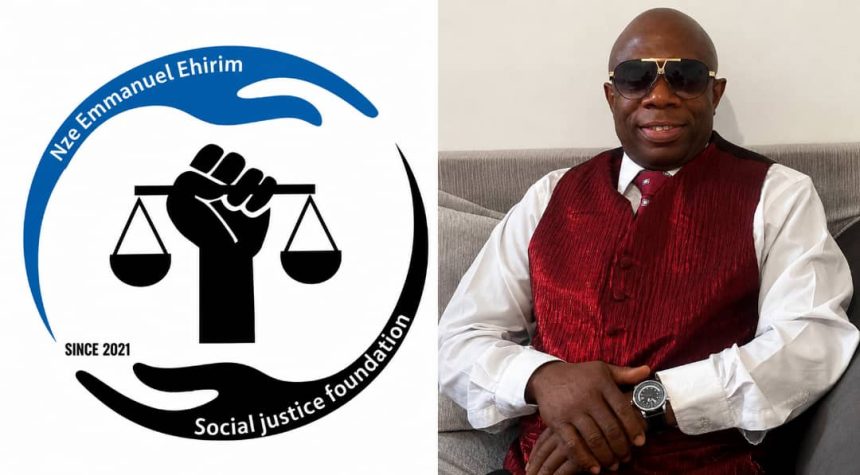
Nze Emmanuel Ehirim is a Corporate Communications Practitioner, public affairs commentator and community development advocate. He is the Chief Executive Officer of the Nze Emmanuel Ehirim Social Justice Foundation and writes extensively on governance, leadership, accountability, social justice and sustainable development. (https://nzesocialjusticefoundation.org).
For inquiries on this news contact 9News Nigeria on +234 08036856526