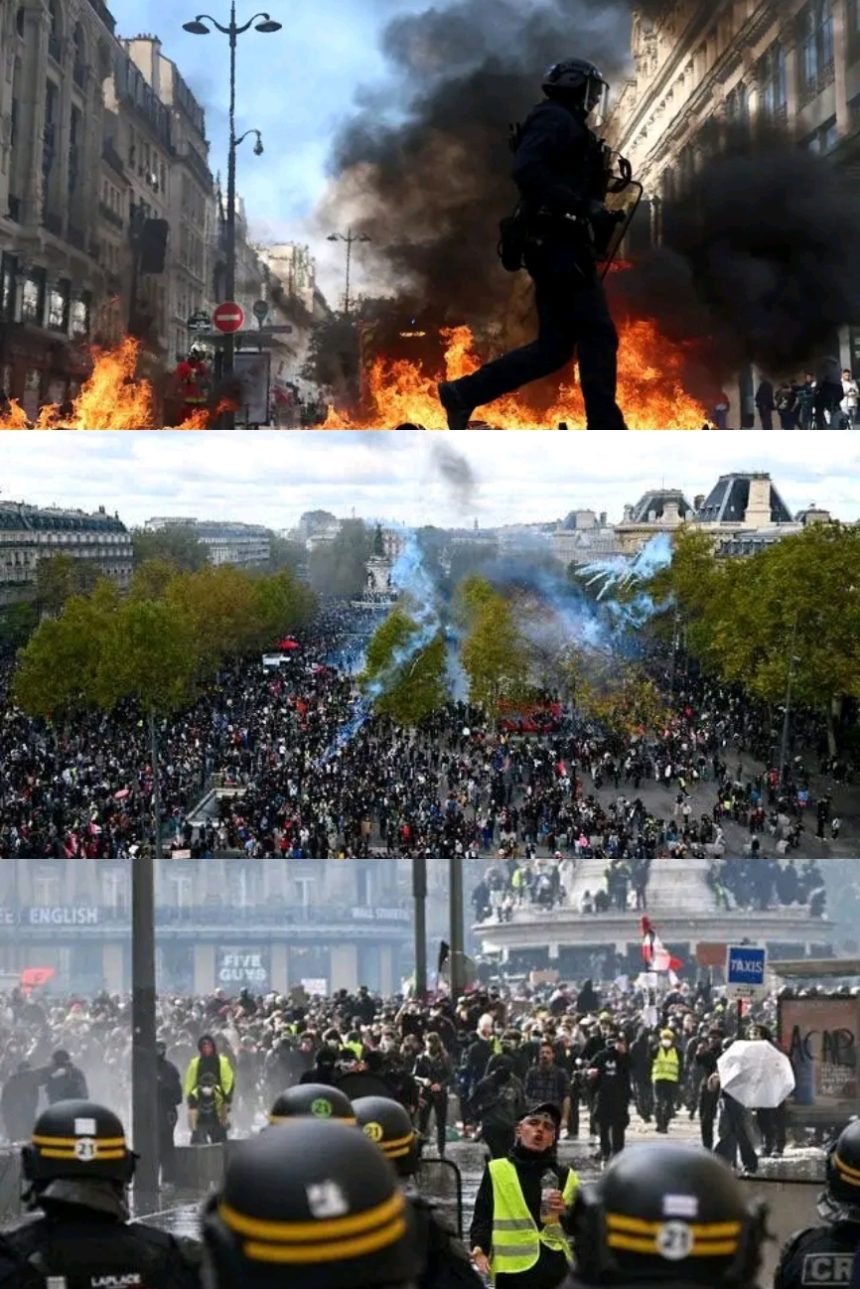
Prance is grappling with widespread unrest after nationwide demonstrations against rising living costs, fuel prices, deteriorating public services and poor school conditions escalated into violent clashes, arson and looting.
The protests, which spread across several major cities on Saturday, October 17, have placed President Emmanuel Macron’s government under mounting pressure.
French authorities reported approximately 2,000 arrests by Sunday, October 18, as the security situation deteriorated. Interior Minister Laurent Nuñez said about 600 police officers, gendarmes and firefighters had been injured. The figures remain provisional.
Hundreds of Thousands Join Demonstrations
According to France’s Interior Ministry, approximately 550,000 people participated in demonstrations across the country. Organisers put the turnout at more than 800,000.
The rallies brought together students, workers, trade unionists, families and supporters of the Yellow Vest movement, which emerged in 2018 over fuel taxes and broader economic grievances.
What began as student protests over inadequate school facilities and teacher shortages developed into a wider expression of anger over economic hardship and government policies.
Paris, Lyon and Marseille Hit by Violence
In Paris, police fired tear gas and used water cannons to disperse groups of demonstrators who threw fireworks, stones and other objects at security personnel.
Cars were set ablaze, shops were looted and public property was damaged as clashes spread through parts of the capital.
Paris Mayor Emmanuel Grégoire said entire streets had suffered extensive destruction.
In Lyon, a fire engulfed the city’s tourist office, while demonstrators attacked public buildings in Marseille and other cities.
Historic Town Hall Destroyed
One of the most serious incidents occurred in Limoges, where a fire set during the unrest largely destroyed the city’s historic town hall, a building more than 140 years old.
Public buildings in Marseille and Lille were also reportedly broken into and vandalised.
Businesses across several cities suffered damage from looting and destruction. France’s retail industry warned that the financial losses could reach hundreds of millions of euros, with an estimated 1,500 shops vandalised, according to the latest report from Spanish news agency EFE.
What Is Driving the Anger?
The demonstrations reflect growing frustration over the rising cost of living, expensive fuel, pressure on household incomes and concerns about the quality of public services.
Students have complained about teacher shortages, overcrowded classrooms and inadequate school facilities.
Workers and other demonstrators have also demanded better wages, improved pensions and stronger government action to protect living standards.
The movement has drawn support from trade unions and activists who argue that ordinary citizens are bearing too much of the economic burden.
Government Promises Tough Action
President Macron condemned the violence and promised that those responsible for looting and vandalism would face sanctions.
Prime Minister Sébastien Lecornu called for those arrested to face appropriate legal action and was scheduled to lead an emergency interministerial meeting on Sunday to address the aftermath.
Interior Minister Nuñez blamed far-left activists and criminal groups for attacks on police officers and public buildings.
However, the protests have also raised questions about the authorities’ preparedness for the scale of the demonstrations.
Marine Tondelier, leader of the French Ecologists, called for Nuñez to resign, arguing that the Interior Ministry had underestimated the turnout and struggled to manage the situation.
Echoes of the Yellow Vest Movement
The unrest has revived memories of the Yellow Vest protests that began in 2018 over fuel taxes before expanding into a broader movement against inequality, declining purchasing power and perceived political indifference.
The latest demonstrations come about six months before France’s next presidential election, adding to the political pressure on Macron’s administration.
Although the protests share some grievances with the Yellow Vest movement, the current demonstrations also reflect anger over education, public spending and the future prospects of young people.
France’s Crisis Reflects Wider European Discontent
France is not the only European country experiencing demonstrations over economic hardship.
Separate protests against living costs, wages, housing and public services were also reported in Belgium, Italy and Portugal on October 17.
Analysts say the simultaneous demonstrations reflect common concerns about affordability, inequality and the ability of governments to respond to citizens’ demands. However, the protests are separate movements rather than one coordinated European campaign.
What Happens Next?
The French government now faces the challenge of restoring public order while addressing the grievances that brought hundreds of thousands of people onto the streets.
The immediate priorities include investigating violence, repairing damaged public infrastructure, protecting businesses and preventing further clashes.
However, security measures alone may not resolve the underlying discontent over living costs, education and public services.
The coming days will test whether the government can calm the situation and persuade frustrated citizens that their concerns will receive meaningful attention.
The crisis has become a major test for France’s leadership as the country approaches a crucial election period.