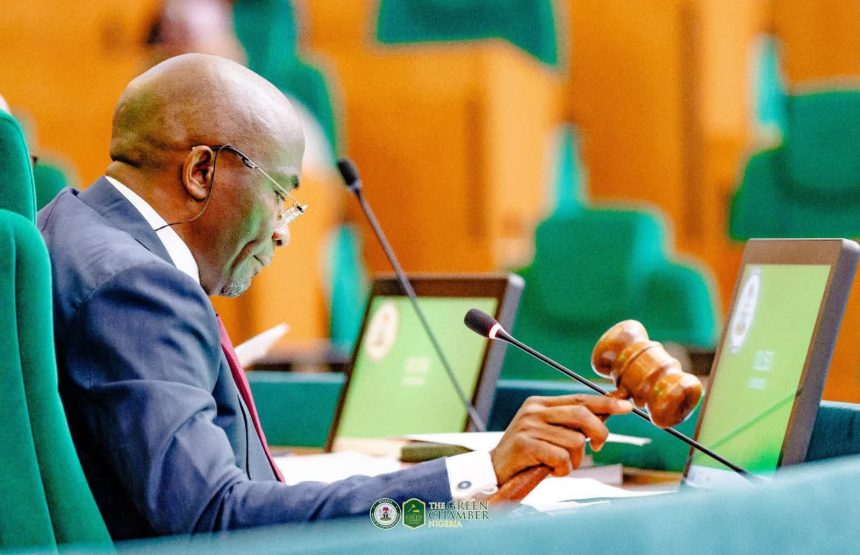
At the plenary highlights of House of Representatives held Wednesday, April 29, 2026, several Bills, issues on national security, economy, reform and certain oversights were brought before the floor of the house for legislation as captured by 9News Nigeria correspondent.
The House of Representatives convened on Wednesday, April 29, 2026, for plenary presided over by the Deputy Speaker, Rt. Hon. Benjamin Okezie Kalu, PhD, CFR. The sitting featured a broad legislative agenda, with significant progress recorded across lawmaking, oversight, and motions addressing pressing national issues.
In a major legislative milestone, the House passed four bills including a Bill establishing a Legislative Security Directorate in the National Assembly, and a Bill to increase the number of Judges in the High Court of the Federal Capital Territory. The proposed Security Directorate will strengthen legislative security through a clear framework for its structure, functions, and personnel.
On electoral reform, the House considered and adopted two Reports from its Committee on Electoral Matters on Bills to amend the Electoral Act, 2026. The Bills aim to clarify jurisdiction in pre-election matters and introduce flexible, technology-driven mechanisms for the service of election petition processes. The amendments are expected to improve efficiency, reduce delays, and modernise electoral dispute resolution.
Further legislative activity saw three new bills read for First Reading, marking the commencement of their legislative process. The House also advanced, at Second Reading, a policy framework Bill seeking to establish a Fifty-Year National Economic Plan for Nigeria, alongside five other Bills. The proposed plan seeks to ensure continuity in national development and sustained implementation across administrations. Other Bills advanced include proposals to mandate the publication of financial and operational records of Ministries, Departments and Agencies (MDAs) and Government-Owned Enterprises (GOEs), as well as Bills to establish the National Defence College of Nigeria and the Naval Training Command to strengthen coordination of military training institutions.
Security concerns also featured prominently, as the House adopted a Matter of Urgent Public Importance on recurring insurgent attacks in Gombi/Hong Federal Constituency of Adamawa State. The House was briefed on recent coordinated attacks resulting in loss of lives, injuries, and displacement of residents, prompting calls for urgent intervention by security agencies to restore peace and safeguard affected communities.
In the exercise of its oversight responsibilities, the House received the Report of the Committee on Communications on the ₦479.5 billion budget of the Nigerian Communications Commission (NCC) for the 2026 financial year. The report outlines recurrent and capital spending, special projects, USPF transfers, and government remittances, highlighting the sector’s fiscal significance.
In addition, the House urged the Federal Ministry of Industry, Trade and Investment, alongside the National Automotive Design and Development Council (NADDC), to ensure the completion and operationalisation of the Dogondaji Automotive Youth Training Centre in Sokoto State. The resolution emphasised maintaining public infrastructure and expanding opportunities for youth and skilled artisans.
The House also recorded shifts in its partisan composition, with two Members, Rep. Jakduwa Hassan Kaikaku (Yobe) and Rep. Bello Isah Ambarura (Sokoto), announcing their defection to new political parties, reflecting ongoing realignments within the legislature.
Overall, the sitting reaffirmed the House’s focus on institutional strengthening, reform, security, and inclusive national development.
For inquiries on this news contact 9News Nigeria on +234 08036856526