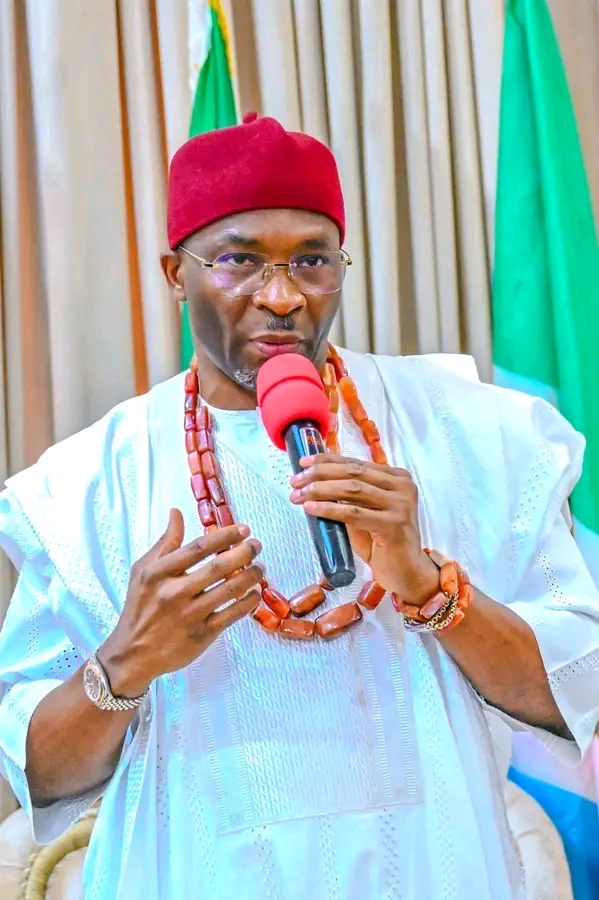
Deputy Speaker of the House of Representatives, Benjamin Kalu, has defended a budgetary provision for the purchase of musical instruments and public address systems for churches in his Bende Federal Constituency, Abia State.
The lawmaker said the allocation was wrongly portrayed as a ₦1 billion project meant only to buy musical instruments. According to him, the actual amount is about ₦780 million after Value Added Tax (VAT) and other statutory deductions.
Kalu explained that the fund is part of a Youth Re-orientation and Social Support Programme to be implemented through faith-based organisations across Bende Federal Constituency.
He said the first phase of the programme will cover about 130 churches spread across the constituency’s 13 electoral wards, with each church expected to receive support valued at between ₦5 million and ₦6 million.
According to the Deputy Speaker, Bende has more than 200 churches, and the selected beneficiaries represent the first batch of institutions expected to participate in the initiative.
He said the funds would be used to procure evangelical musical instruments, sound systems and public address equipment to strengthen youth-focused outreach programmes organised by the churches.
Kalu added that the initiative is aimed at discouraging social vices such as drug abuse, sexual offences and violent crimes while promoting discipline, peace, moral values and character development among young people.
According to him, churches already play important roles in mentoring youths and providing community support, making them suitable partners for government-backed social intervention programmes.
The budget provision attracted widespread public criticism after reports claimed that ₦1 billion had been inserted into the 2026 budget solely for the purchase of church musical instruments.
In response, Kalu insisted that such reports misrepresented both the amount involved and the purpose of the project, stressing that the programme goes beyond purchasing instruments and is designed as a broader community development initiative.
The disclosure has nevertheless sparked debate over constituency projects and budget priorities in Nigeria. Critics argue that public funds should focus more on sectors such as education, healthcare, infrastructure and job creation, especially amid the country’s economic challenges.
Supporters, however, maintain that faith-based organisations often complement government efforts by providing social services, counselling, youth engagement and crime-prevention programmes in many communities.
Constituency projects have remained a recurring issue in Nigeria’s federal budgeting process. Although lawmakers do not directly execute projects, they frequently nominate projects for inclusion in the national budget, with implementation handled by relevant Ministries, Departments and Agencies (MDAs). Civil society groups have repeatedly called for greater transparency, competitive procurement and effective monitoring of such projects to ensure value for public funds.
The controversy surrounding Kalu’s budget provision has renewed calls for increased scrutiny of constituency projects and clearer public disclosure of how intervention funds are allocated and implemented across the country.