By Chinedum Anayo | 9News Nigeria Exclusive
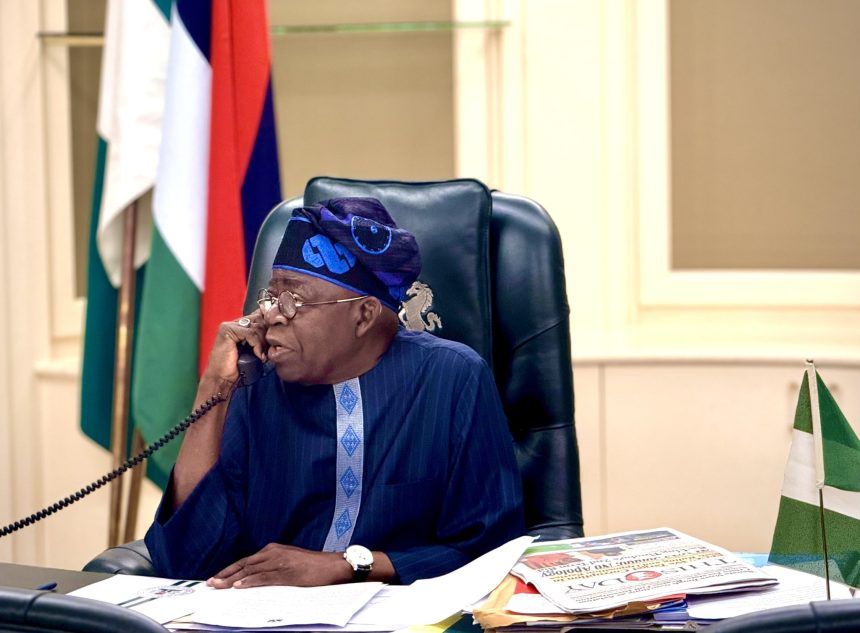
President Bola Ahmed Tinubu’s re-election machinery appears to be taking a broader political dimension following the release of a revised All Progressives Congress (APC) Presidential Campaign Council list featuring figures from across Nigeria’s political landscape, including individuals associated with opposition parties.
The reported appointments suggest a campaign strategy that places a premium on political alliances, grassroots mobilisation, financial coordination and the involvement of influential figures beyond the traditional boundaries of the ruling party.
Among the most striking names on the list is the Minister of the Federal Capital Territory, Nyesom Wike, who has been designated Campaign Coordinator for Tinubu in Rivers State and the FCT.
Osun State Governor Ademola Adeleke and former Gombe State Governor Ibrahim Dankwambo are also featured in the reported structure.
The appointments indicates a familiar feature of Nigerian politics: electoral coalitions are often shaped as much by personal relationships, regional influence and political calculations.
The Wike Influence and the Rivers Question
Wike’s reported inclusion is particularly significant given his continued influence in Rivers State politics and his role in the Federal Government.
Although associated with the Peoples Democratic Party (PDP), Wike has maintained a working relationship with the Tinubu administration.
This development has continued to generate debate about the changing boundaries between Nigeria’s ruling party and opposition politics.
The Minister’s reported designation as campaign coordinator for Rivers State and the FCT would represent an effort to leverage his political network and mobilisation capacity in two strategically important territories.
Rivers remains a politically consequential state in the South-South, while the FCT presents a distinct electoral environment shaped by federal workers, residents from across the country and the politics of the nation’s capital.
For the APC, securing support from influential figures outside its formal structure could strengthen its reach.
However, the ultimate impact would depend on whether political endorsements translate into grassroots support and votes.
Adeleke and Dankwambo: A Wider Political Calculation?
The reported inclusion of Adeleke as Osun State Campaign Coordinator and Dankwambo among the Campaign Council Advisers raises questions about the scope of the coalition being assembled around Tinubu’s re-election.
Adeleke, an Accord Party governor, occupies an important political position in Osun State, while Dankwambo brings experience as a former governor and senator.
Their reported inclusion would be politically noteworthy, particularly if it reflects an obvious attempt to build bridges across party lines.
However, appointments on a campaign list should not automatically be interpreted as formal defections or endorsements.
The political implications would depend on the individuals’ confirmation of their roles and the extent of their actual participation in the campaign.
Nevertheless, the reported structure points to the importance of political outreach in a contest where regional alliances, voter turnout and local political networks could prove decisive.
While the reported inclusion of opposition-associated figures attracts attention, the campaign council also retains a strong core of established APC leaders.
Senator Abdulaziz Yari is listed as Director-General, with Senator Adams Oshiomhole overseeing mobilisation as Deputy Director-General and Femi Gbajabiamila responsible for administration.
Imo State Governor Hope Uzodimma reportedly retains his position as Secretary of the Campaign Council, while James Faleke is listed as Deputy Director-General for Election Planning, Coordination and Monitoring.
These appointments strongly signifies the importance of maintaining organisational discipline within the ruling party while expanding its political alliances.
Uzodinma’s continued role is also noteworthy given his position as a key APC figure in the South-East.
Meanwhile, the reported appointments of former Kano Governor Abdullahi Ganduje as Director for Stakeholder Mobilisation and former Lagos Governor Babatunde Fashola as South-West Zonal Coordinator for Stakeholders’ Mobilisation point to the importance of regional political networks.
Money, Media and Mobilisation: The Real Test
The reported appointment of Delta State Governor Sheriff Oborevwori as Director of Finance, alongside Ogun State Governor Dapo Abiodun and Nigeria Revenue Service Chairman Zacch Adedeji in fundraising coordination roles, highlights the financial and organisational demands of a nationwide campaign.
The media structure is equally significant, with Festus Keyamo, Abdulmumin Jibrin, Lere Olayinka and Segun Sowunmi among the names reportedly assigned communications responsibilities. Dele Alake is listed as the campaign spokesman.
In contemporary Nigerian elections, campaign success depends not only on political endorsements but also on the ability to communicate a compelling narrative, respond to criticism, engage undecided voters and sustain a visible presence across traditional and digital media.
The reported appointment of former Super Eagles captain Joseph Yobo to a sports mobilisation role further suggests an effort to reach constituencies beyond conventional party structures.
In contrast, the size and prominence of a campaign council do not automatically guarantee electoral success.
Its effectiveness will ultimately be measured by coordination, credibility, voter engagement and the ability to convert political networks into support at the ballot box.
The broader significance of the reported list lies in what it may reveal about the political calculations surrounding Tinubu’s re-election bid.
Nigerian politics has a long history of alliances that cross party lines, particularly when influential politicians perceive common interests in governance, regional representation or electoral strategy.
For Tinubu, a broader coalition could offer access to political networks that the APC might otherwise struggle to reach independently.
It could also complicate the opposition’s efforts to maintain a unified political front.
However, such alliances carry their own challenges as political interests can diverge, local rivalries may undermine coordination, and prominent endorsements do not necessarily guarantee that supporters will follow their preferred leaders to the ballot box.
Ultimately, the 2027 contest will not be decided by campaign appointments alone.
The voters will judge the administration by its record, its promises and its ability to demonstrate that current policies are improving their lives.
The Verdict: A Coalition Must Deliver More Than Headlines
If the revised list is officially confirmed, it would represent a politically ambitious attempt to combine the APC’s established organisational structure with the influence of figures whose political affiliations and networks extend beyond the party.
The reported inclusion of Wike, Adeleke and Dankwambo would generate debate about the future of party loyalties and the growing importance of cross-party political relationships.
Nonetheless, the central question remains whether this reported coalition can move beyond prominent appointments to build a coherent national campaign.
In the final analysis, a formidable campaign council may provide the machinery for victory, but the Nigerian electorate will determine whether that machinery succeeds.
Editorial disclaimer: This analysis is based on the campaign appointments.