- Atiku and NDC Question Temporary Petrol Intervention as Nigerians Demand Affordable Fuel, Transparent Pricing and Lasting Relief Ahead of 2027
By Princely Onyenwe | Editorial Desk
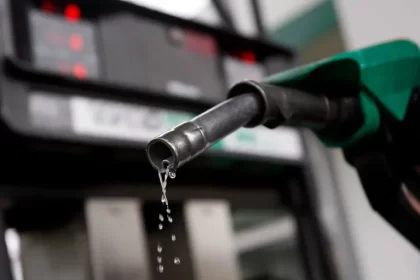
The Federal Government’s announcement that the Nigerian National Petroleum Company Limited (NNPCL) will temporarily forgo its petrol retail profit margin and sell the product at cost for 30 days has raised a fundamental question: is President Bola Ahmed Tinubu’s administration offering Nigerians genuine economic relief, or has it introduced another short-term intervention that may generate political headlines without substantially easing the country’s cost-of-living crisis?
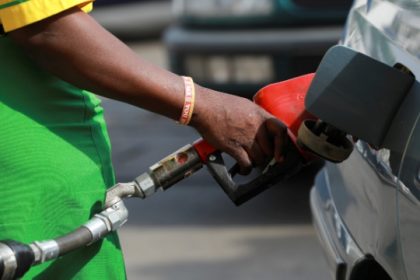
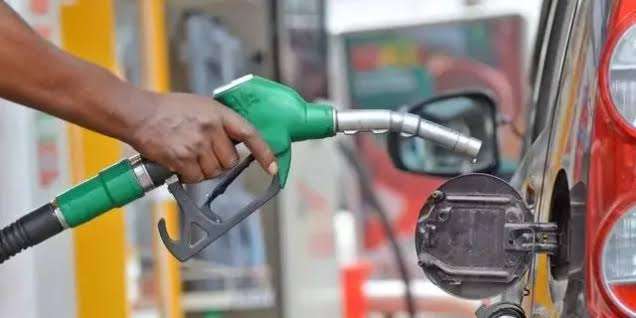
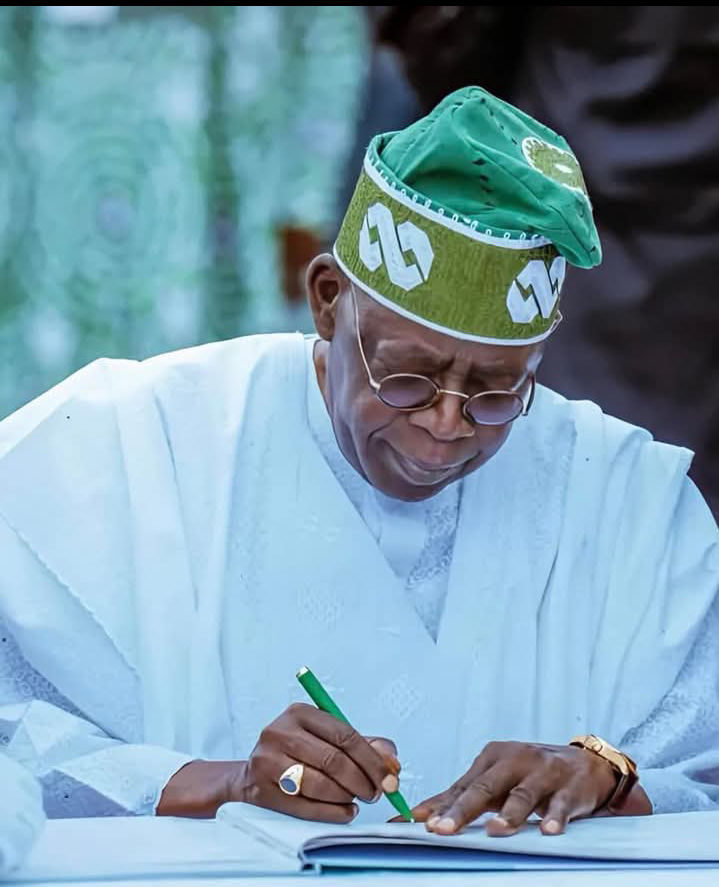
Announced on Thursday, October 8, 2026, by the Minister of Finance and Coordinating Minister of the Economy, Taiwo Oyedele, and subsequently confirmed by the Presidency, the measure is intended to cushion vulnerable households against global crude oil price shocks and volatility. The government says the arrangement has President Tinubu’s approval and is not a return to the fuel subsidy regime abolished in May 2023. Under the plan, NNPC Retail will suspend its usual retail profit margin for the initial 30-day period, with public transport operators receiving priority.
On the surface, the decision appears compassionate. Any measure that reduces the amount Nigerians pay for fuel, even temporarily, deserves serious consideration at a time when transport fares, food prices, production costs and household expenses continue to put enormous pressure on incomes. Government cannot be expected to remain indifferent when global oil market developments threaten to deepen domestic hardship. But compassion must be measured by results, not announcements. Nigerians need to know precisely how much they stand to save, how widely the intervention will apply and what happens when the 30 days expire.
Former Vice-President Atiku Abubakar has condemned the initiative, describing it as a politically motivated publicity gesture that cannot provide lasting relief. The Nigeria Democratic Congress (NDC) has similarly criticised the arrangement, calling it tokenism and questioning its adequacy ahead of the 2027 general election. Both objections centre on the intervention’s short duration and limited reach, particularly because the arrangement applies to petrol sold through NNPC retail outlets rather than establishing a clearly defined, nationwide reduction at every filling station.
The political timing naturally invites scrutiny. With the 2027 elections approaching, Nigerians are entitled to question whether the measure is primarily an emergency economic response, a political calculation or a combination of both. Nevertheless, timing alone cannot establish that the policy is a gimmick. The more important test is whether it produces measurable benefits for ordinary people. If motorists save money, transport operators pass on those savings to passengers and businesses experience lower operating costs, the intervention will have some value. If the benefits remain marginal, inaccessible or short-lived, the government will have to explain why Nigerians should regard it as more than temporary relief.
The first weakness is the 30-day timeline. What happens on Day 31? Will NNPC Retail return to its usual profit margin regardless of prevailing market conditions? Will the government extend the arrangement if international prices remain high? Will the administration introduce a more sustainable mechanism to protect consumers, or will Nigerians simply return to the same prices and economic pressures that existed before the announcement?
These are not unreasonable questions. A family planning its monthly expenses cannot build its budget around a relief measure that expires after four weeks without a clear explanation of what follows. Commercial drivers cannot confidently adjust their fares if they do not know whether the fuel price advantage will last. Traders, manufacturers and transport businesses need predictability because fuel costs influence the prices of goods and services throughout the economy. A temporary intervention may soften a sudden shock, but it cannot substitute for a coherent energy and cost-of-living policy.
There is also an important distinction between selling petrol at cost and guaranteeing Nigerians a low pump price. The Presidency’s own explanation illustrates the difference: if NNPC’s landing cost is ₦1,300 per litre, the company would sell at that same ₦1,300 without adding its usual retail margin. The arrangement removes a component of the selling price; it does not, by itself, eliminate the underlying cost of acquiring the fuel. If the landing cost rises, consumers may still face an expensive product even when the retail margin is waived.
This raises another question: what exactly is the amount Nigerians are expected to save per litre? The government must publish a transparent explanation of the normal retail margin being waived, the prices applicable at participating outlets and the mechanism for monitoring compliance. Without that information, the public cannot independently assess the size of the concession or determine whether the promised relief is commensurate with the hardship it is intended to address.
The decision to concentrate the intervention on NNPC filling stations also demands scrutiny. Why should access to a government-backed relief measure depend on whether a motorist can reach a participating NNPC outlet? What happens to Nigerians who live in communities where such stations are unavailable, distant or unable to meet local demand? If the initiative attracts large numbers of motorists because of a price advantage, will participating outlets have sufficient supplies to prevent long queues, delays and the diversion of customers from other stations?
A national intervention intended to support vulnerable households should not inadvertently create a geographical lottery in which some Nigerians benefit because of where they live while others are excluded because of their location. Nor should public transport operators receive priority without a transparent explanation of how that priority will work and how the resulting savings will reach passengers. A cheaper purchase at the pump does not automatically translate into a cheaper bus fare. Without monitoring and enforceable commitments, the benefit could remain with the operator rather than the passenger.
The more fundamental question, however, concerns the structure of Nigeria’s petroleum market. If the government believes that high international crude oil prices and market volatility are imposing unacceptable hardship on Nigerians, why should the response be confined to temporarily waiving the retail margin of one major operator? Why can the administration not publish a comprehensive framework covering domestic crude supply, refining costs, distribution, competition and consumer protection?
Nigeria is a major crude oil producer, yet the price Nigerians pay for petrol remains exposed to international market movements and the cost of supplying refined products. The expansion of domestic refining, including operations at the Dangote refinery, offers an opportunity to reduce dependence on imported finished petroleum products. But domestic refining alone does not automatically guarantee cheap fuel. Refineries must acquire crude at commercially viable prices, cover operating and financing costs, maintain reliable production and distribute their products efficiently. The decisive question is whether greater domestic refining will translate into more competitive prices and a more secure supply for Nigerian consumers.
The Federal Government should therefore explain its policy on crude oil supplied to domestic refineries and how that policy affects the prices ultimately charged at the pump. Nigerians deserve transparency on the applicable pricing arrangements, the volumes supplied to local refiners and the conditions under which domestically refined products are sold. Where crude is supplied for domestic processing, the public should be able to understand the commercial framework and whether it helps reduce avoidable costs. Any intervention must respect the legal and commercial realities of the petroleum market while ensuring that consumers are not left to bear every increase without an effective policy response.
There is also a legitimate question about uniformity. Must every filling station in Nigeria sell petrol at precisely the same price? Not necessarily. Differences in transportation, storage, distribution and operating costs can produce legitimate regional variations. But the government can still establish transparent pricing rules, publish reliable market information, enforce competition and introduce a properly designed relief mechanism that reaches consumers beyond NNPC outlets. If the administration intends to use public resources or a state-owned company’s commercial concessions to cushion a national shock, it should explain why the benefits cannot be extended fairly and transparently across the market.
Equally important is the question of the naira. Has the currency been devalued as a result of this announcement? The answer, based on the information released about the 30-day intervention, is no such conclusion can be drawn. The decision to waive NNPC’s retail profit margin does not, in itself, constitute a devaluation of the naira. The currency’s exchange rate is affected by a range of factors, including foreign-exchange supply and demand, oil earnings, capital flows, imports and investor confidence. The government must distinguish between the immediate cost of petrol, the exchange rate used in calculating petroleum costs and the wider economic consequences of any policy it adopts.
Oyedele has warned that restoring petrol subsidy could push petrol prices to at least ₦2,000 per litre and the exchange rate towards ₦3,000 to the dollar, while the government has also argued that a return to subsidy could cost more than ₦20 trillion annually. These are serious projections that deserve public scrutiny, but they are forecasts of possible consequences under the minister’s stated assumptions, not proof that such prices or exchange rates are inevitable.
Government is entitled to warn Nigerians about the fiscal dangers of a poorly designed subsidy. A policy that requires the state to sell fuel below its actual cost can impose enormous costs on public finances, encourage waste, create opportunities for arbitrage and divert resources from infrastructure, healthcare, education and social protection. But the argument against an unsustainable subsidy does not relieve government of its responsibility to protect citizens from severe economic shocks. Nigerians should not be forced to choose between a fiscally reckless subsidy and an unprotected market in which the full burden of every price increase falls on households with limited incomes.
The real policy challenge is to design relief that is transparent, targeted, affordable and capable of producing measurable results. If the government rejects a general fuel subsidy, it should explain which alternatives it is implementing to support low-income households, commercial transport operators, small businesses and other vulnerable groups. It should also publish the estimated cost of the 30-day intervention, explain how the waiver will be accounted for and disclose what indicators will determine whether the measure succeeds.
The NDC and Atiku Abubakar are therefore justified in demanding answers about the intervention’s duration and reach. However, criticism of the government should go beyond labelling the measure a political gimmick. Nigerians also need to see practical alternatives, including how any proposed relief would be funded, how domestic refining would be supported without creating new distortions and how savings would reach consumers rather than intermediaries. The country cannot afford a political contest in which one side offers temporary relief while another makes promises without explaining the cost, financing and implementation.
The same standard must apply to the Tinubu administration. The President cannot ask Nigerians to accept the pain of major economic reforms indefinitely without showing how the gains will reach their homes, workplaces and businesses. If the government maintains that the removal of subsidy was necessary to protect public finances, it must demonstrate that the resulting fiscal space is being managed responsibly and that the poor are not being left to absorb the consequences alone. Economic reform should not be measured only by revenue figures, market adjustments or assurances from officials. It must also be judged by whether families can afford food, workers can travel to work, businesses can operate and incomes can meet basic needs.
Ultimately, the most important issue is not whether the 30-day petrol intervention gives the government a political advantage. It is whether it gives Nigerians an economic advantage. A genuine relief programme should be judged by the amount saved per litre, the number of people reached, the effect on transport fares and commodity prices, the transparency of its financing and the existence of a credible plan after the initial period.
As the 2027 elections approach, Nigerians should demand more than carefully timed announcements from every political camp. They should insist on costed proposals, measurable targets, clear timelines and independent monitoring. Any candidate advocating a return to subsidy must explain how it will be funded and sustained. Any government defending subsidy removal must explain how citizens will be protected from the hardship that follows. And any party promising lower fuel prices must show how its policies will work in practice.
The masses have carried a disproportionate burden through rising living costs and uncertain economic conditions. They should not be treated as spectators who can be placated with a month of temporary relief and expected to forget the hardship when the offer expires. If the Federal Government believes its intervention is a genuine act of economic protection, it must publish the details, broaden access where feasible and demonstrate measurable benefits. If it cannot guarantee those outcomes, then the public is entitled to question whether the initiative is a solution to the crisis or merely a temporary political cushion.
Nigeria needs more than 30 days of cheaper petrol. It needs a credible energy policy, fair and transparent pricing, stronger domestic refining, protection for vulnerable households and an economy in which hard work can provide a decent living. When Day 31 arrives, will Nigerians see a lasting plan—or simply the return of the same hardship under a new political explanation?