- Families Allege Multi-Million-Naira Payments in Dollars as Police Insist Security Operations Forced Kidnappers to Release Victims
By Princely Onyenwe | News Desk
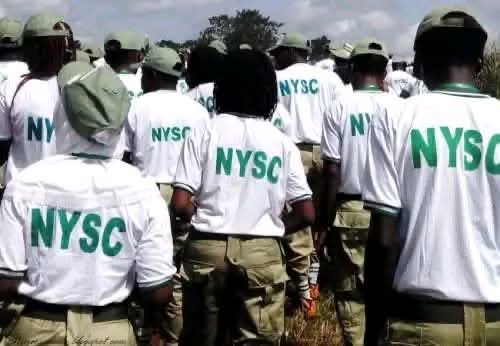
The release of 20 prospective National Youth Service Corps (NYSC) members abducted in Imo State has triggered a major controversy over whether security operatives rescued the victims through sustained operations or whether ransom payments by their families contributed to their freedom.
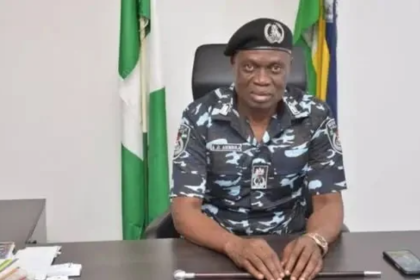
While the Imo State Commissioner of Police, CP Audu Garba Bosso, says he is unaware of any ransom payment and maintains that pressure from security agencies forced the kidnappers to release their captives, some parents insist they raised millions of naira and converted the money into United States dollars to secure their children’s freedom. The conflicting accounts have raised questions about the circumstances surrounding the release and the need for a transparent, evidence-based explanation from the relevant authorities.
The 20 prospective corps members were abducted on October 1, 2026, while travelling from Ibadan, Oyo State, to their respective NYSC orientation camps in Abia and Akwa Ibom states. They were attacked along the Owerri–Onitsha Road in Imo State and held captive for approximately seven days.
On October 7, the Nigeria Police Force announced that the victims had been rescued at Amakohia-Ubi in Imo State following sustained search-and-rescue operations involving the police and other security agencies, including the Department of State Services (DSS) and the armed forces.
The announcement brought relief to families who had spent days seeking information about their relatives. Imo State Governor Hope Uzodimma also commended the security agencies for their role in securing the victims’ release.
However, accounts subsequently provided by some parents introduced a different dimension to the circumstances surrounding the release.
Speaking during a television interview, Imo State Commissioner of Police CP Audu Garba Bosso said he was not aware that ransom had been paid. He maintained that security operatives mounted sustained pressure on the kidnappers, forcing them to abandon the victims.
According to reports by Premium Times and other Nigerian media outlets, Bosso said the police carried out their professional responsibilities and that the coordinated security operation led to the victims’ freedom. He also disclosed that efforts to track down and arrest the abductors were continuing.
Some parents, however, have publicly challenged the official narrative.
Alirat Wahab, the mother of one of the abducted prospective corps members, reportedly told News Central Television that her family paid ₦6 million after negotiations with the kidnappers. Other parents also described raising substantial sums to meet demands made by the abductors.
One account published by Vanguard stated that a mother struggled to raise about ₦3 million, while another family reportedly mobilised ₦6 million. The parents said they had to seek financial assistance from relatives, friends and other supporters to meet the demands.
The reported demands were considerably higher at the beginning of the negotiations. Some parents said the kidnappers initially demanded as much as ₦50 million per captive before negotiations reportedly reduced the amounts demanded from some families.
In another account reported by The Guardian, a relative said families converged in Ibadan to coordinate their fundraising efforts. The relative alleged that some of the money was converted into US dollars in Imo State before being delivered to the kidnappers.
A parent who spoke to BBC News Pidgin, in an interview conducted by BBC News Yoruba, also alleged that families, friends and people who offered assistance online contributed money towards the payments.
The parent claimed that the kidnappers collected the ransom in US dollars and said the families’ efforts, rather than any single individual or security agency, were responsible for securing their children’s release.
The parent further alleged that the DSS had invited relatives to assist with investigations and was aware of the process through which the money was converted into dollars. These assertions remain attributed claims and have not been independently established as a complete account of the operation.
The conflicting narratives have made it necessary to distinguish between the officially announced rescue operation and the separate allegations of ransom payments.
The police announcement establishes that the authorities reported a joint search-and-rescue operation culminating in the victims’ release on October 7. The parents’ accounts, meanwhile, raise questions about whether ransom negotiations and payments also occurred before the captives were freed.
The two possibilities are not necessarily mutually exclusive. Security pressure may have contributed to the release even if ransom was paid, or the payments may have played a different role in the outcome. Determining what happened requires evidence beyond the competing public statements.
A thorough investigation should establish whether payments were made, the amounts involved, how the money was raised and transferred, and whether any security agency had prior knowledge of or participated in negotiations. Investigators should also clarify the basis for the claims about dollar payments and determine whether available communications, financial records and testimony from the victims and their families support the accounts.
The authorities should equally provide a clear timeline of the security operation, including when the victims were located, the circumstances under which the kidnappers released them, and the steps taken to identify and apprehend the perpetrators.
Such clarification would help protect the credibility of the security agencies while ensuring that the experiences of affected families are neither dismissed nor accepted without verification.
The controversy has also renewed concern about the safety of Nigerians travelling on major highways, particularly young graduates journeying to fulfil their national service obligations. The fact that the abductors had not been publicly reported as arrested at the time of the police commissioner’s remarks adds urgency to the need for sustained operations to identify and prosecute those responsible.
For the parents, the overriding concern was the safe return of their children. Their reported fundraising efforts illustrate the desperation families can experience when loved ones are held captive and their lives appear to be at risk.
For the wider public, however, the issue extends beyond the successful return of the victims. It concerns the reliability of official information, the transparency of security operations and the confidence Nigerians can place in the institutions charged with protecting them.
The government and relevant security agencies should therefore provide an evidence-based account of the incident, distinguishing verified findings from allegations and explaining any unresolved discrepancies.
The objective should not be to discredit security operatives or disregard the accounts of parents. It should be to establish the facts, ensure accountability wherever wrongdoing is proven, improve responses to kidnapping and strengthen public confidence in Nigeria’s national security architecture.
For inquiries on this news report contact 9News Nigeria on +234 08036856526