WHEN SURVIVAL ADVICE MEETS ECONOMIC REALITIES
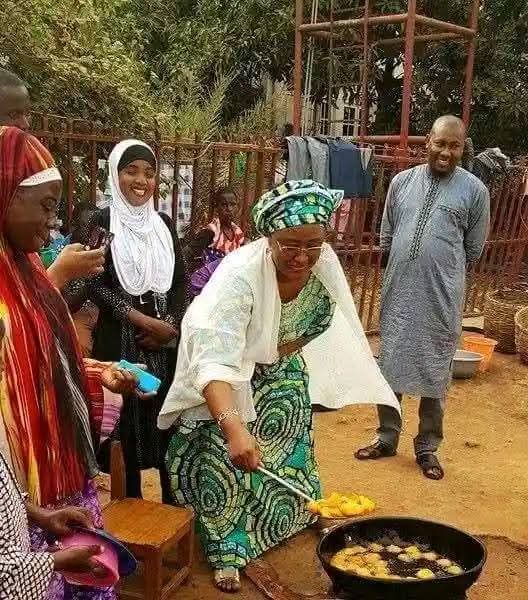
Nigeria’s First Lady, Senator Oluremi Tinubu, recently stirred controversy after advising Nigerians to explore small businesses such as Akara frying, Kuli-Kuli production and roasted corn selling as ways of surviving the country’s economic hardship. She said such ventures do not require much capital and noted that beneficiaries of the Renewed Hope Initiative receive grants rather than loans to support their businesses.
However, instead of receiving the message as encouragement, many Nigerians reacted with anger and disappointment. For many citizens struggling under rising food prices, fuel costs, inflation and declining purchasing power, the advice appeared disconnected from the daily reality they face.
The argument from critics is simple: while Akara, Kuli-Kuli and roasted corn may have traditionally been businesses requiring little capital in the past, Nigeria’s current economic situation has changed the calculation. The ingredients needed for these businesses have become expensive, making what used to be a low-income survival strategy increasingly difficult to sustain.
THE REALITY BEHIND AKARA BUSINESS
Akara is made from beans, vegetable oil, pepper, onions and other ingredients. But the price of these items has risen sharply in recent years.
Many Nigerians argue that starting an Akara business today requires more than buying beans and a frying pan. A potential seller needs capital for beans, oil, cooking materials, fuel or charcoal, transportation and packaging.
With a bag of beans now costing hundreds of thousands of Naira in many markets, critics say the ordinary Nigerian who is already struggling to feed a family may not have the resources to enter the business.
The same applies to Kuli-Kuli, which depends heavily on groundnuts. Rising prices of groundnuts, oil and other production materials have increased the cost of production. Even roasted corn sellers are affected because charcoal, transportation and the cost of buying fresh corn have all become more expensive.
For many Nigerians, the issue is not whether Akara or Kuli-Kuli are respectable businesses. Of course, they are. Here, the issue is whether citizens living under severe economic pressure can realistically access the capital needed to start them at all?
THE ANGER OVER PERCEIVED DISCONNECT
The backlash against Mrs Tinubu’s comment is also tied to a wider public frustration about inequality.
Many Nigerians believe there is a painful contrast between the lifestyle of political leaders and the economic struggles of ordinary citizens.
Since the removal of fuel subsidy by the administration of President Bola Tinubu, Nigerians have complained about increased transportation costs, higher food prices, rising business expenses and a general decline in living standards. Critics argue that the policy may have been presented as necessary for economic reform, but its immediate impact has placed heavy pressure on households and businesses.
While citizens are being encouraged to adjust, cut expenses and explore small survival businesses, public attention has repeatedly focused on government spending on luxury items and official privileges.
Previous controversies over government spending on official vehicles, renovations and presidential-related expenses have fueled public criticism that leaders are not experiencing the same hardship as ordinary Nigerians. Reports have highlighted public anger over allocations involving luxury vehicles for officials and other presidential expenses during a period of economic hardship.
THE QUESTIONS NIGERIANS ARE ASKING
Many Nigerians are asking why the conversation is focused on how citizens can survive rather than how government can reduce the conditions making survival difficult.
For critics, the anger is not about Akara itself. It is about the symbolism.
They argue that telling people who are struggling to afford daily meals to start small food businesses while government officials continue to enjoy expensive security arrangements, vehicles and privileges, creates a feeling of unfairness.
The question many citizens are asking is: if the economy is difficult enough to force ordinary people into Akara and roasted corn businesses, should political leaders also be reducing their own lifestyle and government spending?
A CRISIS OF TRUST
The reaction to Mrs Tinubu’s statement reflects a larger crisis of trust between citizens and government.
Many Nigerians feel their complaints about hunger, unemployment, insecurity and high living costs have not received enough response.
For them, the problem is not a lack of willingness to work. Nigerians have always engaged in small businesses, trading and informal enterprises. The concern is that the economic environment has made even those options harder to access.
A woman who wants to sell Akara today needs money to buy beans, oil and fuel. A young person who wants to roast corn needs money for materials and transportation. A person who wants to produce Kuli-Kuli needs capital for groundnuts and production costs.
The survival economy itself is now suffering from the same inflation affecting every other sector.
THE BIGGER PICTURE
The controversy surrounding the First Lady’s advice reveals a deeper issue: Nigerians are demanding empathy and practical solutions.
Small businesses can help people earn income, but many citizens believe government must also address the root causes of economic hardship, inflation, declining purchasing power, unemployment and high production costs.
For many Nigerians, the anger is not directed at Akara, Kuli-Kuli or roasted corn. Those businesses represent the resilience and creativity of ordinary people.
The anger is about a feeling that the burden of economic adjustment is falling mainly on citizens while government has not shown enough sacrifice.
Until Nigerians see a stronger connection between public policy and their daily struggles, even well-intended survival advice may continue to generate frustration rather than hope.
Written by:
Samuel Abasiekong-Abasiekong
@ www.9newsng.com