By Samuel Abasiekong-Abasiekong
Fresh political intrigue has emerged in the Nigerian Senate following the reversal of a controversial amendment to Order 4 of the Senate Standing Rules, a development many political analysts believe was triggered by pressure from the Presidency over the succession battle for the leadership of the incoming 11th Senate.
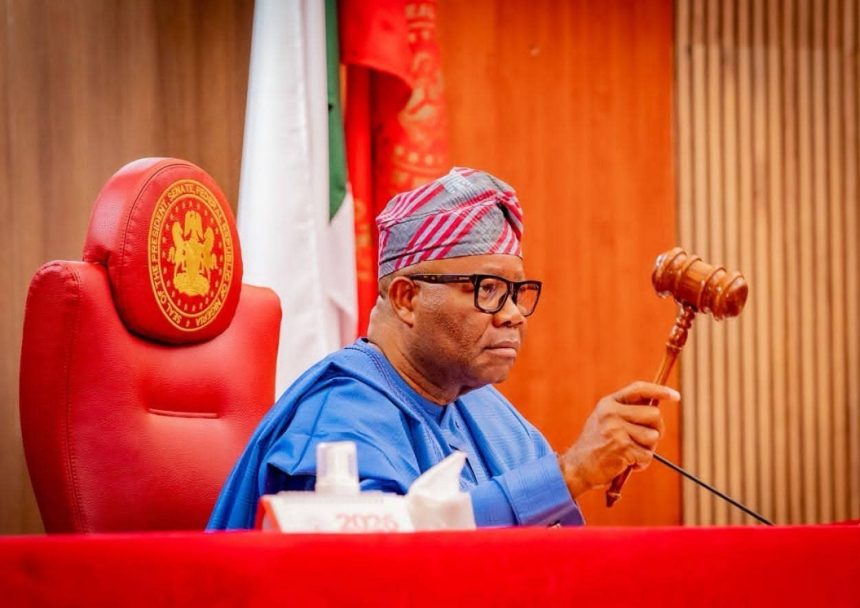
The controversy began when the 10th Senate under the leadership of Senate President Godswill Akpabio amended Order 4 of the red chamber’s rules to restrict eligibility for the office of Senate President and other principal positions to only serving senators in the 10th Assembly who secured re-election into the 11th Senate.
The amendment was widely interpreted as an attempt to narrow the field of contenders for the top Senate offices ahead of the 2027 general elections and to strengthen the influence of ranking lawmakers within the chamber.
However, in a dramatic turn of events during the next legislative sitting, the Senate reversed the amendment following a motion sponsored by Senate Leader Opeyemi Bamidele and backed by Deputy Senate President Jubril Barau.
The reversal restored the earlier provision of the rules, effectively reopening eligibility for the Senate Presidency and other principal offices to all senators-elect of the incoming 11th Assembly based on merit, regardless of whether they served in the current Senate.
The sudden policy reversal has fueled speculations within political circles that the Presidency may have intervened to prevent the emergence of restrictive conditions capable of shutting out preferred loyalists of President Bola Ahmed Tinubu from contesting for the leadership of the next Senate.
Political observers believe the Presidency would be more comfortable with trusted allies such as former Edo State Governor Adams Oshiomhole or Imo State Governor Hope Uzodinma emerging as President of the 11th Senate should they eventually secure seats in the red chamber.
The Senate’s latest resolution on swearing-in procedures and election of presiding officers, passed on Monday, May 11, 2026, also outlines conditions guiding participation in Senate leadership elections.
Under the resolution, any senator-elect unable to take the Oath of Allegiance and Oath of Membership during the first sitting would still be entitled to be sworn in at a subsequent sitting by the Senate President.
The resolution further provides that any senator-elect who fails or neglects to take the oath within the stipulated period could have the seat declared vacant, subject to constitutional provisions, with the Independent National Electoral Commission mandated to conduct a fresh election in the affected senatorial district.
On leadership elections, the Senate reaffirmed that senators-elect may participate in the election of the Senate President and Deputy Senate President even before taking their oaths.
The chamber also retained the ranking principle for determining nominations for presiding officers, placing priority on returning senators based on the number of re-elections, followed by former members of the House of Representatives and then first-time senators.
Additionally, committee appointments are expected to reflect Nigeria’s six geopolitical zones to prevent dominance by a few regions.
Before the reversal of Order 4, the Senate had initially resolved that only lawmakers with at least two full Senate terms including one immediately preceding the election would qualify to contest for Senate President, while principal officers were required to have served for at least one full term immediately before appointment.
The reversal is now seen as a major political opening ahead of the battle for control of the 11th Senate, with analysts predicting an intense contest influenced heavily by the Presidency and power blocs within the ruling All Progressives Congress.