Nigeria’s Leadership Must Choose Development Over Political Rhetoric
By Nze Emmanuel Ehirim (United Kingdom)
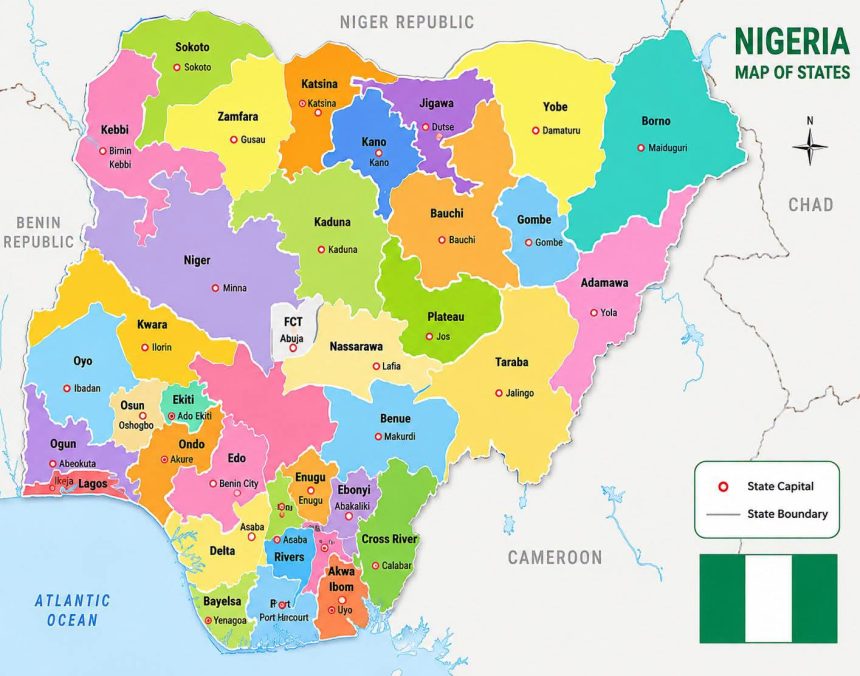
There is a saying that captures one of the greatest tragedies confronting modern Nigeria: “Until leadership begins to prioritise sustainable development and institutional strengthening over political rhetoric, the nation risks remaining trapped in a cycle of unfulfilled promises and declining public welfare. Thirty-six states of the federation with seven hundred and seventy-four local governments, yet no running water and no functional electricity.”
This is more than a criticism of government. It is a painful reflection of the daily reality confronting millions of Nigerians. More than six decades after independence, Africa’s largest economy continues to struggle with some of the most basic responsibilities of governance. Across the federation, citizens wake each day searching for water, fuelling electricity generators, navigating impassable roads and providing for themselves services that governments are constitutionally established to deliver.
The irony is impossible to ignore. Nigeria boasts 36 state governments, 774 local government councils, the Federal Capital Territory, hundreds of ministries, departments and agencies, and one of the largest political structures on the African continent. Yet the average Nigerian still depends on boreholes for drinking water, diesel generators for electricity and private security arrangements for safety. This contradiction should concern every public office holder.
Far too often, political discourse is dominated by appointments, defections, alliances and election victories, while issues such as infrastructure, education, healthcare, industrialisation and institutional reform receive far less sustained attention. Development cannot be measured by campaign speeches or elaborate commissioning ceremonies. It should be measured by whether children attend schools that inspire learning, whether hospitals save lives, whether businesses enjoy reliable electricity, whether communities have access to clean water and whether citizens can travel safely on well-maintained roads. These are the standards by which successful nations are judged.
Nigeria possesses enormous natural and human resources. The country is richly endowed with oil, gas, solid minerals, fertile agricultural land and one of the world’s youngest and most entrepreneurial populations. Yet these advantages have not translated into broad-based prosperity because governance has too often prioritised politics over policy.
Sustainable development requires institutions that outlive political administrations. Strong institutions guarantee continuity regardless of which political party occupies office. They promote accountability, transparency and efficient service delivery. They reduce waste, discourage corruption and strengthen public confidence. Unfortunately, institutions in Nigeria often remain weak while personalities dominate governance.
Every election cycle promises transformation. Manifestoes are unveiled. Campaign slogans are repeated. Groundbreaking ceremonies are televised. Yet many projects never progress beyond foundation level, while completed infrastructure deteriorates because maintenance receives little attention. This recurring cycle of promises and disappointment has steadily eroded public trust.
The local government system illustrates this challenge vividly. Established to bring governance closer to the people, local governments should serve as engines of grassroots development. They are expected to provide primary healthcare, rural roads, potable water, sanitation, markets and local economic development. Instead, many communities remain neglected despite elected councils and statutory allocations.
The consequences are visible across the country. Young people migrate in search of opportunities. Businesses spend enormous sums generating their own electricity. Farmers struggle to transport produce to markets. Manufacturers relocate to countries with more reliable infrastructure. Healthcare professionals leave for better working conditions abroad. These are not isolated problems. They are symptoms of systemic governance failures.

Electricity remains perhaps the most glaring example. Despite decades of reforms, billions of dollars in investment and repeated policy changes, many Nigerians still receive only a few hours of electricity daily. Businesses continue to shoulder enormous energy costs, making Nigerian products less competitive both locally and internationally.
Water presents an equally troubling picture. In many urban and rural communities alike, households depend almost entirely on privately funded boreholes. Public water schemes that once served communities have deteriorated while rapid population growth has outpaced infrastructure investment. Access to clean water should never be a luxury. It is a fundamental public service and a basic responsibility of government.
No nation achieves lasting prosperity through political competition alone. Prosperity comes from long-term planning, investment in infrastructure, quality education, scientific innovation, efficient public institutions and policies that encourage productive enterprise rather than patronage. Countries that have transformed their economies did so because leaders deliberately invested beyond election cycles. Nigeria must embrace the same philosophy.
Leadership should be judged not by the number of political supporters appointed into office but by measurable improvements in the quality of citizens’ lives. Can families access clean drinking water? Can industries operate without generators? Can children learn in safe classrooms? Can hospitals function effectively? Can young graduates find meaningful employment? These are the questions that truly matter.
History rarely remembers politicians for campaign speeches. It remembers leaders who built enduring institutions, expanded opportunities, strengthened democracy and improved living standards. Nigeria does not lack potential. It does not lack talent. It does not lack resources. What the country urgently requires is leadership committed to sustainable development rather than perpetual political calculation.
The nation’s future depends not on the next election slogan but on the next generation of policies capable of transforming public institutions into engines of national progress. Until that transformation occurs, the painful paradox will remain: Thirty-six states. Seven hundred and seventy-four local governments. Yet millions of citizens still struggle every day for clean water and reliable electricity.
That is not merely a development challenge. It is a national call to conscience.
ABOUT THE AUTHOR
Nze Emmanuel Ehirim is a Corporate Communications Practitioner, public affairs commentator and community development advocate. He is the Chief Executive Officer of the Nze Emmanuel Ehirim Social Justice Foundation and writes extensively on governance, leadership, accountability, social justice and sustainable development.
Website: https://nzesocialjusticefoundation.org
Email: [email protected]