Exclusive Report by Chinedum Anayo | 9News Nigeria
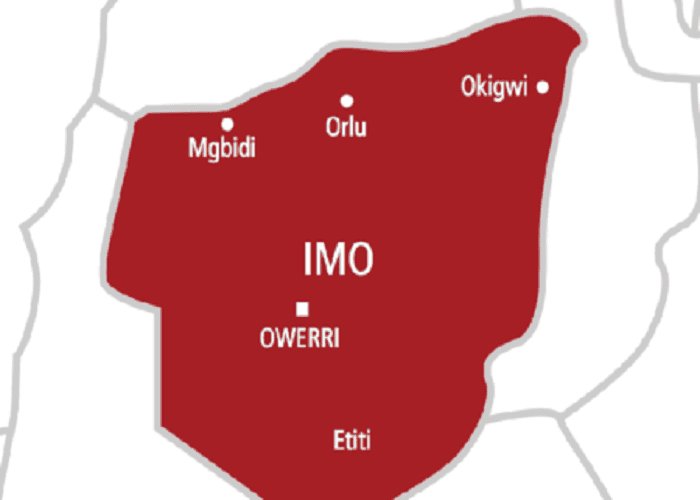
Following political consultations ahead of the 2027 Imo State governorship election, the debate over the proposed Charter of Equity has brought attention to the sequence of political power-sharing among the state’s three senatorial zones: Owerri, Okigwe and Orlu.
A review of Imo State’s democratic history since the return to civilian rule in 1999 shows that Orlu Zone has produced three of the five governors who have held office during the period, while Okigwe and Owerri have each produced one.
The difference becomes even more pronounced when the length of time spent in office is considered.
Udenwa: Orlu Zone, 1999–2007
Chief Achike Udenwa became governor of Imo State following the 1999 governorship election and was sworn in on May 29, 1999.
Udenwa, a native of Ideato South Local Government Area, is from Orlu Senatorial Zone (Imo West).
He won re-election in 2003 and completed two four-year terms, leaving office on May 29, 2007.
His two-term administration marked the beginning of the present democratic era in Imo State.
Zone: Orlu
Period: 1999–2007
Time in office: 8 years
Ohakim: Okigwe Zone, 2007–2011
Udenwa was succeeded by Chief Ikedi Ohakim, who took office on May 29, 2007.
Ohakim is from Isiala Mbano Local Government Area, which falls within Okigwe Senatorial Zone (Imo North).
His emergence represented a shift in power from Orlu to Okigwe.
He served one four-year term before losing the 2011 election to Rochas Okorocha.
Zone: Okigwe
Period: 2007–2011
Time in office: 4 years
The sequence was therefore:
Orlu → Okigwe
Okorocha: Orlu Zone, 2011–2019
Rochas Okorocha defeated Ohakim in the 2011 governorship election and was sworn in on May 29, 2011.
Okorocha, like Udenwa, is from Ideato South Local Government Area, placing him in Orlu Senatorial Zone.
He served two terms and left office on May 29, 2019.
His eight years in office returned the governorship to Orlu and made Orlu the first of the three zones to produce two governors since 1999.
Zone: Orlu
Period: 2011–2019
Time in office: 8 years
The sequence had now become:
Orlu → Okigwe → Orlu
Ihedioha: Owerri Zone, 2019–2020
The 2019 election produced another change in the zoning pattern when former Deputy Speaker of the House of Representatives, Emeka Ihedioha, won the governorship on the platform of the Peoples Democratic Party.
Ihedioha was from Aboh Mbaise Local Government Area, in Owerri Senatorial Zone (Imo East).
He was sworn in on May 29, 2019, becoming the first governor from Owerri Zone since the beginning of the Fourth Republic.
However, his tenure was short-lived.
On January 14, 2020, the Supreme Court nullified Ihedioha’s election and declared Hope Uzodimma the winner of the 2019 governorship election.
Uzodimma was sworn in on January 15, 2020.
Ihedioha therefore spent approximately seven months and 17 days in office.
Zone: Owerri
Period: May 29, 2019 – January 15, 2020
Time in office: approximately 7½ months
The sequence had therefore changed to:
Orlu → Okigwe → Orlu → Owerri
Ihedioha’s short tenure is important to the present zoning argument because, although Owerri produced a governor in 2019, it did not complete a four-year term.
Uzodimma: Orlu Zone, 2020–Present
Following the Supreme Court judgment, Senator Hope Uzodimma assumed office as governor on January 15, 2020.
Uzodimma is from Oru East Local Government Area, which is in Orlu Senatorial Zone.
He won the 2023 governorship election and began a second term in January 2024.
As of August 2026, Uzodimma has spent approximately six years and seven months as governor and is constitutionally due to leave office at the end of his second term in 2028.
Zone: Orlu
Period: January 15, 2020–present
Time in office as of August 2026: approximately 6 years, 7 months
The current sequence is therefore:
Orlu → Okigwe → Orlu → Owerri → Orlu
The Numbers Behind the Zoning Debate
When the periods are put together, the imbalance becomes clear.
From May 29, 1999, to August 2026, roughly 27 years and three months of the Fourth Republic have elapsed.
Of that period, Orlu has controlled the governorship for more than 22 years, while Okigwe has held it for four years and Owerri for less than one year.
In percentage terms, Orlu has therefore accounted for roughly 83 per cent of the period since 1999.
What the History Means for 2027
This historical record has become central to the renewed argument over the Imo Charter of Equity, which seeks to establish a rotational arrangement among the three senatorial zones.
The major political argument for Owerri is strengthened by the fact that it has had the shortest period in office since 1999, particularly because Ihedioha’s administration lasted only months.
However, the situation is not entirely straightforward.
Okigwe stakeholders can point to their own four-year tenure under Ohakim and argue that their zone has also not enjoyed equal rotation.
This is precisely why the recent meeting between Owerri and Okigwe stakeholders has become politically significant.
Meanwhile, Orlu remains a major factor in the calculations because of its dominant record since 1999 and the emergence of politicians from the zone who may be interested in the 2027 contest.
The Political Sequence Since 1999
The history can be summarised simply:
1999–2007 — Orlu: Achike Udenwa
2007–2011 — Okigwe: Ikedi Ohakim
2011–2019 — Orlu: Rochas Okorocha
2019–2020 — Owerri: Emeka Ihedioha
2020–2028 — Orlu: Hope Uzodimma
That makes Orlu the only zone to have produced three governors since 1999.
With Governor Uzodimma expected to leave office in 2028, the 2027 election will therefore be the first major test of whether the Charter of Equity can translate the principle of rotation into an actual political consensus.