By Princely Onyenwe | News Desk
Imo State has recorded a major breakthrough in healthcare delivery with the successful completion of its first robotic-assisted surgery, placing the state among a growing number of locations in Nigeria where highly specialised surgical procedures can now be performed with advanced robotic technology.
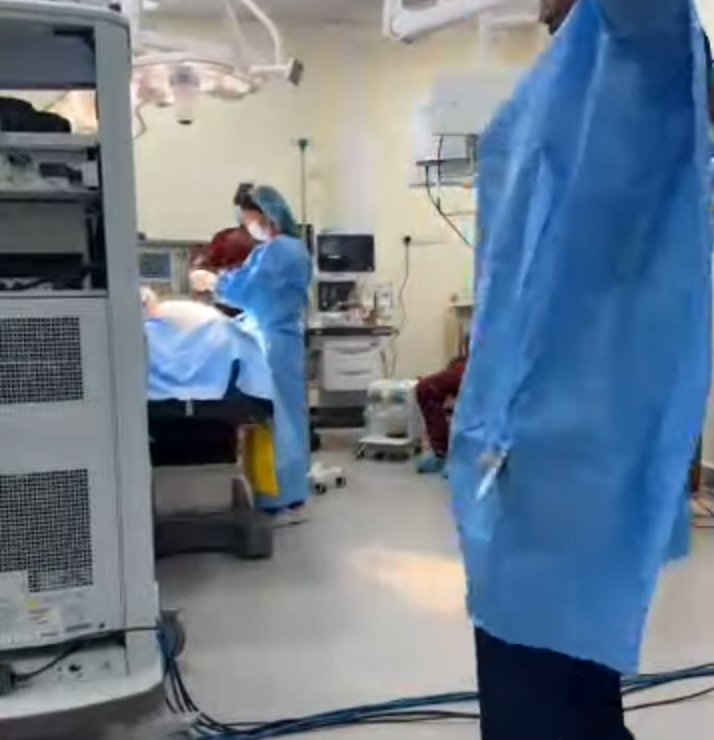
The landmark procedure was carried out on Friday, August 21, 2026, at the Imo Robotics and Oncology Centre (IROC), located within the Imo Specialist Hospital Complex, Umuguma, Owerri, with a team of medical specialists led by Professor Kingsley Ekwueme, a UK-based Consultant Urological.
The development makes Imo the first state in the South-East to record a robotic-assisted surgical procedure. Current reports independently confirm that the operation was successfully performed at the facility on Friday.
The achievement represents a significant development in the state’s effort to expand access to advanced specialist healthcare and reduce the pressure that often drives Nigerians to seek complex medical treatment outside their communities or abroad. It also marks the practical commencement of the robotic surgery programme that the Imo State Government announced earlier this year.
Professor Ekwueme, who led the surgical team, described the operation as a complete success and highlighted the particular importance of robotic-assisted techniques in the treatment of localised prostate cancer. According to him, the technology gives surgeons enhanced precision and allows them to remove cancerous tissues while working to preserve important functions, including urinary and sexual control.
Ekwueme’s involvement gives the Imo project an additional dimension. The surgeon has built a professional career around minimally invasive urological and robotic surgery and has previously pioneered major robotic procedures in Nigeria. His professional profile identifies him as a UK-trained consultant urologist and robotic surgeon with specialist training and international collaborations in robotic surgery.
His return to contribute to the development of advanced surgical capacity in his home state also underscores the growing importance of Nigerian medical professionals in the diaspora bringing specialised knowledge, technology and international experience back into the country.
Ekwueme had previously spoken publicly about his determination to make world-class treatment available to Nigerians without requiring patients to travel overseas for specialised care.
Governor Hope Uzodinma, who witnessed the landmark procedure, described the development as a major step towards providing Imo residents with quality and affordable healthcare. He said the facility was conceived not merely as a treatment centre, but as part of a wider healthcare system that would promote early detection, prevention, specialist treatment and continuous medical training.
Uzodinma also stressed that the project was designed around a Public-Private Partnership model, with substantial private-sector participation intended to support sustainability and professional management.
The arrangement is particularly significant because the long-term value of robotic surgery will depend not simply on acquiring sophisticated equipment, but on keeping the technology operational, maintaining it properly, developing local expertise and ensuring that patients can actually afford the services.
That sustainability question is perhaps the most important test now facing the project. The launch of a robotic surgery programme is undoubtedly a major technological achievement, but its ultimate success should be measured beyond the symbolism of a first operation.
The real impact will emerge through the number of patients treated, the continuity of surgical services, the training of Nigerian doctors and other healthcare professionals, the maintenance of the equipment, the availability of essential support systems and the ability of ordinary residents to access the service.
This is why the Governor’s emphasis on training and competence is significant. Before the procedure, Uzodinma said his administration did not want to acquire sophisticated medical equipment only to leave it idle, insisting that technology must be accompanied by competence and continuous training.
The state government has linked the Robotics and Oncology Centre to the broader redevelopment of the Imo Specialist Hospital Complex, which includes expanded intensive care capacity, modern surgical theatres, advanced diagnostic services, neonatal care and specialised oncology facilities.
The government says the broader objective is to create a more comprehensive specialist healthcare environment rather than a stand-alone technological showcase.
The project also has its roots in an agreement reached in January between the Imo State Government, through the Heartland Hospital Management Corporation, and IDCL Surgicals Limited, led by Professor Ekwueme. The agreement was designed to establish and support a robotic surgical centre while combining government oversight with private-sector technical expertise, infrastructure, equipment and operational support.
For Imo, the development therefore represents more than a ceremonial medical milestone. It is an opportunity to build a sustainable specialist healthcare ecosystem capable of attracting patients, retaining medical professionals, transferring advanced skills and potentially positioning Owerri as a regional destination for complex medical treatment.
The timing is also noteworthy. Nigeria has already witnessed the introduction of robotic-assisted surgery, with Professor Ekwueme himself playing a pioneering role in the country’s earlier robotic prostate cancer surgery in Lagos in 2025.
What makes Friday’s development particularly significant is that the technology has now been established in Imo and, by extension, in the South-East, bringing a level of specialist surgical capability closer to patients in the region.
For residents, however, the biggest question will ultimately be accessibility. Advanced healthcare infrastructure has little transformative value if the average patient cannot afford to use it. The Governor has therefore urged residents to participate in the Imo State Health Insurance Scheme, stressing that wider insurance coverage will help make sophisticated medical treatment more accessible.
The first robotic-assisted operation is consequently both an achievement and a responsibility. It demonstrates that Imo can host sophisticated medical technology and attract highly trained specialists, but the greater challenge is ensuring that the equipment remains functional, the professionals are continuously trained, the partnership remains transparent and effective, and the benefits reach ordinary citizens.
For Professor Kingsley Ekwueme and his medical team, the successful operation represents another milestone in a career dedicated to advancing robotic and minimally invasive surgery in Nigeria. For Governor Hope Uzodimma’s administration, it provides a tangible demonstration of its investment in specialised healthcare infrastructure. And for Imo State, it offers the prospect of becoming a stronger regional centre for advanced medical care.
The historic operation should therefore be celebrated, but its real legacy will not be determined by the first patient alone. It will be determined by what happens after the cameras leave, the headlines fade and the system is required to function every day.
If the equipment is maintained, specialists are developed, local medical personnel receive sustained training, patients can access the service through affordable financing and the public-private partnership delivers on its promises, Friday’s milestone could become the beginning of a lasting transformation in healthcare delivery in Imo State.
Imo has made the first move. The real test now is to make the achievement sustainable.
For more inquiries on this news contact 9News Nigeria on +234 08036856526