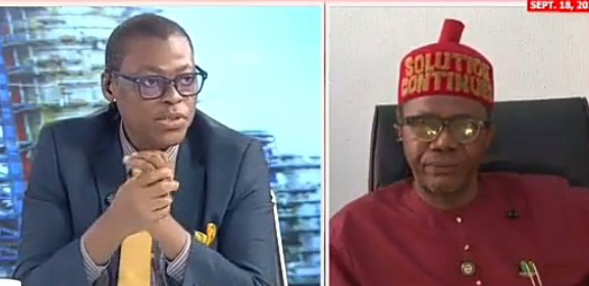
- ARISE TV debate exposes gap between loan value and actual drawdown
By Suzy Chukwuechedom | Anambra
AWKA, ANAMBRA STATE — A fresh controversy has emerged over Anambra State’s external debt profile after ARISE TV analyst Rufai Oseni challenged the state government’s claim that former Governor Peter Obi’s administration contracted $123.77 million in external loans, citing Debt Management Office (DMO) records showing a substantially lower figure for Anambra’s external debt around the period.
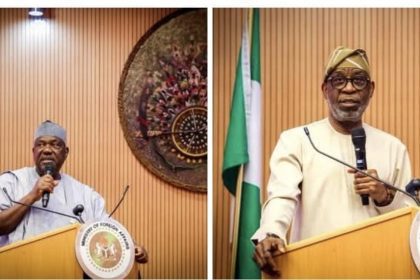
The dispute became the focus of a live television exchange on Friday, September 18, between Oseni and Anambra State Commissioner for Information and Value Reorientation, Dr. Law Mefor, with the discussion highlighting a critical distinction between the total value of loan facilities approved or signed and the amount actually drawn down.
The Anambra State Government had said eight external borrowing facilities associated with projects implemented during Obi’s administration were valued at $123.77 million, with an outstanding balance of about $92.35 million, equivalent to N127.37 billion as of June 30, 2026. The government said the facilities covered areas including malaria control, agriculture, healthcare, education, community development and erosion management.
The government has maintained that the obligations remained loans even where they carried Federal Government guarantees, arguing that Anambra’s FAAC allocations continue to be deducted to service the facilities. Mefor reiterated this position during the ARISE TV interview, saying the loans were not grants and that successive administrations inherited the repayment obligations.
Oseni, however, questioned whether the $123.77 million represented money actually accessed by Anambra during Obi’s tenure. The question placed the emphasis on the amount drawn down rather than the total value of facilities signed or approved.
When asked how much of the $123.77 million had actually been drawn by the time Obi left office on March 17, 2014, Mefor acknowledged that he did not have the precise drawdown figures at hand.
Mefor said the figures would have to be reconciled with the DMO before the exact amount could be established. He nevertheless maintained that Obi’s administration had committed Anambra to the loan obligations and argued that the state remained responsible for servicing them.
The admission has shifted the centre of the controversy from whether the eight loan facilities existed to a more specific question: how much was actually drawn down during Obi’s administration, and what amount remained outstanding when he handed over power?
Recent reports of the ARISE TV exchange quoted Mefor as acknowledging that the amount actually drawn during Obi’s tenure should be distinguished from the total amount approved or committed. He said the precise figures needed to be obtained and reconciled with the DMO.
The distinction is significant because the Anambra Government’s $123.77 million figure represents the value of the eight facilities it attributes to the Obi administration, while debt records from the period may reflect a different measure of the state’s external debt exposure. A report citing DMO records put Anambra’s external debt at $30.32 million as of December 31, 2013, although that historical figure alone does not settle the separate question of the cumulative amount drawn under each individual facility.
The government’s position remains that the facilities created obligations for Anambra and that deductions from the state’s federal allocations continue to service them. The state has also argued that Obi could have declined participation in some federally guaranteed development-financing arrangements, pointing to Governor Chukwuma Soludo’s decision to opt out of Nigeria’s CARES programme as an example of a state exercising such a choice.
The controversy follows Obi’s recent rejection of claims that he left Anambra with unpaid financial obligations when he handed over to Willie Obiano on March 17, 2014. Obi has maintained that he left no unpaid salaries, pensions, gratuities or certified contractor liabilities and has challenged the state government to produce evidence contradicting his account.
The former governor has also said his administration left substantial funds in the state, while the current administration has disputed aspects of his account of Anambra’s finances at the end of his tenure.
The latest exchange does not, however, by itself resolve the broader debt dispute. The government has documentary records showing eight external financing facilities linked to projects undertaken during the period, while the unresolved issue is the relationship between the facilities’ signed values, actual disbursements, repayments and balances outstanding at different dates.
For the controversy to be conclusively settled, the relevant DMO records would need to show, facility by facility, the amount approved, the amount actually drawn, the date of each drawdown, repayments made and the outstanding balance at March 17, 2014. Those figures would provide a clearer basis for determining the financial obligations inherited by subsequent administrations.
For now, the central issue is therefore not simply whether Anambra had external loan obligations, but how much of the $123.77 million was actually drawn under Obi, how much remained outstanding when he left office, and how the current N127.37 billion balance was calculated.
The figures and records remain subject to reconciliation between the Anambra State Government and the DMO, making the drawdown question the latest flashpoint in the continuing dispute over Obi’s financial record as governor.