Report by Obinna Ejianya (9News Nigeria – Abuja)
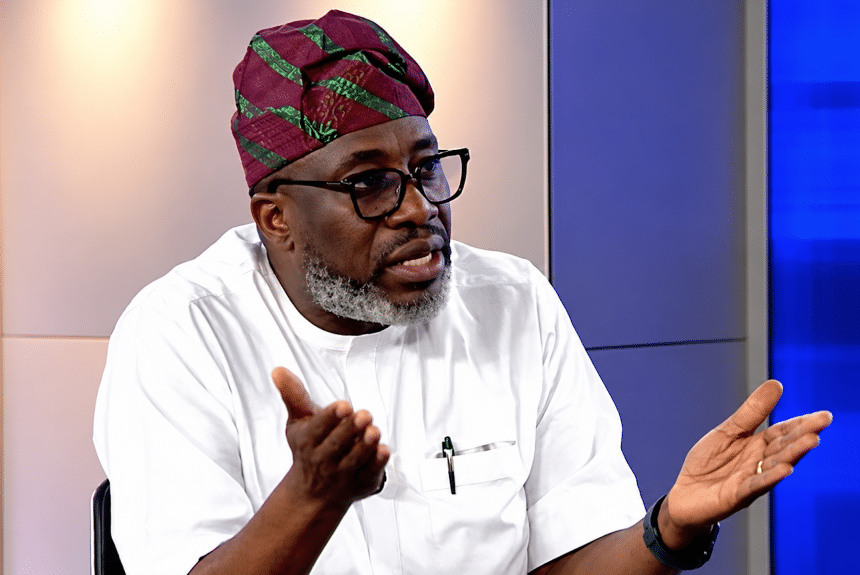
A spokesperson for the Tinubu/Shettima Presidential Campaign Council, Segun Sowunmi, has come under criticism over remarks about the imprisonment of Chief Moshood Kashimawo Olawale – MKO Abiola, with former minister Solomon Dalung and social reform advocate Richard Odusanya demanding a public apology.
The controversy centres on Sowunmi’s reference to Abiola’s detention while warning opposition politicians against declaring themselves winners of the 2027 presidential election ahead of the Independent National Electoral Commission’s official announcement. Sowunmi was recently reported to have joined the media and strategic communication directorate of President Bola Tinubu’s campaign council.
His invocation of the June 12 democracy icon, particularly the remark that Abiola was jailed for doing something “stupid,” has drawn objections from critics who say it trivialises the struggle against military rule and the sacrifice of a man widely regarded as the winner of the annulled June 12, 1993 presidential election.
Reports of the comments place them within Sowunmi’s argument that opposition candidates should pursue electoral grievances through established legal channels rather than proclaim themselves president. He cited Abiola’s detention under General Sani Abacha’s military government as a warning about the consequences of such action.
However, Dalung and Odusanya have challenged the comparison, arguing that Abiola’s attempt to reclaim an annulled electoral mandate cannot be stripped of its historical circumstances and presented merely as a cautionary tale for contemporary opposition politicians.
Dalung, a former Minister of Youth and Sports Development, said Sowunmi’s reference diminished the significance of a national figure whose ordeal helped define Nigeria’s democratic aspirations.
According to a media report, Dalung argued that political disagreement did not justify treating Abiola’s imprisonment as a convenient warning to opponents. He maintained that Sowunmi could challenge opposition politicians’ tactics while still respecting the history and sacrifice associated with June 12.
The former minister also questioned the consistency of the remarks with Tinubu’s longstanding association with the pro-democracy struggle.
“Did you stop to consider that contradiction before making that statement?” Dalung asked, urging Sowunmi to reflect and publicly apologise.
In a separate statement submitted to 9News Nigeria, Odusanya, Convener of the Africa Covenant Rescue Initiative (ACRI)/WITNESS 2026/2036, rejected the description of Abiola’s action as stupid, saying the late businessman and politician sacrificed his freedom and ultimately his life in defence of the people’s mandate.
Odusanya quoted the disputed remark as: “Of course MKO Abiola was thrown in jail for doing something that stupid.”
He described the statement as insensitive, arguing that Abiola’s declaration at Epetedo, Lagos, on June 11, 1994, was a response to the annulment of an election he was widely acknowledged to have won.
“Segun Sowunmi, have you considered the weight of the name you invoked?” Odusanya asked.
For the reform advocate, the central issue was the attempt to characterise resistance to the denial of an electoral mandate as an act deserving ridicule. He maintained that Abiola’s place in history rested on his refusal to surrender that mandate despite the personal consequences.
Abiola was arrested in June 1994 following his declaration and faced treason charges under the military government. He remained in detention until his death on July 7, 1998. His declaration and imprisonment became defining episodes in the campaign against military rule.
Odusanya argued that using that ordeal to disparage Abiola overlooked the distinction between the military government’s prosecution of him and the democratic principles his supporters believed he was defending.
He also invoked the late human rights lawyer, Chief Gani Fawehinmi, as an example of courage and principled resistance, urging political actors to honour those who confronted injustice at considerable personal cost.
Like Dalung, Odusanya linked the controversy to Tinubu’s involvement in the June 12 movement, arguing that dismissing Abiola’s declaration also diminished the wider struggle in which the president and other pro-democracy campaigners participated.
“If you call MKO’s declaration stupid, you call Tinubu’s own struggle stupid,” he said.
The criticism has also extended to online commentary. Parallel Facts reported objections from a commentator who contrasted the portrayal of Abiola as deserving imprisonment with his subsequent national recognition as a symbol of democratic sacrifice.
Abiola’s legacy received formal federal recognition when then-President Muhammadu Buhari announced June 12 as Democracy Day in 2018 and awarded him the Grand Commander of the Federal Republic honour posthumously. The Abuja National Stadium was subsequently renamed after him in 2019.
Odusanya said his demand for an apology was intended to encourage correction and historical understanding, urging politicians to exercise greater care when discussing those whose sacrifices helped secure civilian rule.
He maintained that respect for Abiola must also be reflected in credible elections, equal treatment of citizens and accountable institutions.
“This is certainly not the democracy that our heroes envisioned,” he said.