- ‘Don’t Abandon Your People’ — Senate President’s Remarks Intensify Debate Over 11th Senate Leadership
By Princely Onyenwe | News Desk
ABUJA, Nigeria — Senate President Godswill Akpabio’s warning to governors against pursuing other political offices before completing their tenures has intensified attention on Imo State Governor Hope Uzodinma’s senatorial ambition, amid growing political tensions and disagreements involving Federal Capital Territory Minister Nyesom Wike ahead of the 2027 general election.
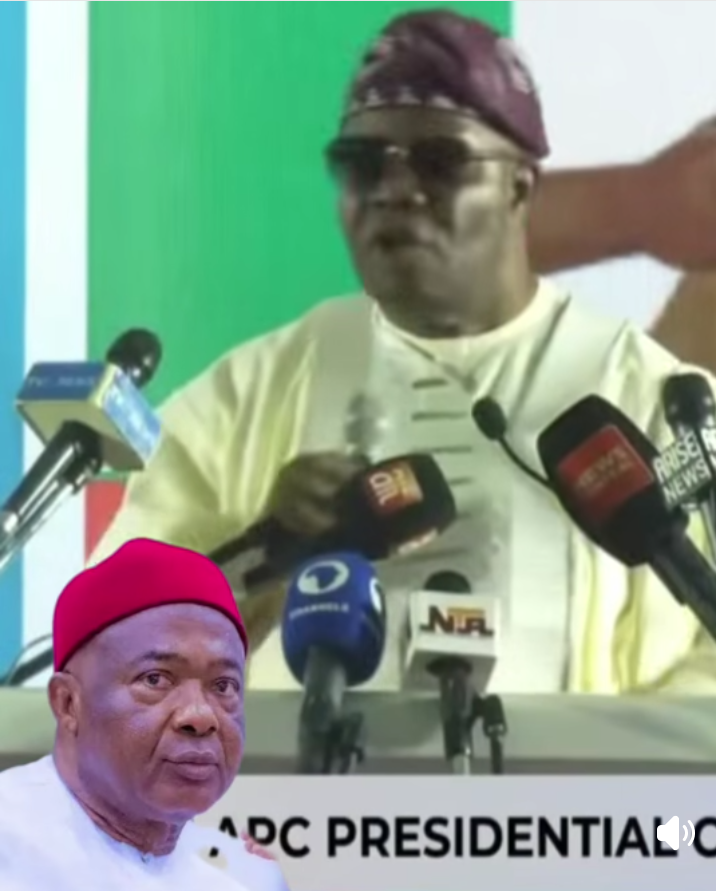
Akpabio made the remarks on Wednesday, October 14, during the inauguration of the All Progressives Congress (APC) Presidential Campaign Council in Abuja, where he appealed to President Bola Tinubu to support continuity in the National Assembly leadership and cautioned governors against abandoning their constituents in pursuit of other offices.
“And for my brothers who are governors, I want you to know: you must not abandon your people. I did eight years as a governor, and the Constitution says you should do eight years. There is no need for you to start eyeing another position that is not available,” Akpabio said.
Although Akpabio did not mention Uzodinma by name in the quoted passage, the remarks have been interpreted in the context of reports that the Imo governor intends to contest for the Senate presidency after securing the APC ticket for Imo West Senatorial District.
In a report published on October 15, Premium Times reported that Akpabio had sought Tinubu’s support for his return to the Senate and urged the President to discourage Uzodinma’s ambition to lead the 11th National Assembly. The contest is emerging as a significant political issue within the ruling party ahead of the next general election.
Uzodinma, who is serving his second term as Imo governor and chairs the Progressive Governors Forum, confirmed his intention to contest for the Imo West senatorial seat during the campaign council inauguration. He also urged APC members to reconcile their differences and work together towards the party’s electoral objectives.
His ambition has placed the transition from the Imo governorship to the Senate at the centre of an increasingly sensitive political debate. Uzodimma’s current tenure is expected to end in January 2028, while the 11th National Assembly is expected to emerge following the 2027 elections.
The controversy is unfolding alongside tensions involving Wike, whose political disagreements with some APC governors have added another dimension to the struggle for influence within the wider pro-Tinubu political camp.
In September, Minister Wike publicly named Uzodinma and Kwara State Governor AbdulRahman AbdulRazaq among governors he accused of working against him. The remarks highlighted disagreements among political figures who otherwise support Tinubu’s re-election, although the precise implications of those disputes for the Senate presidency remain uncertain.
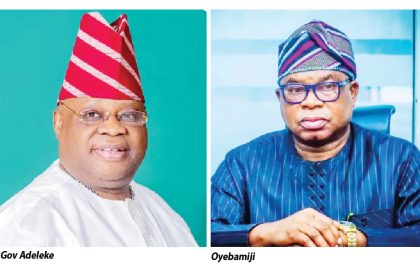
The inclusion of Wike and other politicians outside the APC in Tinubu’s Presidential Campaign Council has further illustrated the breadth of the coalition being assembled for 2027. Wike belongs to the Peoples Democratic Party (PDP), while Anambra State Governor Chukwuma Soludo belongs to the All Progressives Grand Alliance (APGA). Osun State Governor Ademola Adeleke won his state’s 2026 governorship election on the platform of the Accord Party.
Their participation in the campaign council demonstrates cooperation around Tinubu’s re-election bid, but it does not establish a common position on the leadership of the next Senate. Presidential alliances and legislative leadership contests involve distinct political calculations, and the eventual Senate president will be elected by senators after the next National Assembly is constituted.
The emerging rivalry has nevertheless raised questions about whether competing ambitions could deepen divisions among political leaders who are expected to work together on the President’s re-election campaign.
For Imo residents, the debate has a direct political dimension. While Uzodimma’s supporters may regard his senatorial ambition as a legitimate next step in his political career, critics may question the timing and argue that completing his governorship tenure should remain his immediate priority.
However, the Senate presidency is not an office that any governor or political leader can secure through a unilateral declaration. Its emergence depends on the composition of the Senate after the elections and the ability of a candidate to obtain the support of fellow senators. Presidential backing and party negotiations may influence the contest, but the final decision rests with the elected members of the chamber.
The public exchange has also drawn attention to the responsibilities of national leaders in a country facing persistent economic pressures, insecurity and demands for better public services. Political disagreements are an established feature of democratic competition, but Nigerians have a legitimate interest in seeing their leaders handle rivalries with restraint and respect for public institutions.
The concern, therefore, extends beyond the personalities involved. As the 2027 elections approach, the question is whether competing ambitions can be managed through political dialogue and negotiation without undermining cooperation within the ruling party or distracting public officials from their responsibilities.
Akpabio’s warning, Uzodinma’s declared senatorial ambition and Wike’s disagreements with some APC governors have placed the struggle for influence within the pro-Tinubu camp under renewed scrutiny. How the parties involved manage these competing interests could shape discussions around the leadership of the next Senate.
For now, the contest remains unresolved, and the final decision will depend on the political alignments and votes that emerge after the 2027 National Assembly elections.
For inquiries on this news report contact 9News Nigeria on +234 08036856526