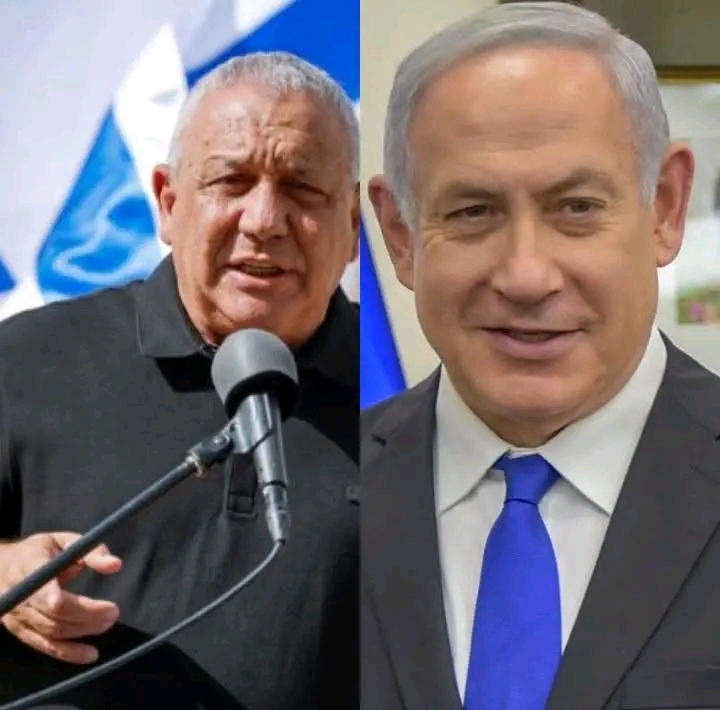
Israeli Prime Minister Benjamin Netanyahu has ruled out forming a coalition government with Arab political parties, despite the decisive role their parliamentary seats could play in determining who governs Israel following the country’s inconclusive October 27, 2026, general election.
The election has produced a political stalemate, with neither Netanyahu’s ruling bloc nor the opposition led by former Israel Defence Forces (IDF) chief Gadi Eisenkot securing the 61 seats required for a majority in the 120-member Knesset.
Results released after the counting of votes show Netanyahu’s Likud-led bloc with 53 seats, while Eisenkot’s opposition alliance secured 48. Arab-led political parties collectively won 19 seats, giving them considerable influence over the formation of the next government.
Likud emerged as the largest individual party with 27 seats, compared with 21 for Eisenkot’s Yashar party. However, the result represents a significant setback for Netanyahu’s governing alliance, which previously controlled a much larger parliamentary majority.
Netanyahu has repeatedly described a government dependent on Arab political parties as unacceptable, arguing that such an arrangement could compromise Israel’s national security. He has called the prospect of relying on Arab-led parties a disgrace and insisted that Israel needs a right-wing, nationalist administration.
However, the election has placed the Arab parties in an unusually influential position. The Joint List won 11 seats, while the United Arab List (Ra’am), led by Mansour Abbas, secured eight.
Together, their 19 seats could provide the opposition with a parliamentary majority if an agreement can be reached.
Arab Parties Emerge as Potential Kingmakers
The opposition’s arithmetic presents an opportunity for Eisenkot. His 48-seat bloc, combined with the 19 seats held by the Arab parties, would produce a potential 67-seat majority.
But achieving that arrangement will not be straightforward.
Eisenkot and several of his political allies had previously ruled out including Arab parties in their government. Eisenkot has maintained that prospective coalition partners must recognise Israel as a Jewish and democratic state, accept the principles of its Declaration of Independence and recognise Hamas as a terrorist organisation.
He has also said that Ra’am would not be part of a government under his leadership because, in his assessment, it does not meet those conditions.
Nevertheless, the opposition is divided over whether Arab lawmakers should be excluded entirely or allowed to support a government from outside the formal coalition.
Yair Golan, leader of the Democrats, has openly advocated cooperation with Arab political parties, arguing that Israel cannot continue to exclude its Arab citizens from the political process.
The Joint List has also expressed willingness to cooperate with the opposition to establish an alternative government without Netanyahu. Ra’am’s Mansour Abbas has indicated that his party is prepared to engage in negotiations.
Previous Coalition With an Arab Party Sets a Precedent
Israel has previously experienced a governing coalition involving an independent Arab political party.
In 2021, Ra’am joined a broad coalition led by Naftali Bennett and Yair Lapid, helping to end Netanyahu’s 12-year consecutive period in office. It was the first time an independent Arab party formally participated in an Israeli governing coalition.
That government survived for approximately 18 months before collapsing in 2022, paving the way for Netanyahu’s return to power.
The precedent demonstrates that Arab political participation in an Israeli government is not constitutionally impossible. However, the political and security circumstances surrounding the present election are considerably more complicated.
Would Arab Parties Support Israeli Military Operations Against Iran?
One of the major questions surrounding a possible coalition arrangement concerns Israel’s military operations and wider confrontation with Iran.
It would be inaccurate, however, to assume that Arab political parties would automatically support or oppose every Israeli military operation simply because they are Arab-led.
The Joint List and Ra’am have different political orientations, priorities and approaches to national security. Their participation in government would likely involve negotiations over military policy, Palestinian rights, civilian protection, regional diplomacy and the use of military force.
Ra’am’s participation in the 2021 coalition demonstrated its willingness to negotiate on domestic governance and parliamentary cooperation. It did not establish an unconditional commitment to support every military decision taken by an Israeli government.
Consequently, whether either party would support a particular military operation against Iran would depend on the circumstances, the government’s justification, the perceived security threat and the terms of any coalition agreement.
There is currently no established basis for claiming that the two parties have promised unconditional support for an Israeli military campaign against Iran.
Herzog Moves to Prevent Another Election
Meanwhile, Israeli President Isaac Herzog has urged political leaders to approach coalition negotiations with open minds and make every effort to prevent another general election.
Herzog warned that another electoral contest would deepen political uncertainty and called on rival parties to consider compromises in the national interest.
The Central Elections Committee is expected to submit the certified election results to the president on November 4, while the newly elected Knesset is scheduled to convene on November 10.
If no political leader succeeds in forming a government within the constitutional process, Israel could face another election, potentially extending the political crisis into next year.
Netanyahu Also Faces Questions Over Election Allegations
Following the disappointing outcome, Netanyahu’s Likud Party alleged that the election had been stolen through irregularities involving Arab political parties.
However, the allegations of systematic electoral interference have not been substantiated. Election officials have reportedly found no evidence that would invalidate the overall results.
The controversy has further heightened tensions between Netanyahu’s political camp and Arab political representatives.
Ultimately, the election has exposed a fundamental contradiction in Israeli politics: Arab-led parties have secured enough parliamentary representation to influence the country’s next government, yet major political contenders remain reluctant to accept their participation.
The coming coalition negotiations will therefore test not only Netanyahu’s political survival but also the willingness of Israel’s political establishment to accommodate its Arab citizens within the country’s democratic institutions.