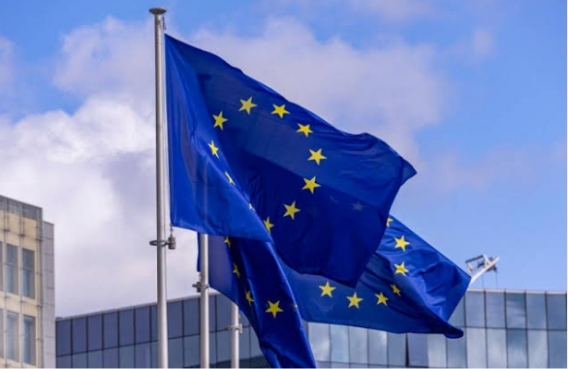
The European Union is reportedly set to abandon plans for a full-scale election observation mission for Nigeria’s 2027 general elections, marking a major change in its two-decade engagement with the country’s electoral process.
According to a report published Monday, the EU is instead expected to maintain a much smaller team in Abuja to monitor developments and report to Brussels.
The reported decision is attributed to worsening security conditions and what the bloc considers hostile treatment of its officials following its critical assessment of Nigeria’s 2023 elections.
If confirmed, the move would represent a significant reduction in the EU’s direct presence during a Nigerian general election.
The development is particularly notable because Nigeria has been one of the EU’s longest-running election observation engagements in Africa.
Two decades of EU election monitoring
The EU has observed Nigeria’s general elections repeatedly over the past two decades.
Its records show missions for the 2003, 2007, 2011, 2015, 2019 and 2023 general elections. The EU itself described the 2023 deployment as its seventh election observation mission to Nigeria since 1999.
The scale of those missions has varied, but they have traditionally involved teams deployed across several parts of the country before, during and after election day.
The EU’s methodology covers the legal framework, election administration, campaign environment, media, political participation, election technology, voting, counting, results management and post-election complaints.
Its observers are required to operate independently and without interfering in the electoral process.
From 110 observers to a smaller Abuja presence
The contrast with the 2023 election is substantial.
For the 2023 elections, the EU deployed a core team of 11 experts to Abuja in January, followed by 40 long-term observers across the country.
The mission eventually accredited 110 observers from 25 EU member states, as well as Norway, Switzerland and Canada.
The observers monitored the presidential and National Assembly elections and subsequent state-level elections.
The mission operated in Nigeria from January to April 2023, making its reported 2027 deployment a potentially significant departure from the established model.
Security concerns
Security has been a persistent challenge for Nigeria’s electoral process.
During the 2023 elections, the EU reported that insecurity affected the ability of election officials to operate in some areas.
Its observers also documented attacks on INEC facilities and personnel.
The EU’s preliminary assessment said INEC faced a hostile operating environment, including violent attacks on staff and offices. It recorded 16 attacks on INEC facilities and staff between the announcement of the election date in February 2022 and the 2023 polls.
The broader security situation has remained a major concern ahead of 2027, with insurgency, banditry, kidnapping and communal violence continuing to affect parts of the country.
For an international observation mission requiring personnel to travel extensively across Nigeria, security risks can significantly affect the size and structure of any deployment.
Disagreement over the 2023 election
Relations between the EU and Nigerian authorities also became strained after the 2023 elections.
In its final report, the EU Election Observation Mission said the election exposed “enduring systemic weaknesses” and that shortcomings in electoral law and administration damaged public confidence in the Independent National Electoral Commission.
The mission issued 23 recommendations aimed at improving future elections.
Priority areas identified are
They included removing ambiguities from electoral laws, improving the process for appointing INEC officials, ensuring greater transparency in the publication of election results, strengthening protection for journalists, addressing discrimination against women in political life and tackling impunity for electoral offences.
The Nigerian government rejected some of the EU mission’s conclusions at the time.
The disagreement underscored the sensitivity surrounding international assessments of Nigeria’s elections, particularly when observers raise concerns about the credibility and administration of the process.
EU returned in 2025 to assess reforms
Despite the tensions, the EU continued engaging Nigerian electoral authorities.
In October 2025, Barry Andrews, who headed the EU’s 2023 observation mission, led a follow-up delegation to Nigeria to assess progress on the recommendations.
The meeting with INEC was part of the EU’s established practice of returning between elections to assess how recommendations from a previous poll are being implemented.
The EU follow-up mission reported that only one of the 23 recommendations had been fully implemented.
Two had been partially implemented, eight were still ongoing and nine had not been implemented.
The EU subsequently warned that Nigeria was running out of time to complete important electoral and constitutional reforms ahead of the 2027 election.
The warning placed renewed attention on the need for reforms before political activity surrounding the 2027 election intensifies.
What the withdrawal could mean
A smaller EU presence would not prevent international election observation in Nigeria.
Other organisations, including the African Union, ECOWAS, the Commonwealth and domestic civil society groups, can still monitor the electoral process.
However, the absence of a full EU mission would remove one of the most established international observation operations from the 2027 election.
The EU’s missions have traditionally provided independent assessments covering the entire electoral cycle rather than focusing solely on election day.
Their reports also provide detailed recommendations that can influence subsequent electoral reforms.
INEC had expected international observers
The reported EU pullback comes as Nigeria’s electoral preparations continue.
INEC had previously indicated that it expected to invite international organisations, including the EU, African Union, ECOWAS and the Commonwealth, to observe the 2027 elections.
During the EU follow-up mission in 2025, then-INEC Chairman Mahmood Yakubu stressed the importance of international observation to Nigeria’s electoral process.
Civil society organisations have similarly urged INEC to invite international observers early enough to allow them to properly assess the electoral environment before polling day.
A warning for Nigeria ahead of 2027
The reported EU decision comes at a critical point in Nigeria’s preparations for the next presidential election.
The 2027 contest is expected to attract intense domestic and international attention because of Nigeria’s political and economic influence in West Africa.
The EU’s reported concerns — security, treatment of observers and the slow pace of electoral reform — therefore raise questions beyond the size of an international monitoring team.
They also highlight the importance of creating an electoral environment in which domestic and foreign observers can operate safely and independently.
For Nigeria, the challenge before 2027 is not simply to hold an election, but to strengthen confidence in the institutions, laws and procedures governing the vote.
Whether the EU ultimately confirms a full withdrawal or proceeds with a limited deployment, its reduced presence would send a significant signal about the difficulties surrounding Nigeria’s electoral environment.
The final position of the European Union will therefore be closely watched as the 2027 election approaches.