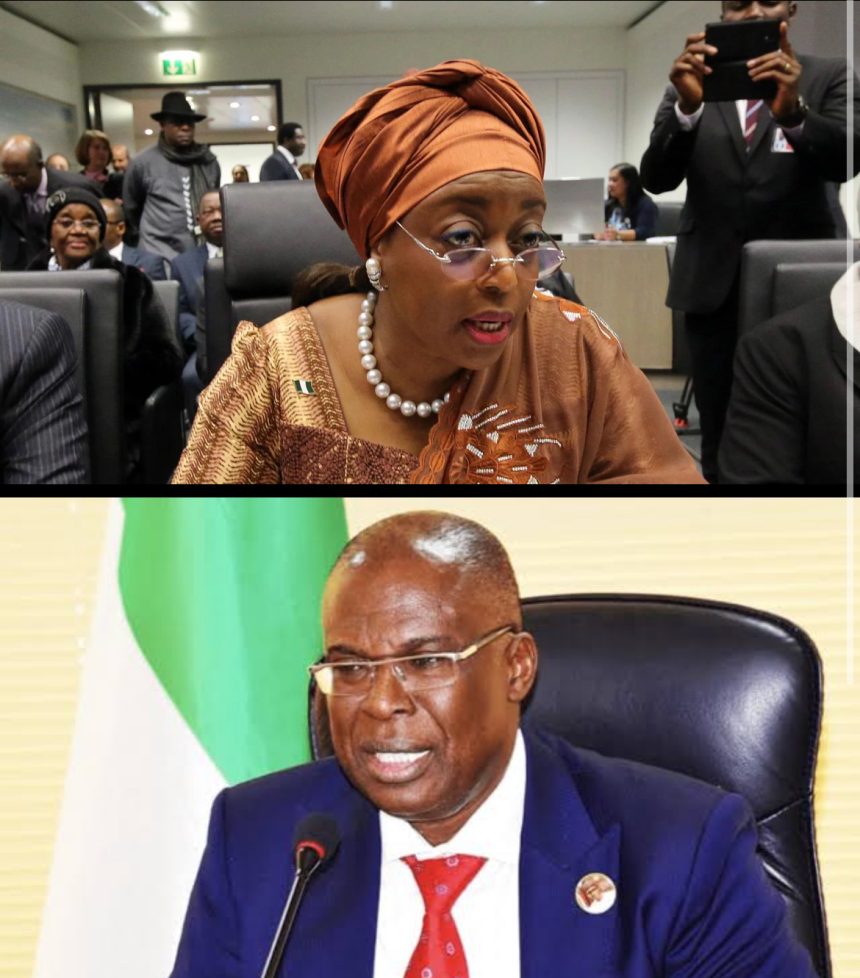
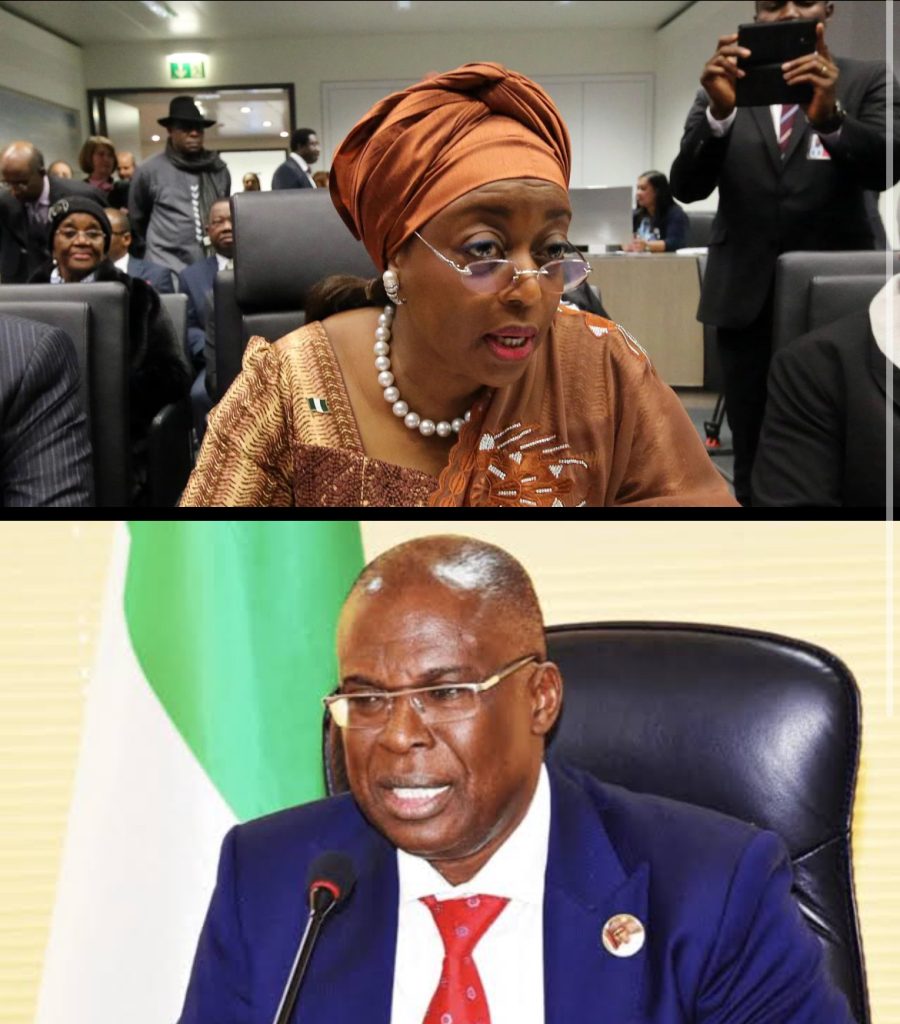
Nigeria’s long struggle with corruption in its oil and gas sector has once again come into sharp focus, drawing attention to two former petroleum ministers from different administrations; Diezani Alison-Madueke and Timipre Sylva.
Though separated by time, political leadership, and jurisdiction, both figures rose to the pinnacle of Nigeria’s petroleum industry and later became entangled in serious corruption allegations, highlighting persistent governance challenges in a sector that remains central to the nation’s economy.
Mrs Diezani Alison-Madueke served as Minister of Petroleum Resources from 2010 to 2015 under former President Goodluck Jonathan and later made history as the first female President of the Organisation of the Petroleum Exporting Countries (OPEC).
Her tenure coincided with some of Nigeria’s highest oil revenues, but also with mounting allegations of large-scale corruption tied to the award of oil contracts.
On Monday 19 January 2025, the former OPEC president and Nigerian oil minister appeared in a London court, ahead of her full trial on bribery charges relating to her time in office.
UK prosecutors allege that Alison-Madueke accepted cash and luxury benefits in exchange for influence over oil and gas deals.
In outlining the case, UK prosecutors said the charges relate to “serious allegations of bribery involving the abuse of high public office for personal gain,” adding that the case signifies Britain’s commitment to pursuing complex international corruption cases “where the proceeds of crime cross borders and undermine public trust.”
The prosecution has further argued that the alleged conduct involved “a sustained pattern of corrupt behaviour linked to the allocation of lucrative oil contracts,” with benefits allegedly routed through offshore arrangements and luxury assets.
Alison-Madueke has consistently denied all allegations against her.
The case has attracted global attention due to its international scope, involving investigations and asset recovery efforts spanning the United Kingdom, the United States, and Nigeria, with millions of dollars in assets previously repatriated to Nigeria through international cooperation agreements.
By contrast, Timipre Sylva, who served as Minister of State for Petroleum Resources from 2019 to 2023 under former President Muhammadu Buhari, is facing a corruption case unfolding entirely within Nigeria’s legal system.
In late 2025, the Economic and Financial Crimes Commission (EFCC) obtained a court warrant declaring Sylva wanted over the alleged diversion of approximately $14.86 million linked to funds invested in a refinery project by the Nigerian Content Development and Monitoring Board.
In a statement announcing the warrant, the EFCC said the case involved “the alleged conspiracy and dishonest conversion of public funds meant for strategic national infrastructure,” adding that the commission was determined to ensure that “no individual, regardless of status or political affiliation, is above the law.”
The anti-graft agency stated that it was acting on “documented financial trails and transactional evidence” and urged the former minister to submit himself for investigation.
Sylva has similarly rejected the allegations, describing the EFCC’s action as politically motivated and insisting he would clear his name in court.
While both cases involve former petroleum ministers, commentators note sharp differences in scale and scope.
Alison-Madueke’s prosecution represents one of Nigeria’s most internationalised corruption cases, characterised by cross-border financial flows, foreign courts, and global asset recovery.
Sylva’s case, though serious, centres on a specific project and a defined sum, reflecting a more conventional domestic prosecution.
Together, the two cases underscore recurring weaknesses in Nigeria’s oil governance framework concentrated power, opaque contracting processes, and delayed accountability.
They also reflect a gradual shift in enforcement tactics, from reliance on domestic investigations to increasingly coordinated international anti-corruption efforts.