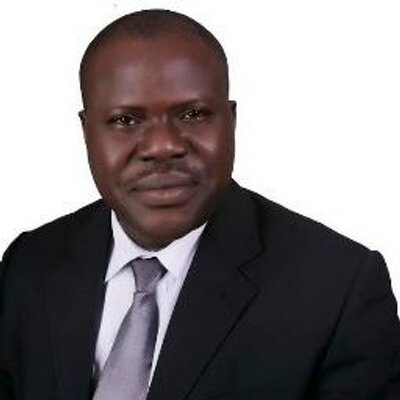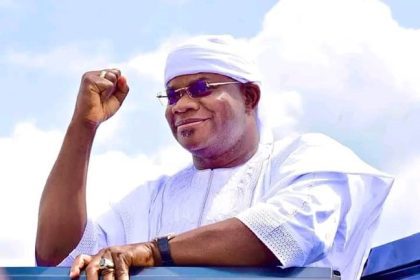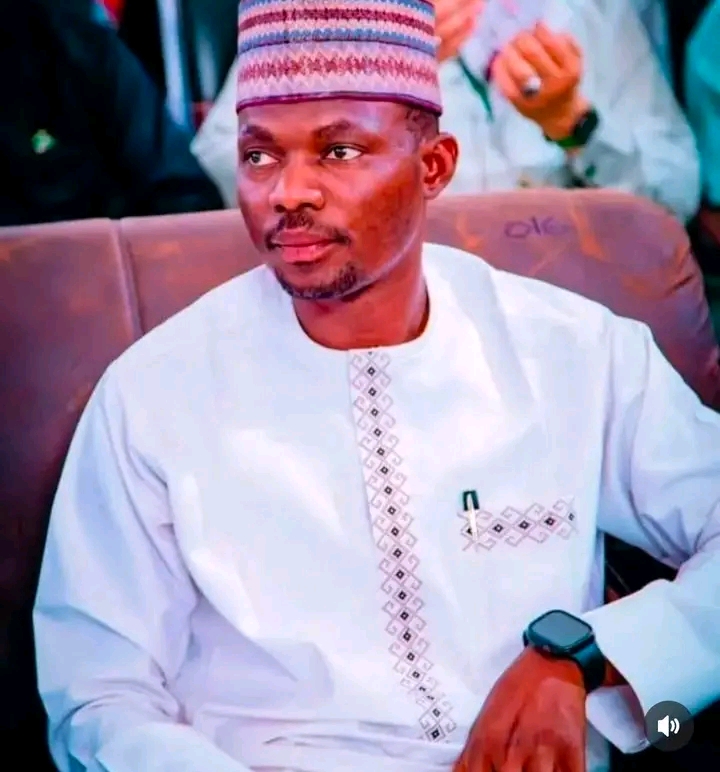
His name is Nuru Aliyu Garwa, a former Senior Special Adviser on Community Development to the Governor of Katsina State. Notably, his portfolio was not in an obscure department or technical office detached from people’s realities. He served as Senior Special Adviser on Community Development — a role ordinarily associated with grassroots engagement, social welfare, and strengthening the bond between government and local communities.
Recently, he reportedly resigned from his position to pursue political ambition, seeking election into the House of Assembly to represent his people.
Then came a development that has raised difficult questions and ignited troubling conversations.
On May 13, an eight-year-old boy was reportedly abducted while returning home from a Quranic school. According to available accounts, the family was later contacted by the abductors and asked to pay a ransom of ₦50 million for the child’s release.
Like many families trapped in such agonizing situations across parts of Nigeria, negotiations reportedly followed. The ransom demand was eventually reduced to ₦17 million, which was paid in hopes of securing the child’s freedom.
Following the payment, the family reportedly reached out to a security outfit known as the Violent Crime Response Unit (VCRU) in Katsina State.
The Unit reportedly swung into action and commenced investigations.
According to reports, intelligence gathering and investigations eventually led to the arrest of six suspected members of the kidnapping network on May 23.
But the development that followed reportedly shocked many observers.
The arrest of the six suspects allegedly led investigators to another individual believed to be a key figure within the network — Nuru Aliyu Garwa, former Senior Special Adviser on Community Development to the Katsina State Governor.
He was reportedly arrested on May 24.
Reports further claimed that security operatives discovered ₦7.5 million inside a Ghana-Must-Go bag at his residence — an amount investigators allegedly believe represented his share of the ransom proceeds. Authorities were also said to have recovered a motorcycle allegedly used in operations, alongside other items considered relevant to the investigation.
The allegations remain deeply disturbing.
And if proven true, they present a frightening portrait of a society battling not only insecurity in the forests and highways, but insecurity that may be penetrating spaces once assumed to represent authority, trust, and public responsibility.
MY REFLECTION
What this story says about Nigeria — if the allegations are established and proven — is both troubling and profoundly complex.
For years, insecurity has often been viewed largely as an external criminal problem: armed men in forests, kidnappers on highways, or violent actors operating from distant enclaves outside the reach of the state.
But cases like this challenge that understanding.
Because when individuals previously connected to government structures, community leadership, or positions of public trust are allegedly linked to criminal enterprises, it raises an uncomfortable possibility: that insecurity may not simply exist outside society’s institutions — it may, in some instances, be finding pathways into them.
And that possibility is deeply unsettling.
It highlights painful realities Nigeria has wrestled with for years:
■ Poverty
■ Unemployment
■ Greed
■ The gradual erosion of moral and social values
These factors, individually and collectively, continue to create fertile conditions for criminality.
Even more concerning is the growing perception that some criminal operations are no longer random acts by isolated actors. Increasingly, they appear organized, coordinated, and embedded within communities and networks that provide support structures for their activities.
That reality creates another crisis: the crisis of trust.
People no longer know with certainty who is genuinely protecting society and who may secretly be exploiting it.
And once trust begins to collapse, societies face a different kind of insecurity — one that cannot be measured merely by casualty figures or crime statistics.
Security challenges, especially those that involve alleged insiders or influential actors, cannot realistically disappear overnight.
This is why simplistic conversations around insecurity often miss the deeper structural problem.
At the same time, another aspect of this story deserves attention.
The fact that the Violent Crime Response Unit reportedly investigated, tracked suspects, and carried out arrests through intelligence-driven operations also matters.
Because amid the discouraging headlines, it suggests something important: that functional policing, intelligence coordination, and determined security operations can still produce results when institutions are willing to act.
For leaders — including President Bola Ahmed Tinubu and governments at all levels — solving Nigeria’s insecurity challenge requires more than deploying military force.
It requires:
■ rebuilding institutions
■ reducing corruption
■ creating genuine economic opportunities
■ strengthening intelligence systems
■ restoring moral and community values
■ ensuring justice is swift, credible, and seen to work
Cases such as this explain why many Nigerians feel frustrated, shocked, and emotionally exhausted by the country’s security crisis.
But they also reveal why the problem is structurally deep and unlikely to disappear through quick fixes alone.
Because insecurity is no longer merely about armed men in the bush.
It is increasingly about how criminal networks can embed themselves within political, social, and community structures where accountability becomes weak and oversight fails.
When that happens, insecurity begins to sustain itself.
And fixing it requires more than arresting foot soldiers.
It requires institutional vetting, internal discipline, political accountability, and ensuring that security agencies possess both the independence and capacity to investigate upward — wherever evidence may lead — without interference or fear.
Only then can societies begin to restore the trust they have lost.
— Richard ODUSANYA