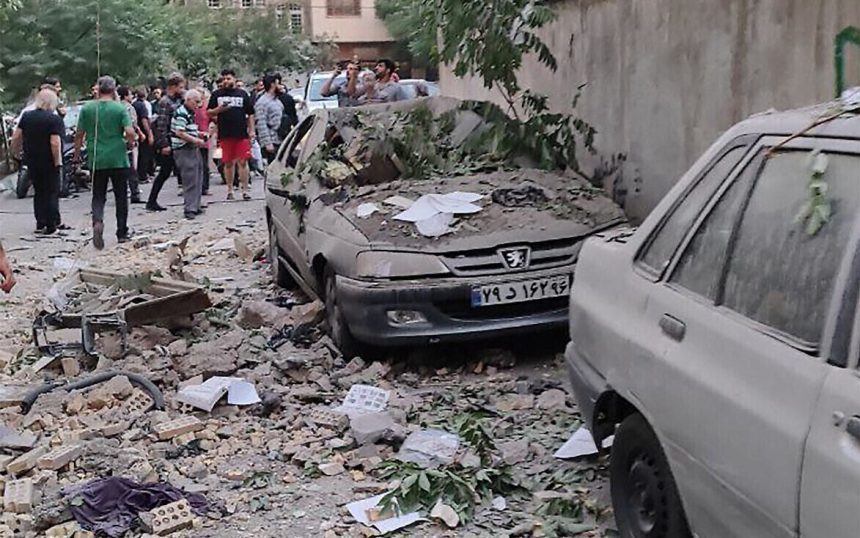
In a meticulously coordinated military offensive, Israel launched Operation Rising Lion, a wide-scale strike deep into Iranian territory targeting its nuclear infrastructure and top military leadership on June 13, 2025.
The mission, kept under wraps for months, was described by Israeli Prime Minister Benjamin Netanyahu as a “preemptive and necessary act of national survival.”
Sources confirm the Israeli war cabinet authorized the assault following intelligence that Iran was weeks away from weaponizing enriched uranium, a direct violation of international agreements.
Central to the operation were precision strikes on Iran’s nuclear sites at Natanz and Fordow, two facilities believed to be at the heart of Tehran’s clandestine nuclear weapons program.
For years, global agencies including the International Atomic Energy Agency (IAEA) have raised alarm over Iran’s enrichment of uranium to near-weapons-grade levels.
But recent activity, including a suspected third enrichment site and escalated production, pushed Israel to act.
“Israel could not wait for a second Holocaust.
“When your enemy publicly vows to erase your country from the map, and is two steps away from building a nuclear bomb, you don’t wait—you strike.” An Israeli defense official confirmed.
The fallout was immediate and devastating. Among the casualties were top Iranian generals, including Major General Mohammad Bagheri, the Chief of General Staff of Iran’s Armed Forces, and General Hossein Salami, the Commander-in-Chief of the Islamic Revolutionary Guard Corps (IRGC).
High-ranking nuclear scientists were also reported killed in what observers describe as a surgical decapitation of Iran’s military and scientific hierarchy.
These assassinations bore the hallmark of Mossad’s signature operations; swift, lethal, and devastatingly accurate.
While Israel and Iran have waged a covert war in the shadows for years—via cyberattacks, proxy militias, and assassinations, this strike marks the first direct, large-scale military confrontation between the two nations.
However, Iran wasted no time in retaliating, launching more than 100 drones and missiles at Israel.
While Israel’s Iron Dome defense system intercepted most of the projectiles, damage was reported in Tel Aviv and Haifa, with several casualties confirmed.
Iran’s state media vowed “continued resistance,” warning of a regional response if Israel attacks again.
Though U.S. officials denied any direct role in the strikes, Washington was reportedly informed ahead of time.
President Trump reiterated Israel’s right to self-defense but urged both nations to avoid escalating into a full-blown war.
Behind the scenes, however, diplomatic backchannels are said to be in overdrive, as fears grow that the crisis could spiral into a broader regional conflict involving Lebanon, Syria, and even Saudi Arabia.
What is clear, however, is that Israel has chosen to act now, rather than risk annihilation later.
For now, the world watches anxiously as two long-time enemies inch dangerously close to the edge of an all-out war.
Note: This is a developing story. More updates to follow.