Landmark investment offers hope, but implementation—not ceremonies—will determine its economic legacy.
By Princely Onyenwe | Editorial Desk
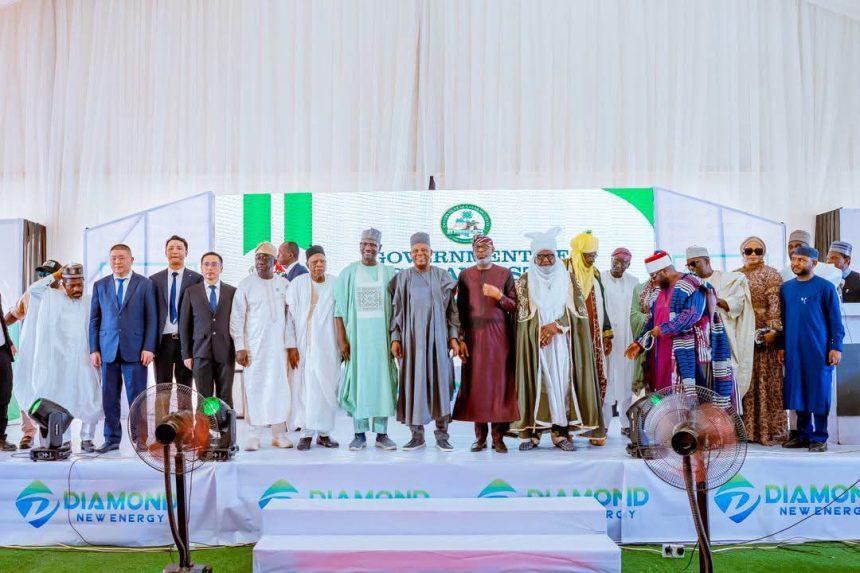
The commissioning of one of Africa’s largest lithium processing plants in Nasarawa State marks a significant milestone in Nigeria’s long-standing quest to diversify its economy beyond crude oil. Beyond the speeches, applause and official ceremonies lies a bigger national question: will this project become another symbol of unrealised potential, or the beginning of a genuine industrial revolution?
Vice President Kashim Shettima’s assertion that Nigeria must move from mere extraction to value addition reflects a reality that economic experts have advocated for decades. Nations that process their mineral resources rather than export them in raw form create more jobs, attract advanced technology, earn higher foreign exchange and strengthen their industrial base.
Nigeria possesses enormous deposits of lithium and other strategic minerals increasingly required for electric vehicles, battery manufacturing, renewable energy storage and modern electronics. As global demand continues to rise, countries rich in these resources have an opportunity to reposition themselves within the emerging clean-energy economy.
For years, however, Nigeria has watched valuable mineral resources leave its borders with limited local processing while importing finished products at significantly higher costs. If sustained, the Nasarawa lithium processing plant could begin reversing that cycle by keeping more value within the country.
The project’s importance extends beyond mining. It has the potential to stimulate transportation, engineering, manufacturing, logistics, research, technical education and numerous small and medium-scale businesses that support industrial operations. Such multiplier effects are what truly transform economies.
Yet optimism alone will not guarantee success. Nigeria’s history is filled with ambitious projects that generated impressive headlines but delivered limited long-term economic benefits. Sustainable electricity, modern transport infrastructure, transparent regulation, security, environmental protection and policy consistency remain essential ingredients for industrial growth.
Another critical issue is local content. Nigerians expect more than temporary construction jobs. The real measure of success will be the employment of local professionals, the transfer of technical knowledge and the development of indigenous expertise capable of competing globally.
Equally important is environmental responsibility. Lithium mining and processing, if poorly managed, can pose significant environmental challenges. Government regulators and the operating companies must ensure strict compliance with environmental standards to protect host communities, water sources and agricultural livelihoods.
The recommendation that Nigeria should proceed beyond mineral processing into lithium battery manufacturing deserves serious attention. Processing minerals is an important first step, but manufacturing finished products would substantially increase economic value, expand exports and position Nigeria as a competitive player in Africa’s industrial landscape.
Host communities must also become genuine beneficiaries of the investment. Development projects, employment opportunities, educational partnerships and robust corporate social responsibility initiatives should accompany industrial expansion. Experience across the extractive sector has shown that communities excluded from development often become sources of avoidable conflict.
The Federal Government’s renewed focus on the solid minerals sector comes at a time when the global transition to cleaner energy is accelerating. This presents Nigeria with an opportunity that may not remain open indefinitely. Delays, policy inconsistency or weak implementation could allow competing African countries to attract greater investment and secure a larger share of the global lithium value chain.
Ultimately, the commissioning of the Diamond New Energy lithium processing plant should be remembered not merely as another government event but as a test of Nigeria’s capacity to convert natural wealth into national prosperity. The ribbon has been cut, the speeches have been delivered and the promises have been made. Nigerians now expect factories that remain productive, jobs that endure, industries that expand and economic growth that reaches ordinary citizens. Only then will this landmark investment fulfil the promise celebrated on commissioning day.