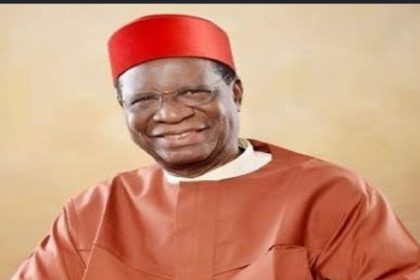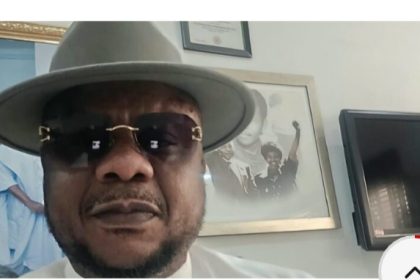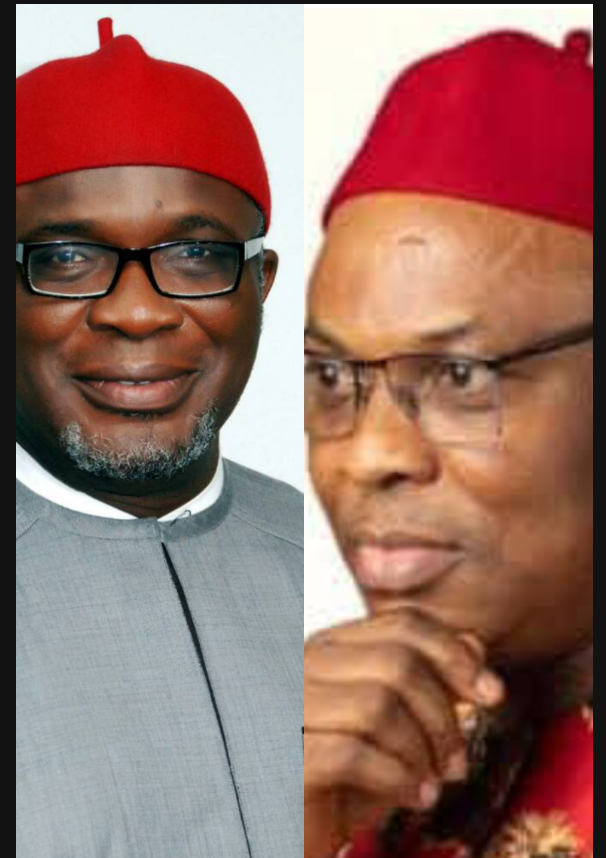
Dr. Etofolam Osuji mni fca
At a time when public trust is thin and expectations are rising, what matters is not how often credibility is invoked, but how concretely it can be demonstrated, audited, and stress-tested over
time.
Alex Mbata is one among the senatorial aspirants in Owerri zone who is keenly filling out to face the contest, possibly if he secures the party ticket through the stipulated process.
An erudite expert in economic planning has raised concern over the emergence of qualified candidates to secure the mandate of the electorates as captured in this publication by 9News Nigeria.
It reads thus:
I have read and heard about my fellow Imolite called Alex Mbata even though I have not met him in person till date. Reading about him from Okechukwu Ajoku has opened up the opportunity to know him. I am pushed to join Okechukwu Ajoku to open Alex Mbata to get to know him.
The language around Alex Mbata is polished, like the English spoken in Government Secondary School Owerri in those good old days, however it leans heavily on assertion rather than evidence.
At a time when public trust is thin and expectations are rising, what matters is not how often credibility is invoked, but how concretely it can be demonstrated, audited, and stress-tested over time. What key performance indicators had he achieved? If he seeks to be taken seriously as a contender for the governorship of Imo State, then the conversation must move from affirmation to interrogation.
The first question is simple but foundational: what verifiable record of public or private sector leadership can he point to that shows measurable outcomes? I am interrogating him from my experience as a Chartered Accountant without any political undertones. Beyond general references to “consistency” and “delivery,” where are the projects, institutions, or reforms he has led that can be independently assessed? What budgets did he manage, what targets were set, and what was achieved relative to those targets?
Leadership at the state level is not theoretical; it is operational and demands a track record that can withstand scrutiny. There are many pillars that will be deployed in his assessment that would enable the average Imo man to give a rough knowledge of him. Every contestant should pass the crucible of intelligent assessment.
Closely tied to this is the issue of vision. What is his clearly articulated economic blueprint for Imo State, especially in areas such as revenue generation, industrialisation, youth employment, and infrastructure financing? Hope Uzodinma has opened up the road network in the State, so what will he be doing? It is no longer sufficient to speak in broad terms about development.
How does he intend to expand the state’s internally generated revenue without overburdening citizens? What specific sectors will he prioritise, and what policies will he deploy to attract investment into those sectors? How does he get the State working along production from a civil service mentality?
A credible candidate should be able to translate vision into timelines, milestones, costings, and expected outcomes. Credibility also demands transparency around personal and professional history. What is the full extent of his business interests, and are they structured in a way that avoids conflicts of interest if he assumes public office? Has he been involved in any controversies—financial, legal, or ethical—that require clarification? In an era where public officials are increasingly scrutinised, the absence of scandal is not assumed; it must be demonstrated through openness and verifiable records.
Another critical area is governance philosophy. Does he believe in institutional strengthening, or does his leadership style lean toward personality-driven control? How does he intend to work with the legislature, local governments, and civil service to ensure continuity and stability? Imo State does not need another cycle of disrupted policies and abandoned projects; it needs governance anchored in systems, not individuals.
There is also the question of political courage and independence. Can he make difficult decisions that may be unpopular in the short term but necessary for long-term stability? Who are the key influencers around him, and what do they reveal about his judgment? Leadership is often a reflection of the company one keeps, and voters are entitled to understand the network that will shape his administration.
Finally, trust must be tested against accessibility and accountability. Has he created channels through which citizens can engage him and hold him accountable even now, before holding office? Campaigns often present idealised versions of candidates, but governance exposes reality. What mechanisms is he proposing to ensure transparency in budgeting, procurement, and project execution?
Until these questions are answered with clarity and evidence, the narrative of trust remains incomplete. The electorate in Imo State is no longer in search of well-crafted rhetoric; we are in search of competence that can be verified, integrity that can be defended, and leadership that can be measured. Whether Alex Mbata fits that bill is not a matter of proclamation—it is a matter of proof. Once there are proofs, support invariably follows swiftly.
Imo State is blessed with human capital and we are moving for the Electoral system and the multi-party in the ecosystem to get the best for our State. Someone that can build on what Hope Uzodinma has done.
I come in peace.
THE ETOFOLAM OSUJI ECONOMIC AND ACCOUNTABILITY TEAM WRITES
For inquiries on this News, contact 9News Nigeria on +234 08036856526