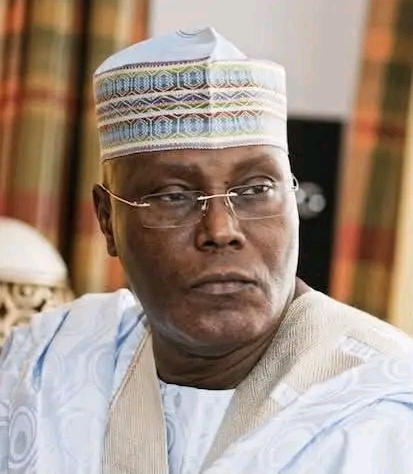
Former Vice President and African Democratic Congress (ADC) presidential candidate, Atiku Abubakar, has unveiled a new petroleum subsidy model that would shift government support from fuel imports to domestic refining.
The proposal is contained in his Atiku Economic Recovery Plan (AERP) 2027 and was disclosed in a statement by his Senior Special Assistant on Public Communication, Phrank Shaibu.
Atiku said his plan would provide targeted and temporary production subsidies to qualifying Nigerian refineries while ensuring that consumers directly benefit from the intervention.
He said the policy would replace what he described as Nigeria’s opaque import-subsidy system with a model that is capped, budgeted, independently audited and transparently monitored.
“The subsidy will follow the barrel,” Atiku said.
Under the proposal, eligible public and private refineries would receive crude oil at a preferential price, subject to strict production, efficiency and domestic supply requirements.
Atiku said refineries receiving subsidised crude must demonstrate that the benefit is passed on to Nigerian consumers through cheaper petroleum products.
He proposed tracking every subsidised barrel from crude allocation to refining, inventory and final domestic delivery.
“No phantom cargoes. No fictitious imports. No unverifiable under-recoveries,” he said.
Atiku also ruled out preferential treatment for politically connected refinery owners, saying eligibility would be based on independently verified capacity, efficiency, domestic supply and compliance.
Operators found diverting subsidised crude or products to foreign markets, falsifying records or failing to meet consumer obligations would lose access to the programme and face sanctions.
The former vice president said the subsidy would also operate within a fixed annual fiscal ceiling approved by the National Assembly.
He said Nigerians would know the maximum amount government could spend, while independent auditors would monitor production and subsidy benefits.
Atiku further proposed a sunset clause under which subsidy support would gradually decline as domestic refining capacity expands, efficiency improves and production costs fall.
He said the ultimate goal was not to maintain permanent fuel subsidy but to build a strong domestic refining industry that would eventually operate without government support.
According to Atiku, increased domestic refining would lower transportation and energy costs, support businesses and agriculture, create jobs and help reduce inflation.
He also criticised President Bola Tinubu’s 2023 decision to remove fuel subsidy, arguing that Nigerians were immediately exposed to higher petrol, transport and food prices.
Atiku questioned whether subsidy-like petroleum costs had continued to appear in government accounts despite the declaration that subsidy had ended.
He cited NNPCL’s audited financial statements, which recorded about ₦4.84 trillion in Energy Security Expenses in 2023 and ₦7.13 trillion in 2024.
Atiku said the government should explain the economic nature of those expenses and clarify whether they included under-recoveries, pricing differentials or other petroleum-related costs.
“If government continued absorbing differences between the economic cost of petroleum products and what was recovered from the market, then Nigerians are entitled to ask how that differs economically from the subsidy they were told had disappeared,” he said.
Atiku also raised questions over approximately ₦30 trillion in Federation revenues, deductions, savings, transfers and related funds that he said require detailed reconciliation.
He stressed that he was not claiming the ₦30 trillion was fuel subsidy or stolen money.
Instead, he called for a month-by-month public reconciliation showing every deduction, beneficiary, transfer, balance and legal authority.
Atiku said the government must answer where the benefits of subsidy removal went and explain petroleum-related costs recorded after the subsidy was declared abolished.
He also promised that any previous subsidy transactions found to involve fraud or diversion would be subjected to lawful investigation, prosecution and asset recovery.
Summing up his proposal, Atiku said his approach would be to “target it, cap it, budget it, track it, audit it” and ensure Nigerians feel the benefits.
He said the subsidy would then be progressively reduced as domestic refining grows, with the ultimate objective of eliminating the need for it altogether.